Galileo FOC: Europe's Navigation Constellation
Galileo FOC (Full Operational Capability) is the European Union's global navigation satellite system, designed to provide highly accurate positioning data worldwide. Unlike the United States' GPS or Russia's GLONASS, Galileo is a civilian-controlled system, managed by the European Union Agency for t
What is Galileo FOC?
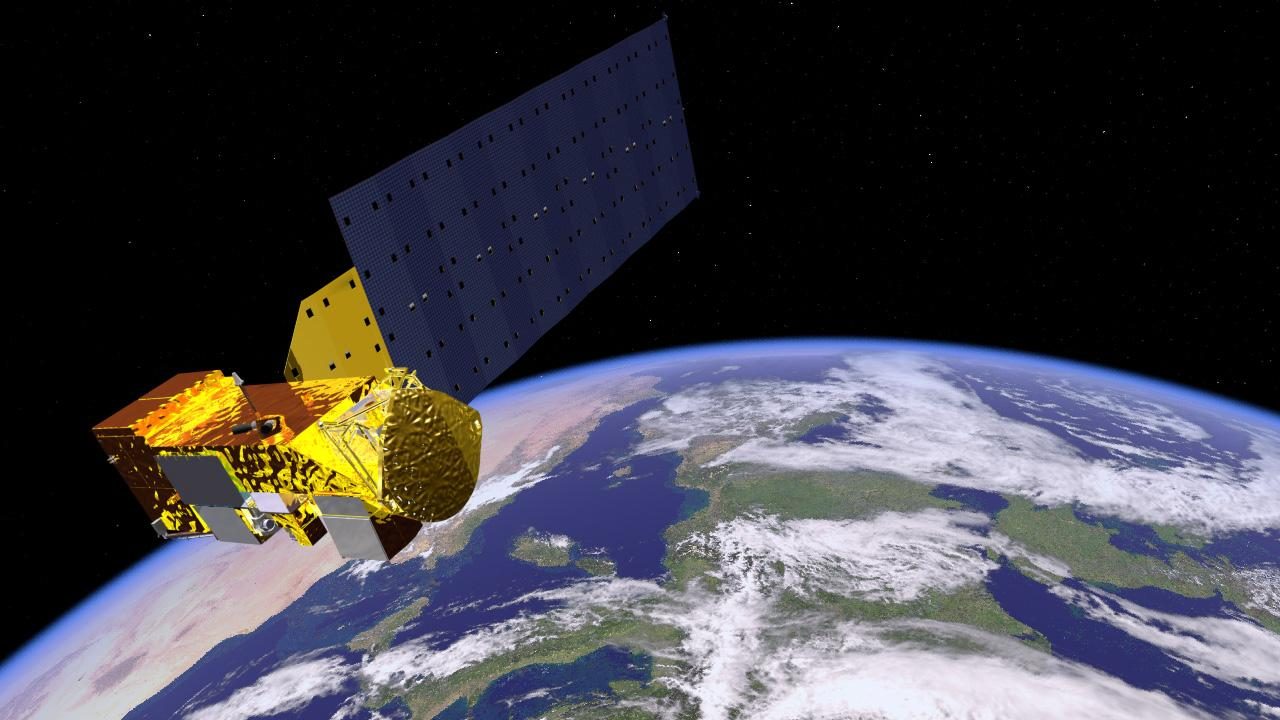
Galileo FOC (Full Operational Capability) is the European Union's global navigation satellite system, designed to provide highly accurate positioning data worldwide. Unlike the United States' GPS or Russia's GLONASS, Galileo is a civilian-controlled system, managed by the European Union Agency for the Space Programme (EUSPA) and the European Space Agency (ESA). The constellation is intended to provide an independent, high-precision positioning service, enhancing the accuracy and reliability of navigation for both civilian and commercial applications.
Mission and Purpose

The primary mission of the Galileo FOC is to offer a global navigation service that is independent of other systems. This independence is crucial for strategic autonomy, allowing Europe to maintain its own navigation capabilities without relying on foreign systems. The constellation supports a range of services, including Open Service (OS) for general public use, Commercial Service (CS) for more precise applications, and Public Regulated Service (PRS) for government-authorised users. Galileo also contributes to the Search and Rescue (SAR) service, which assists in locating distress signals globally.
Orbital Characteristics
The Galileo FOC satellites are situated in medium Earth orbit (MEO) at an altitude of approximately 23,222 kilometres. Each satellite operates with an inclination of 56 degrees, ensuring coverage across the entire globe. The orbital period of these satellites is around 14 hours. As of the latest data, the constellation comprises 24 operational satellites, with additional satellites serving as in-orbit spares. Each satellite is identified with a unique NORAD ID, which can be explored in detail in the Orbital Radar Satellite Library.
Significance and Legacy
Galileo represents a significant milestone for Europe's space ambitions, marking its presence as a key player in global navigation. The system enhances the precision of positioning services, offering accuracy down to a metre for public users and even better for authorised users. Galileo's legacy lies in its contribution to technological independence and its role in fostering innovation across various sectors, from transportation to agriculture. The constellation's development and deployment have also bolstered Europe's space industry, creating jobs and driving technological advancements.
Current Status
As of 2023, the Galileo constellation is fully operational, with all 24 satellites providing navigation services. The system continues to undergo enhancements to improve its accuracy and reliability. The European Union has plans to expand and upgrade the constellation, ensuring it remains competitive with other global navigation systems. Users can track the operational status of Galileo satellites and their visible passes using the Orbital Radar pass predictor and satellite library.
📎 Cite this article
Orbital Radar Newsroom. (2026). Galileo FOC: Europe's Navigation Constellation. Orbital Radar. https://orbitalradar.com/blog/galileo-foc-europe-navigation-constellation"Galileo FOC: Europe's Navigation Constellation." Orbital Radar, 14 July 2026, https://orbitalradar.com/blog/galileo-foc-europe-navigation-constellation.@misc{orbitalradar_galileo_foc_europe_navigation_constellat,
title = {Galileo FOC: Europe's Navigation Constellation},
author = {{Orbital Radar}},
year = {2026},
howpublished = {\url{https://orbitalradar.com/blog/galileo-foc-europe-navigation-constellation}}
}