Overview
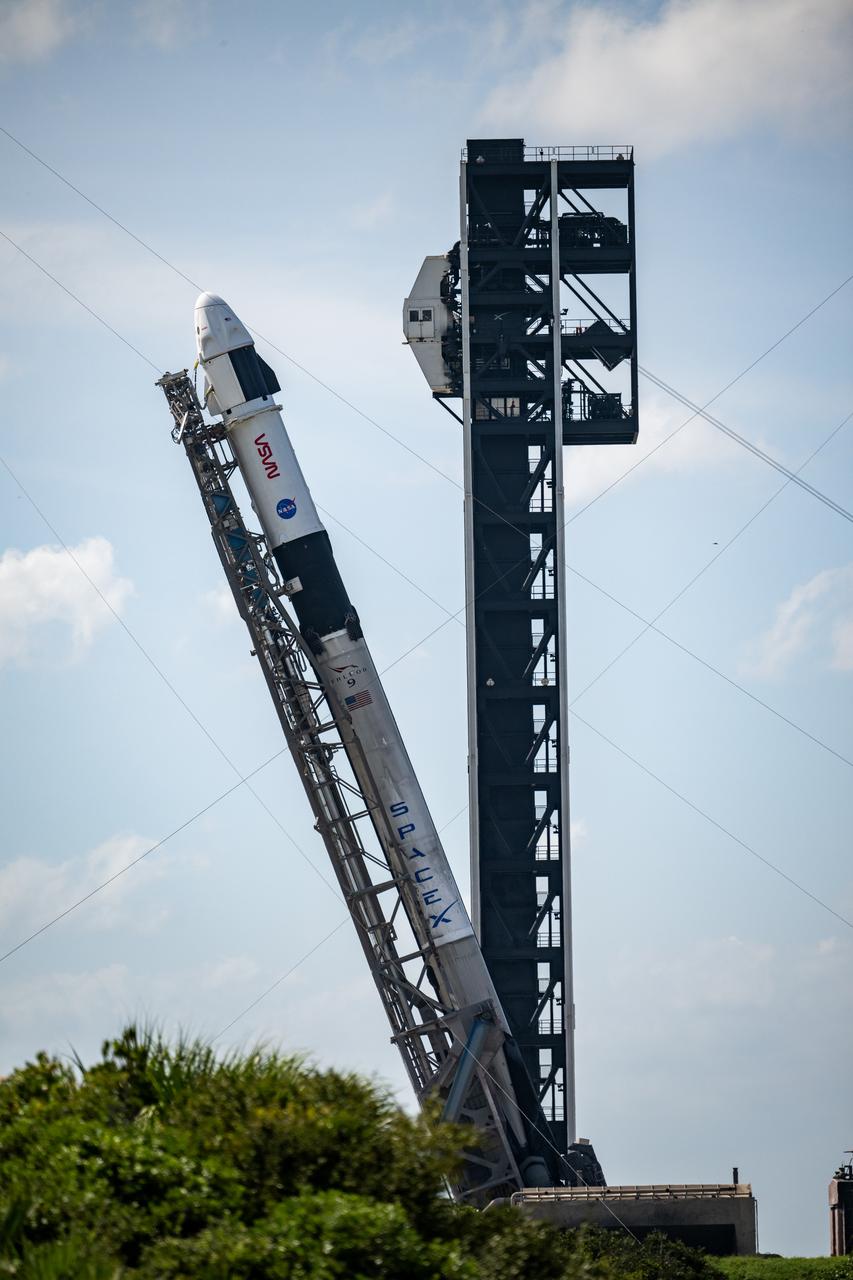
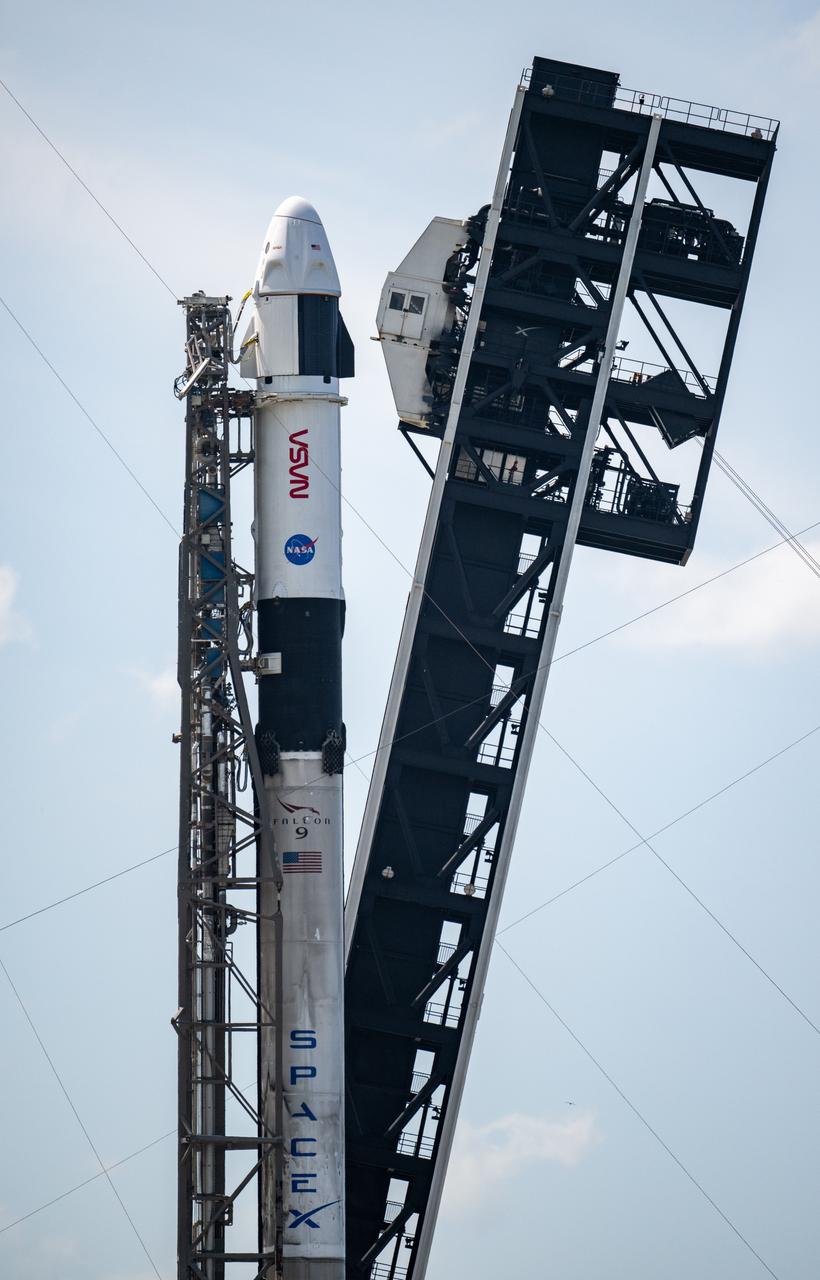
Falcon 9 is a two-stage, partially reusable orbital launch vehicle designed and manufactured by SpaceX. It is named after the Millennium Falcon from Star Wars and the nine Merlin engines that power its first stage. Since its debut in 2010, Falcon 9 has become the dominant launch vehicle globally, performing the vast majority of orbital launches worldwide and transforming the economics of space access through routine first-stage reuse.
Falcon 9 has completed 688 missions with a success rate exceeding 99% (excluding the two early failures: CRS-7 in June 2015 and AMOS-6 on the pad in September 2016). It launches from three pads — LC-39A and SLC-40 at Kennedy Space Center/Cape Canaveral, Florida, and SLC-4E at Vandenberg Space Force Base, California — at a cadence that routinely exceeds 100 missions per year.
Specifications — Falcon 9 Block 5
| Parameter | Value |
|---|---|
| Height | 70 m (229.6 ft) |
| Diameter | 3.7 m (12 ft) |
| Mass at liftoff | ~549,000 kg (1,207,900 lb) |
| Stages | 2 |
| First stage engines | 9 × Merlin 1D+ (sea-level) |
| First stage thrust (SL) | 7,607 kN (1,710,000 lbf) |
| Second stage engine | 1 × Merlin 1D+ Vacuum |
| Propellant | RP-1 (kerosene) / LOX |
| Payload to LEO | 22,800 kg (50,265 lb) |
| Payload to GTO | 8,300 kg (18,300 lb) — expendable |
| Payload to GTO (reusable) | ~5,500 kg (12,100 lb) |
| Fairing diameter | 5.2 m (17 ft) |
| Fairing reuse | Yes — recovered by boat and reflown |
| First stage reusable | Yes — propulsive landing on drone ship or pad |
Reusability
The defining innovation of Falcon 9 is routine first-stage reuse. After separating from the second stage, the booster performs a series of engine burns to decelerate and guide itself to a landing — either on an autonomous drone ship at sea or on a concrete pad near the launch site. SpaceX has demonstrated individual boosters flying more than 20 times each, with turnaround times as short as three weeks between flights.
The current Block 5 variant was specifically designed for reusability — with improved thermal protection, more durable engines rated for at least 10 flights without refurbishment, and titanium grid fins that survive re-entry heating. SpaceX has also developed fairing recovery: the two halves of the payload fairing are caught or scooped from the ocean and reflown on subsequent missions, saving approximately $6 million per pair.
Reuse has driven launch costs dramatically lower. SpaceX's published list price for a Falcon 9 launch is about $70 million for external customers, while internal Starlink missions are estimated to cost SpaceX substantially less, perhaps $15–30 million per flight when reusing hardware. That makes it by far the cheapest per-kilogram path to orbit for medium-to-large payloads, as the launch cost trends comparison shows.
What Falcon 9 Launches
The majority of Falcon 9 missions are Starlink constellation deployment flights, which account for the bulk of the vehicle's 100+ annual launches. Each Starlink mission carries approximately 20–23 v2 Mini satellites to low Earth orbit. Beyond Starlink, Falcon 9 serves a wide range of customers:
- NASA — Crew Dragon missions to the ISS (crew and cargo), Earth science satellites, and planetary science payloads.
- Commercial GEO — communications satellites for operators like SES, Eutelsat, Intelsat and others.
- Government/National Security — US Space Force missions and classified payloads.
- Rideshare — Transporter-series missions carrying dozens of small satellites from multiple customers to sun-synchronous orbit.
Flight History Milestones
| Date | Milestone |
|---|---|
| Jun 2010 | First Falcon 9 v1.0 flight (successful) |
| Dec 2015 | First successful first-stage landing (Orbcomm OG2, RTLS at LZ-1) |
| Apr 2016 | First successful drone ship landing (CRS-8) |
| Mar 2017 | First re-flight of a recovered booster (SES-10) |
| May 2018 | Block 5 debut (Bangabandhu-1) — the final major variant |
| Nov 2019 | First booster to fly four times (B1048) |
| May 2021 | First booster to fly 10 times (B1051) |
| 2023 | First booster to fly 20 times |
| 2024 | Crossed 350 total Falcon 9 missions; achieved 100+ launches in a single year |
| 2025 | Continued 100+ launch cadence; cumulative missions surpassed 400 |