NOAA-19: The Last of the POES Weather Satellites

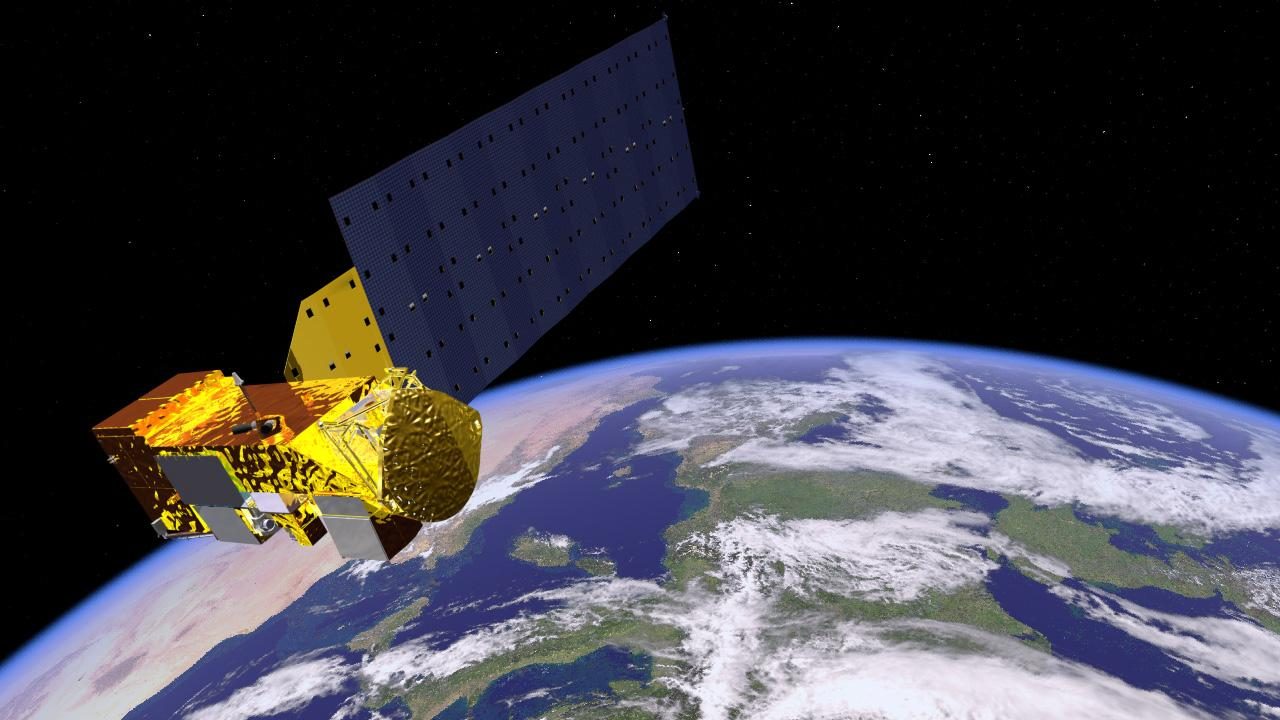
NOAA-19, also known as NOAA-N Prime, is the final satellite in the Polar Operational Environmental Satellites (POES) series. Launched on 6 February 2009, it serves as a crucial component in the National Oceanic and Atmospheric Administration's (NOAA) weather forecasting and environmental monitoring
| Active satellites | 15,775 |
| Catalogued objects | 31,553 |
| Starlink active | 10,064 |
What is NOAA-19?
NOAA-19, also known as NOAA-N Prime, is the final satellite in the Polar Operational Environmental Satellites (POES) series. Launched on 6 February 2009, it serves as a crucial component in the National Oceanic and Atmospheric Administration's (NOAA) weather forecasting and environmental monitoring efforts. The satellite is equipped with a suite of instruments designed to collect data on atmospheric conditions, sea surface temperatures, and cloud cover, among other environmental parameters.
Mission and Purpose
The primary mission of NOAA-19 is to provide continuous, long-term data sets that are essential for weather prediction and climate research. Its instruments, such as the Advanced Very High Resolution Radiometer (AVHRR) and the High Resolution Infrared Radiation Sounder (HIRS), allow for detailed observations of the Earth's surface and atmosphere. These observations support a variety of applications, from daily weather forecasts to climate change studies.
Orbital Characteristics
NOAA-19 operates in a sun-synchronous polar orbit, which allows it to pass over the same part of the Earth at roughly the same local solar time each day. This orbit is ideal for consistent lighting conditions in satellite imagery. NOAA-19 has a NORAD ID of 33591 and orbits the Earth at an altitude of approximately 870 kilometres with an inclination of 98.7 degrees. Its orbital period is about 102 minutes, enabling it to provide global coverage twice daily.
Significance and Legacy
As the last of the POES series, NOAA-19 represents the culmination of decades of satellite-based environmental monitoring. The data it collects is vital for understanding weather patterns and climate dynamics. The POES programme has been instrumental in advancing meteorological science and improving the accuracy of weather forecasts worldwide. NOAA-19 continues to contribute valuable data, complementing newer satellite systems like the Joint Polar Satellite System (JPSS).
Current Status
NOAA-19 remains operational and continues to deliver critical environmental data. Despite being over a decade old, it still plays a key role in NOAA's satellite constellation. As of now, NOAA-19 is one of 15,775 active satellites in orbit, according to Orbital Radar's live catalogue. Its ongoing contributions are a testament to the durability and importance of the POES programme in the realm of satellite meteorology.
📎 Cite this article · data available
Orbital Radar Newsroom. (2026). NOAA-19: The Last of the POES Weather Satellites. Orbital Radar. https://orbitalradar.com/blog/noaa-19-poes-weather-satellite"NOAA-19: The Last of the POES Weather Satellites." Orbital Radar, 9 October 2026, https://orbitalradar.com/blog/noaa-19-poes-weather-satellite.@misc{orbitalradar_noaa_19_poes_weather_satellite,
title = {NOAA-19: The Last of the POES Weather Satellites},
author = {{Orbital Radar}},
year = {2026},
howpublished = {\url{https://orbitalradar.com/blog/noaa-19-poes-weather-satellite}}
}