How to Spot a Starlink Satellite Train in the Night Sky
To see a Starlink satellite train, find a clear night, use a satellite pass predictor, and look for a line of moving lights in the sky.
Starlink satellites, part of SpaceX's ambitious project to provide global internet coverage, can often be seen in the night sky as a 'train' of moving lights. These satellites orbit at an altitude of approximately 550 km, and their reflective surfaces make them visible from Earth, especially shortly after launch when they are still closely grouped.
What is a Starlink Satellite Train?
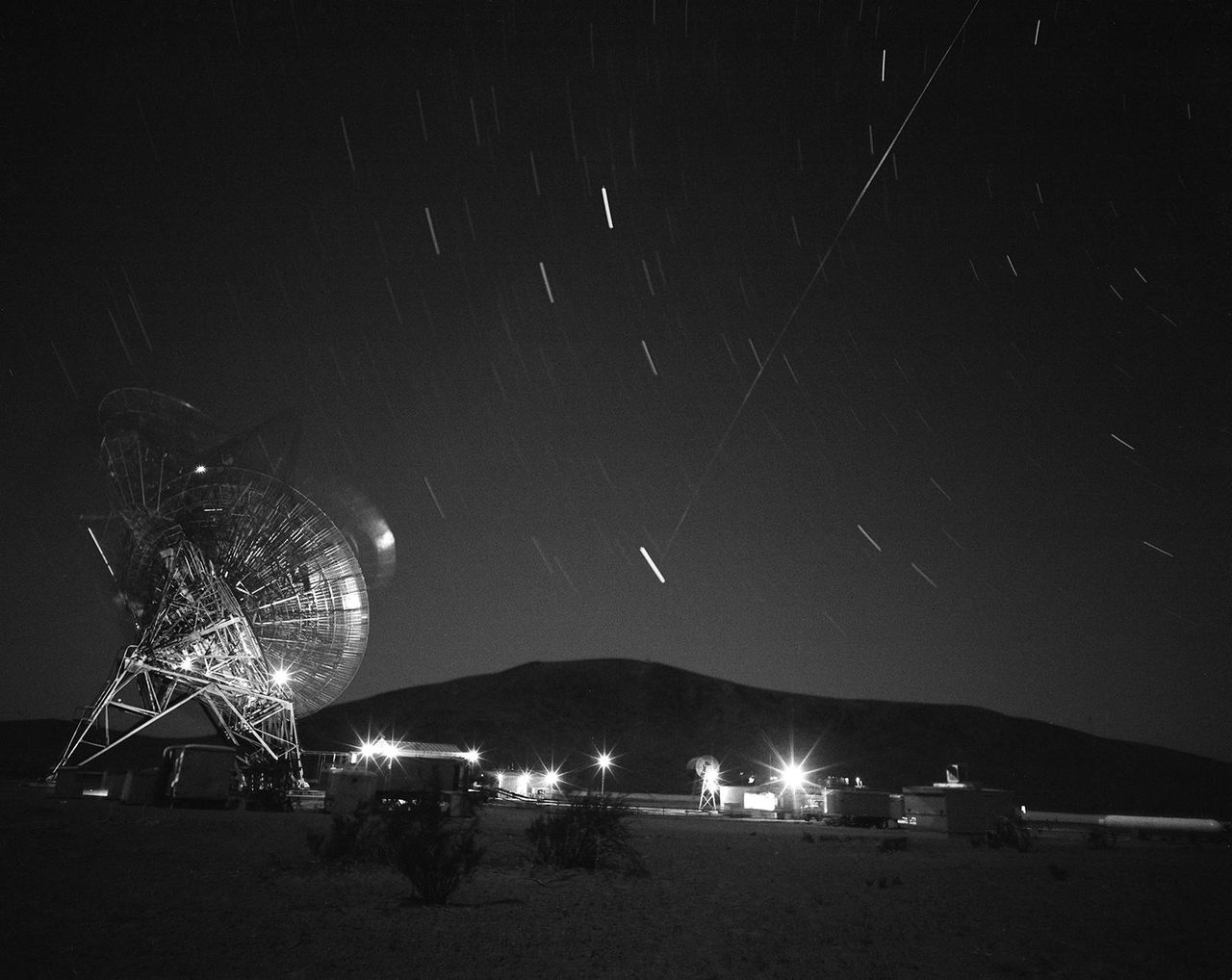
A Starlink satellite train refers to the visual phenomenon observed when a series of Starlink satellites, launched by SpaceX, travel in a line across the sky. This occurs when satellites are initially deployed and are still in close proximity before reaching their designated orbits. As of now, there are 10,709 active Starlink satellites, with 9,448 operational and 919 in the process of raising their orbits.
How to Predict Starlink Passes
To increase your chances of seeing a Starlink train, use a satellite pass predictor. Websites like Orbital Radar's pass predictor provide detailed information on when and where to look for Starlink satellites based on your location. These tools use the satellites' orbital parameters, such as inclination and altitude, to forecast visible passes.
Best Times and Conditions for Viewing
The best time to view a Starlink train is during twilight, either just after sunset or before sunrise, when the satellites are illuminated by the sun but the ground is in darkness. Clear skies and minimal light pollution will enhance visibility. The satellites' reflective surfaces catch sunlight, making them visible as they traverse the sky.
Tracking Starlink with Orbital Radar
For real-time tracking, the Starlink Tracker on Orbital Radar provides up-to-date information on the position of each satellite. This tool allows users to follow the progress of individual satellites and predict when they will be visible in their area.
Why Starlink Satellites Are Visible

Starlink satellites are visible due to their reflective surfaces, which catch sunlight and reflect it towards Earth. This is particularly noticeable shortly after launch, as the satellites are released in a compact formation. Over time, they spread out to their operational orbits, reducing the visibility of the train effect.
Key Takeaways
To see a Starlink satellite train, use a satellite pass predictor, look during twilight, and ensure clear skies. With over 10,000 satellites active, Starlink trains are a frequent sight. Real-time tracking tools enhance your chances of a successful observation.
Frequently Asked Questions
When is the best time to see Starlink satellites?
How do I know when Starlink will be visible in my area?
Why do Starlink satellites appear in a line?
Can I see Starlink satellites with the naked eye?
Do Starlink satellites interfere with astronomical observations?
📎 Cite this article
Orbital Radar Newsroom. (2026). How to Spot a Starlink Satellite Train in the Night Sky. Orbital Radar. https://orbitalradar.com/blog/how-to-spot-starlink-train"How to Spot a Starlink Satellite Train in the Night Sky." Orbital Radar, 4 July 2026, https://orbitalradar.com/blog/how-to-spot-starlink-train.@misc{orbitalradar_how_to_spot_starlink_train,
title = {How to Spot a Starlink Satellite Train in the Night Sky},
author = {{Orbital Radar}},
year = {2026},
howpublished = {\url{https://orbitalradar.com/blog/how-to-spot-starlink-train}}
}