Galactic Ballet: The Dance of Three in Pavo
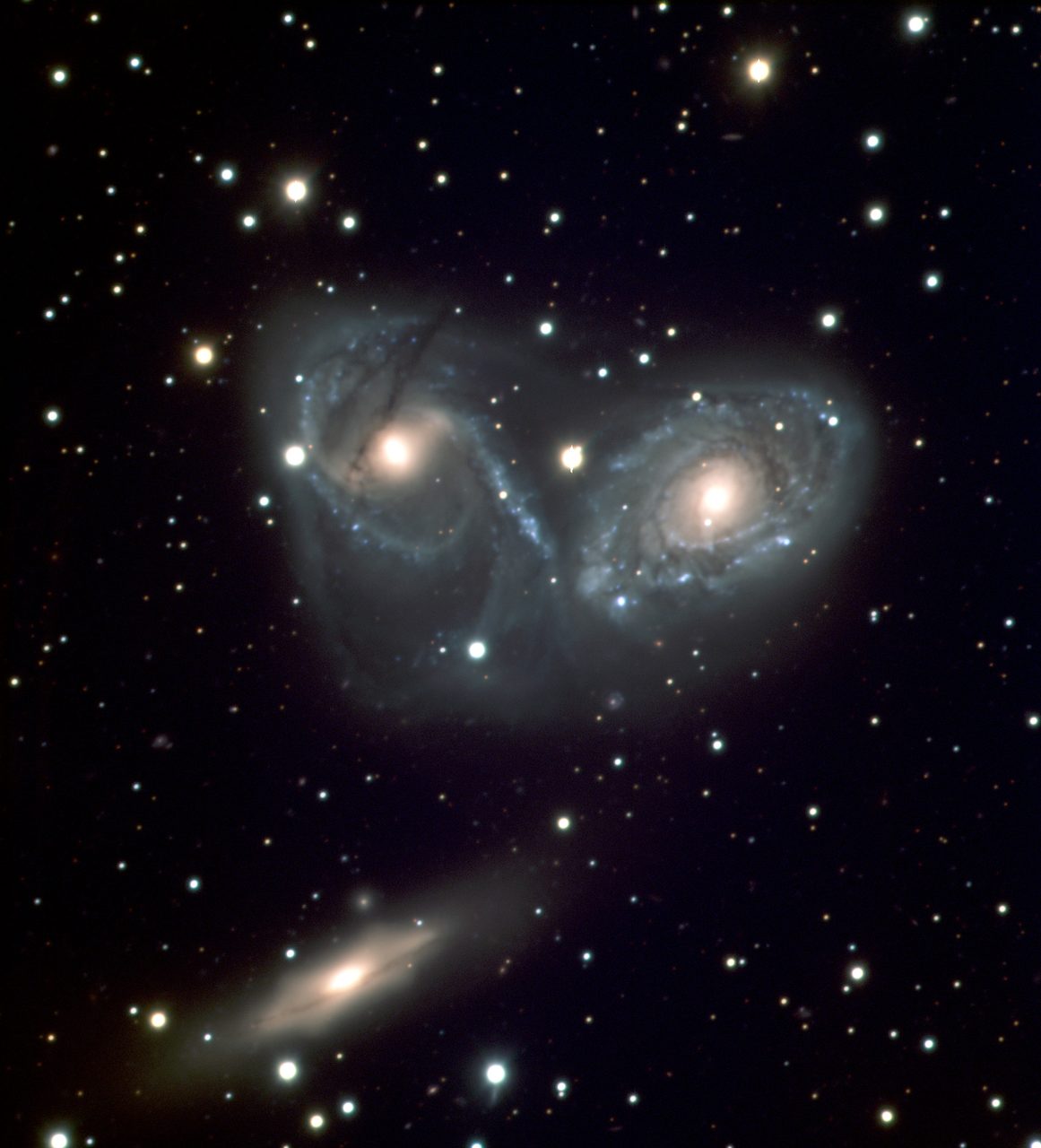
Three galaxies in Pavo, 190 million light-years away, engage in a gravitational dance, foreshadowing a cosmic merger.
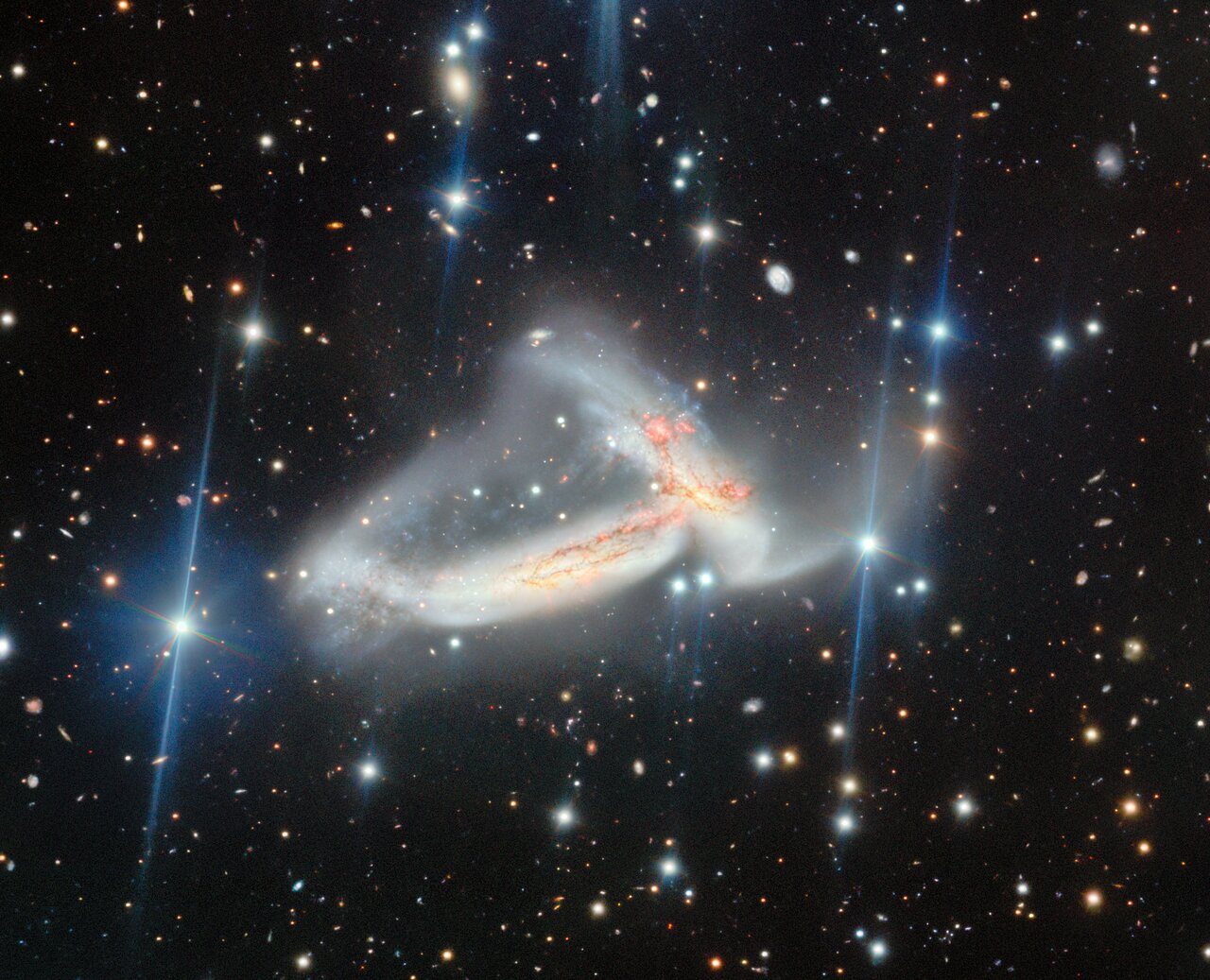
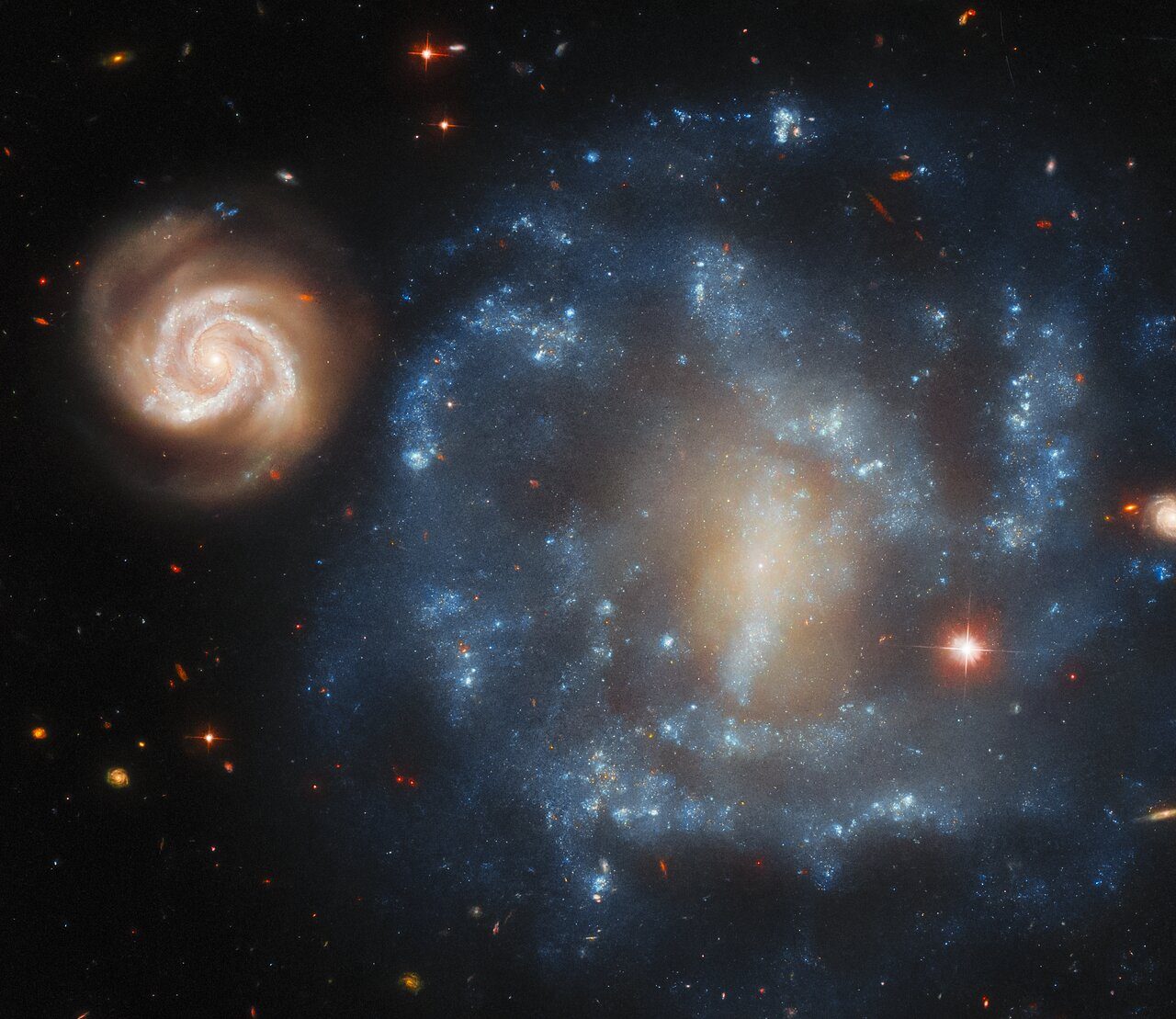
In the far reaches of the southern constellation Pavo, three galaxies engage in a gravitational ballet, 190 million light-years from Earth. This stunning image captures NGC 6769, NGC 6770, and NGC 6771, each displaying unique characteristics due to their interactions. The spiral galaxies NGC 6769 and NGC 6770, viewed face-on, reveal luminous disks marred by interstellar dust. These features, along with young blue star clusters, are products of galactic collisions that have triggered star formation. Meanwhile, NGC 6771 offers an edge-on view, its central bulge shaped by tidal star streams. This cosmic dance is a prelude to an eventual merger, a common fate for interacting galaxies.
Galactic Interactions and Cosmic Evolution
The interactions observed in this galactic trio are not just visually captivating but also scientifically significant. Such gravitational encounters are key drivers of galactic evolution, often leading to the formation of new stars and sometimes resulting in the creation of elliptical galaxies. The dynamics of these interactions are governed by the principles of orbital mechanics, much like the satellites orbiting Earth. Currently, there are 18,171 active satellites, with a significant portion being part of the Starlink constellation. These satellites, tracked by tools like the Debris Map, help us understand the complexities of orbits and gravitational influences.
Observing the Cosmos
For those eager to observe such celestial wonders, a telescope with a decent aperture is essential to capture the faint light of distant galaxies. While the trio in Pavo is beyond the reach of amateur equipment, nearby galaxies and star clusters can be observed with the right tools. For satellite enthusiasts, the Pass Predictor on Orbital Radar provides opportunities to witness the passage of satellites across the night sky, offering a different perspective on our place in the universe.
Frequently Asked Questions
What are the names of the three galaxies in Pavo?
How far are the galaxies in Pavo from Earth?
Cite this article
Pick a style, then copy it or download it for your reference manager.Orbital Radar. (2026, July 4). Galactic Ballet: The Dance of Three in Pavo. Retrieved November 18, 2026, from https://orbitalradar.com/blog/cosmic-gallery-2026-07-03
“Galactic Ballet: The Dance of Three in Pavo.” Orbital Radar, 4 July 2026, orbitalradar.com/blog/cosmic-gallery-2026-07-03. Accessed 18 Nov. 2026.
Orbital Radar (2026) Galactic Ballet: The Dance of Three in Pavo. Available at: https://orbitalradar.com/blog/cosmic-gallery-2026-07-03 (Accessed: 18 November 2026).
Orbital Radar. “Galactic Ballet: The Dance of Three in Pavo.” Last modified July 4, 2026. https://orbitalradar.com/blog/cosmic-gallery-2026-07-03.
@misc{orbitalradar_blog_cosmic_gallery_2026_07_03,
  author       = {{Orbital Radar}},
  title        = {Galactic Ballet: The Dance of Three in Pavo},
  year         = {2026},
  month        = jul,
  howpublished = {\url{https://orbitalradar.com/blog/cosmic-gallery-2026-07-03}},
  url          = {https://orbitalradar.com/blog/cosmic-gallery-2026-07-03},
  urldate      = {2026-11-18},
  note         = {Accessed 2026-11-18}
}
TY - ELEC AU - Orbital Radar, TI - Galactic Ballet: The Dance of Three in Pavo PY - 2026 DA - 2026/07/04 PB - Orbital Radar UR - https://orbitalradar.com/blog/cosmic-gallery-2026-07-03 Y2 - 2026/11/18 LA - en ER -
Live figures change, so keep the date you accessed the page. How to cite Orbital Radar