International Space Station: 25+ Years of Continuous Human Presence
The International Space Station (ISS) is a large spacecraft in low Earth orbit (LEO) that serves as a microgravity and space environment research laboratory. It is a joint project involving five participating space agencies: NASA, Roscosmos, JAXA, ESA, and CSA.
What is the International Space Station?
The International Space Station (ISS) is a large spacecraft in low Earth orbit (LEO) that serves as a microgravity and space environment research laboratory. It is a joint project involving five participating space agencies: NASA, Roscosmos, JAXA, ESA, and CSA. The ISS was launched in 1998 and has been continuously inhabited since November 2000, making it the longest-running human presence in space. The station supports scientific research across a variety of disciplines, including biology, human biology, physics, astronomy, and meteorology.
Mission and Purpose
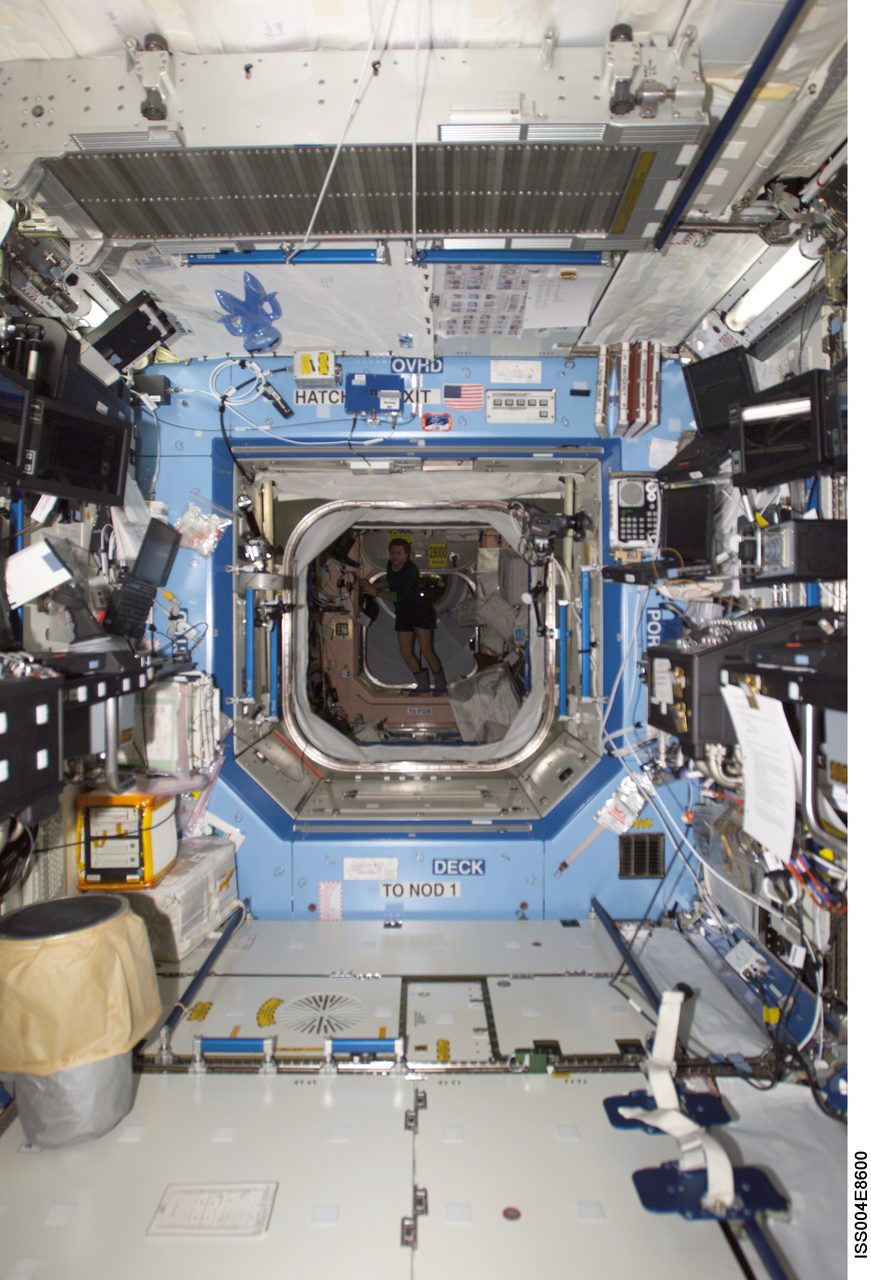
The primary mission of the ISS is to serve as a platform for scientific research in space. It allows scientists to conduct experiments that are not possible on Earth due to gravity, providing insights into fundamental scientific questions. The ISS also plays a crucial role in international cooperation in space, bringing together astronauts and researchers from around the world. Additionally, it serves as a testbed for the technologies needed for long-duration human and robotic exploration missions beyond low Earth orbit, including missions to the Moon and Mars.
Orbital Characteristics
The ISS orbits Earth at an average altitude of approximately 420 kilometres (261 miles) and travels at a speed of about 28,000 kilometres per hour (17,500 miles per hour). It completes an orbit roughly every 90 minutes. The station's orbital inclination is 51.6 degrees, allowing it to pass over 90% of the Earth's surface. The ISS is catalogued under NORAD ID 25544. Its orbit allows for regular visible passes over most inhabited regions, which can be predicted using the Orbital Radar pass predictor.
Significance and Legacy
The ISS represents a monumental achievement in international collaboration and engineering. Over its 25+ years of operation, it has hosted over 240 astronauts from 19 countries and supported more than 3,000 scientific investigations. The research conducted aboard the ISS has led to advancements in medicine, materials science, and environmental monitoring. The station has also inspired a new generation of scientists and engineers while serving as a symbol of what can be achieved when nations work together towards a common goal.
Current Status
As of 2026, the ISS remains fully operational with a crew of 11 astronauts onboard, including representatives from multiple countries. The station continues to support a wide range of scientific experiments and technology demonstrations. Plans are underway to extend its operational life into the 2030s, with discussions on how it might transition to commercial operations or be replaced by new orbital platforms. The ISS's ongoing contributions to science and international cooperation can be explored further in the Orbital Radar Satellite Library.
📎 Cite this article
Orbital Radar Newsroom. (2026). International Space Station: 25+ Years of Continuous Human Presence. Orbital Radar. https://orbitalradar.com/blog/international-space-station-25-years"International Space Station: 25+ Years of Continuous Human Presence." Orbital Radar, 4 July 2026, https://orbitalradar.com/blog/international-space-station-25-years.@misc{orbitalradar_international_space_station_25_years,
title = {International Space Station: 25+ Years of Continuous Human Presence},
author = {{Orbital Radar}},
year = {2026},
howpublished = {\url{https://orbitalradar.com/blog/international-space-station-25-years}}
}