James Webb Space Telescope at L2: A Deep Space Observatory
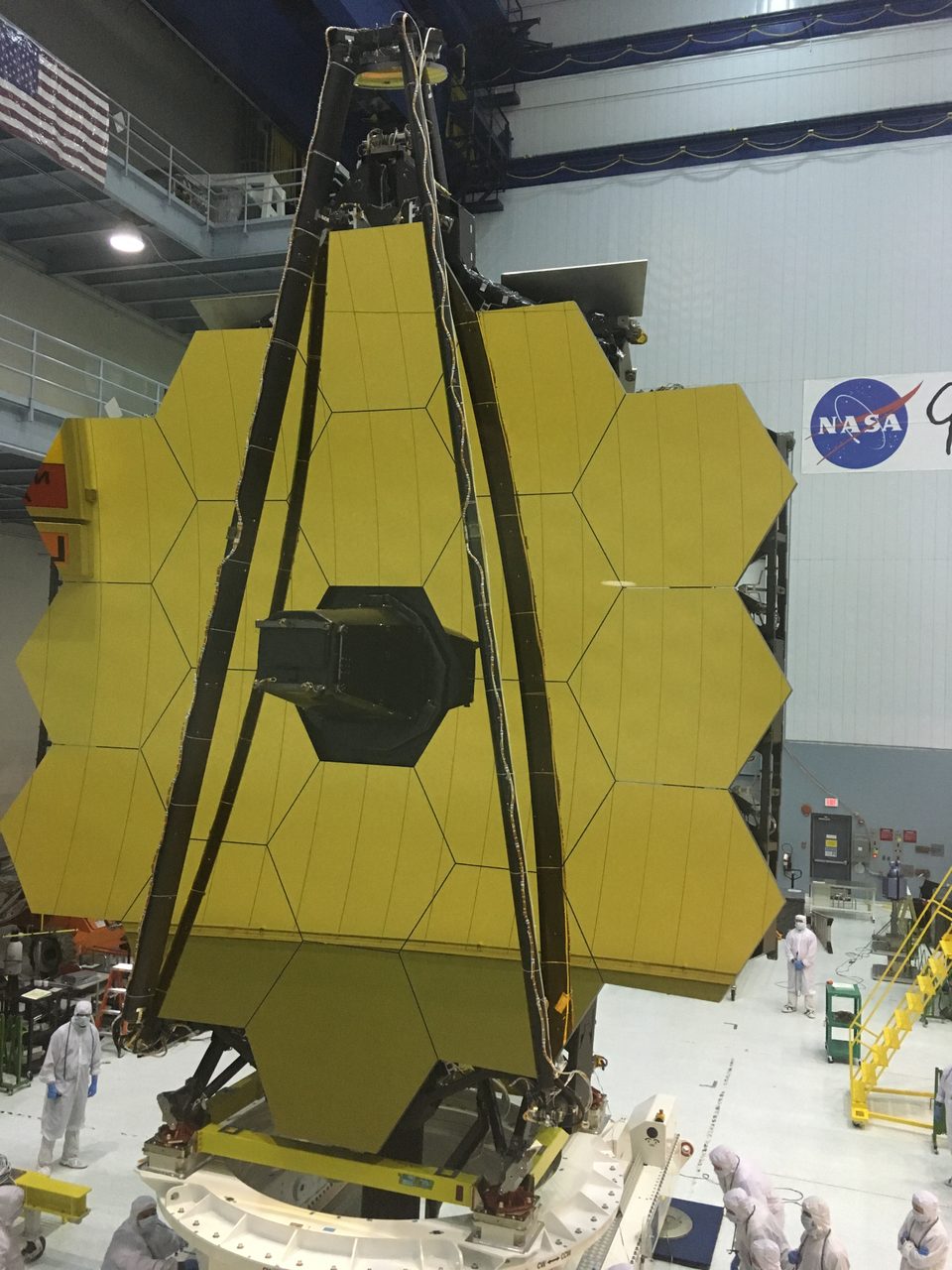
The James Webb Space Telescope (JWST) is a large, space-based observatory designed to complement and extend the discoveries of the Hubble Space Telescope. Launched on 25 December 2021, JWST is an international collaboration between NASA, the European Space Agency (ESA), and the Canadian Space Agency
| Active satellites | 15,784 |
| Catalogued objects | 31,414 |
| Starlink active | 10,066 |
What is the James Webb Space Telescope?
The James Webb Space Telescope (JWST) is a large, space-based observatory designed to complement and extend the discoveries of the Hubble Space Telescope. Launched on 25 December 2021, JWST is an international collaboration between NASA, the European Space Agency (ESA), and the Canadian Space Agency (CSA). The telescope is equipped with a 6.5-metre primary mirror and is optimized for infrared observations, allowing it to peer into the early universe, study the formation of stars and galaxies, and observe the atmospheres of exoplanets.
Mission and Purpose

The primary mission of the James Webb Space Telescope is to explore the universe in the infrared spectrum, providing unprecedented insight into the birth of stars and galaxies, and the formation of planetary systems. With its advanced instruments, JWST aims to answer fundamental questions about the origins of the universe and the potential for life on other planets. The telescope's capabilities include observing the first galaxies formed after the Big Bang, studying the atmospheres of exoplanets, and examining the lifecycle of stars.
Orbital Characteristics

The James Webb Space Telescope is positioned at the second Lagrange point (L2), approximately 1.5 million kilometres from Earth. This location allows JWST to maintain a stable position relative to the Earth and Sun, minimizing the need for orbital adjustments. The telescope's orbit around L2 is a halo orbit, which provides a clear and unobstructed view of the cosmos. The NORAD ID for JWST is 50463, and its orbital period around L2 is approximately six months.
Significance and Legacy
The James Webb Space Telescope represents a significant leap forward in astronomical research, building on the legacy of the Hubble Space Telescope. Its ability to observe in the infrared spectrum opens new windows into the universe, enabling scientists to study phenomena that are invisible in visible light. JWST's discoveries are expected to transform our understanding of the universe, from the earliest galaxies to the potential habitability of exoplanets. As of 2023, the telescope has already begun to deliver stunning images and data, advancing our knowledge of the cosmos.
Current Status
As of October 2023, the James Webb Space Telescope is fully operational and continues to conduct scientific observations. The telescope's instruments are functioning as expected, and it is actively collecting data that is being analysed by scientists worldwide. The latest updates and observations from JWST can be accessed through Orbital Radar's satellite library, which provides detailed information on its current status and recent findings.
📎 Cite this article · data available
Orbital Radar Newsroom. (2026). James Webb Space Telescope at L2: A Deep Space Observatory. Orbital Radar. https://orbitalradar.com/blog/james-webb-space-telescope-at-l2"James Webb Space Telescope at L2: A Deep Space Observatory." Orbital Radar, 14 October 2026, https://orbitalradar.com/blog/james-webb-space-telescope-at-l2.@misc{orbitalradar_james_webb_space_telescope_at_l2,
title = {James Webb Space Telescope at L2: A Deep Space Observatory},
author = {{Orbital Radar}},
year = {2026},
howpublished = {\url{https://orbitalradar.com/blog/james-webb-space-telescope-at-l2}}
}