Mars Storms and Satellite Close Calls Dominate Space News
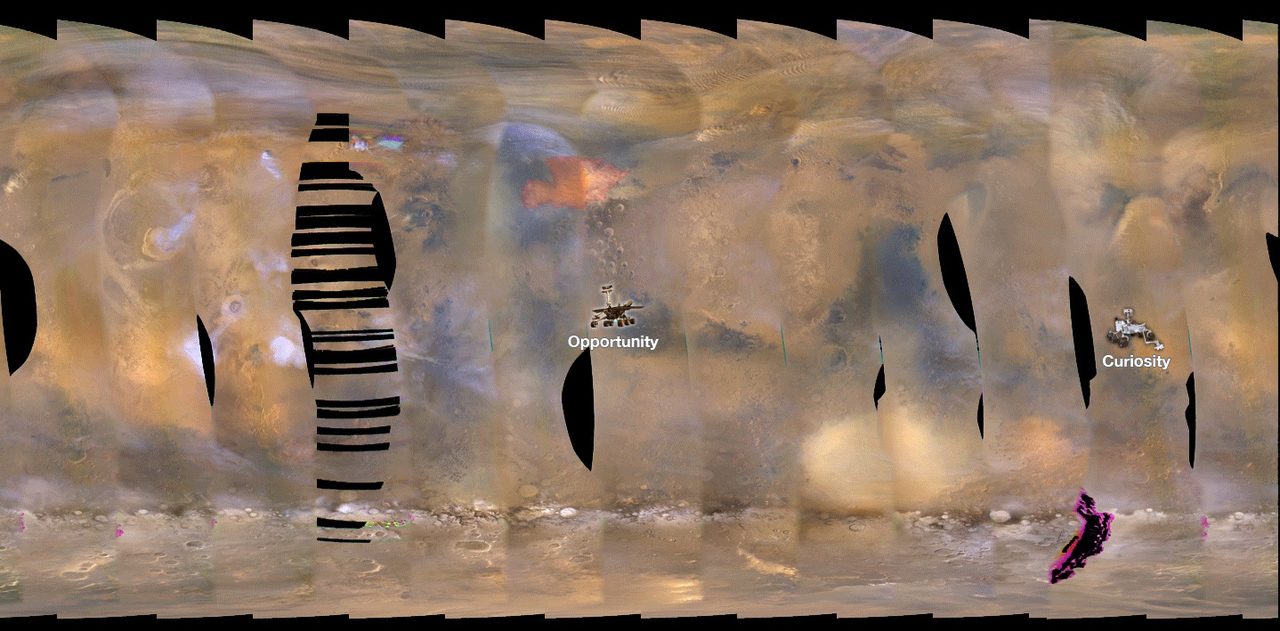
Electrically charged storms on Mars pose challenges for future missions, while Earth satellites face close approaches.
Electrically charged storms on Mars are raising concerns for future exploration missions. These storms, which can envelop the entire planet, generate significant electrical activity that could interfere with electronic equipment on Mars rovers and landers. The implications for human missions are particularly concerning, as these storms may affect communications and navigation systems.
Satellite Close Approaches

A series of close approaches between satellites have been monitored recently, highlighting the increasing congestion in Earth's orbit. Notably, the SUPERVIEW NEO-2 03 and SUPERVIEW NEO-2 04 satellites came within approximately 1.09 km of each other. Such events underscore the importance of tracking and collision avoidance systems, which can be explored further on the Orbital Radar Debris Map.
NISAR's Antarctic Discovery

NASA's NISAR mission has unveiled a fascinating radar image of Antarctica, revealing a feature dubbed the 'Hummingbird'. This discovery, made possible by the satellite's L-band radar, offers insights into the region's ice dynamics. The NISAR mission continues to provide valuable data for understanding Earth's cryosphere.
What to Watch
While there are no launches scheduled for the immediate future, the space community remains vigilant for any updates. Regularly checking the Orbital Radar Launch Schedule ensures you stay informed about upcoming missions. Additionally, with 21 active close approaches being tracked, the potential for satellite manoeuvres remains high.