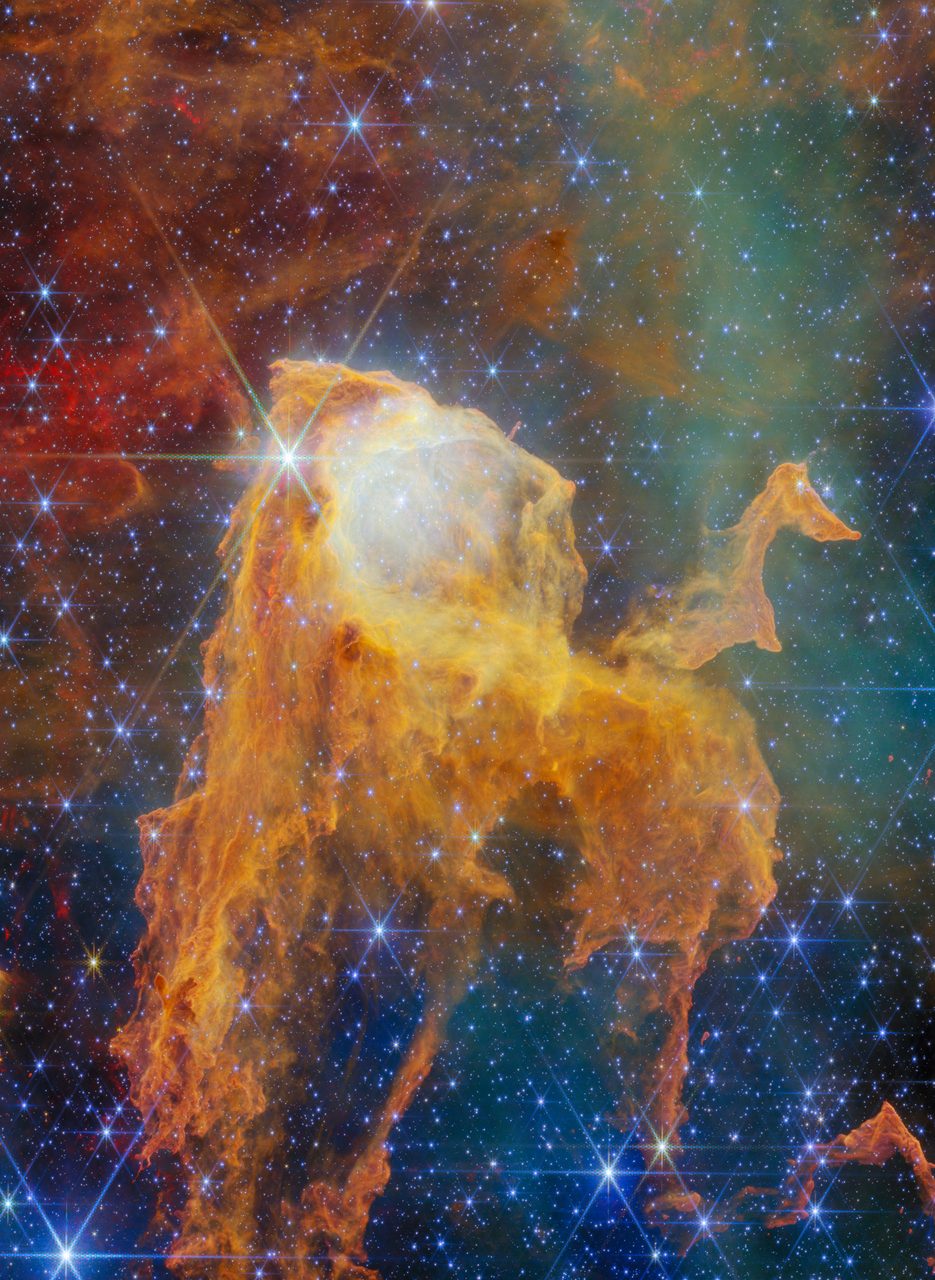
Unveiling the Mysteries of the Statue of Liberty Nebula
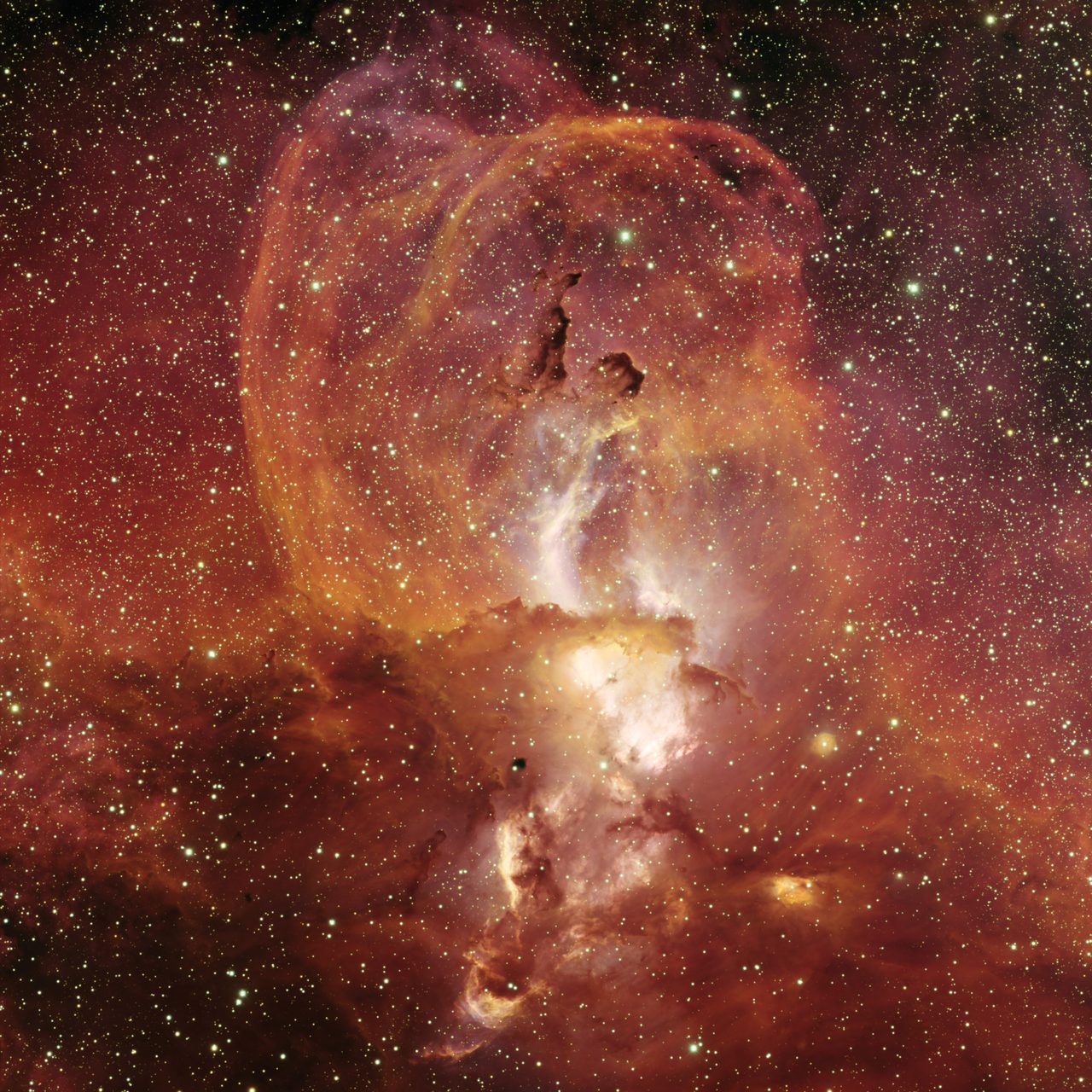
NGC 3576, the Statue of Liberty Nebula, reveals a vibrant star-forming region with massive stars and complex molecules.
NGC 3576, known as the Statue of Liberty Nebula, is a vibrant star-forming region located in the southern constellation of Carina. This nebula, also catalogued as NGC 3582 and NGC 3584, is a hub of stellar activity where bright stars and intriguing molecules are being birthed and released. The nebula's striking appearance is due to dense knots of dark interstellar dust and glowing hydrogen gas, ionised by the intense radiation from newly formed stars. The presence of polycyclic aromatic hydrocarbons (PAHs), complex carbon molecules, adds to the nebula's scientific intrigue, as these molecules are considered a potential precursor to the development of life.
The Broader Context of Star Formation
The Statue of Liberty Nebula is a prime example of the dynamic processes involved in star formation. Within its confines, at least 33 massive stars are in the final stages of their formation, a testament to the nebula's role as a stellar nursery. The presence of PAHs within NGC 3576 is particularly noteworthy, as these molecules are thought to have played a crucial role in the chemical evolution of the solar nebula from which our own Sun and planets formed. Understanding such regions helps astronomers piece together the complex puzzle of how stars and planetary systems, including our own, come into existence.
Observing the Nebula and Related Tools
For those interested in observing the Statue of Liberty Nebula, it is best viewed from the southern hemisphere, where the constellation Carina is prominent. While direct observation requires a telescope, enthusiasts can explore similar celestial phenomena through the Satellite Eye tool, which offers live satellite imagery of the cosmos. This tool provides a unique perspective on the dynamic and ever-changing nature of our universe.
Frequently Asked Questions
What is the Statue of Liberty Nebula?
Why are polycyclic aromatic hydrocarbons important?
📎 Cite this article
Orbital Radar Newsroom. (2026). Unveiling the Mysteries of the Statue of Liberty Nebula. Orbital Radar. https://orbitalradar.com/blog/cosmic-gallery-2026-07-20"Unveiling the Mysteries of the Statue of Liberty Nebula." Orbital Radar, 21 July 2026, https://orbitalradar.com/blog/cosmic-gallery-2026-07-20.@misc{orbitalradar_cosmic_gallery_2026_07_20,
title = {Unveiling the Mysteries of the Statue of Liberty Nebula},
author = {{Orbital Radar}},
year = {2026},
howpublished = {\url{https://orbitalradar.com/blog/cosmic-gallery-2026-07-20}}
}