Chandra X-ray Observatory: High-Energy Astronomy
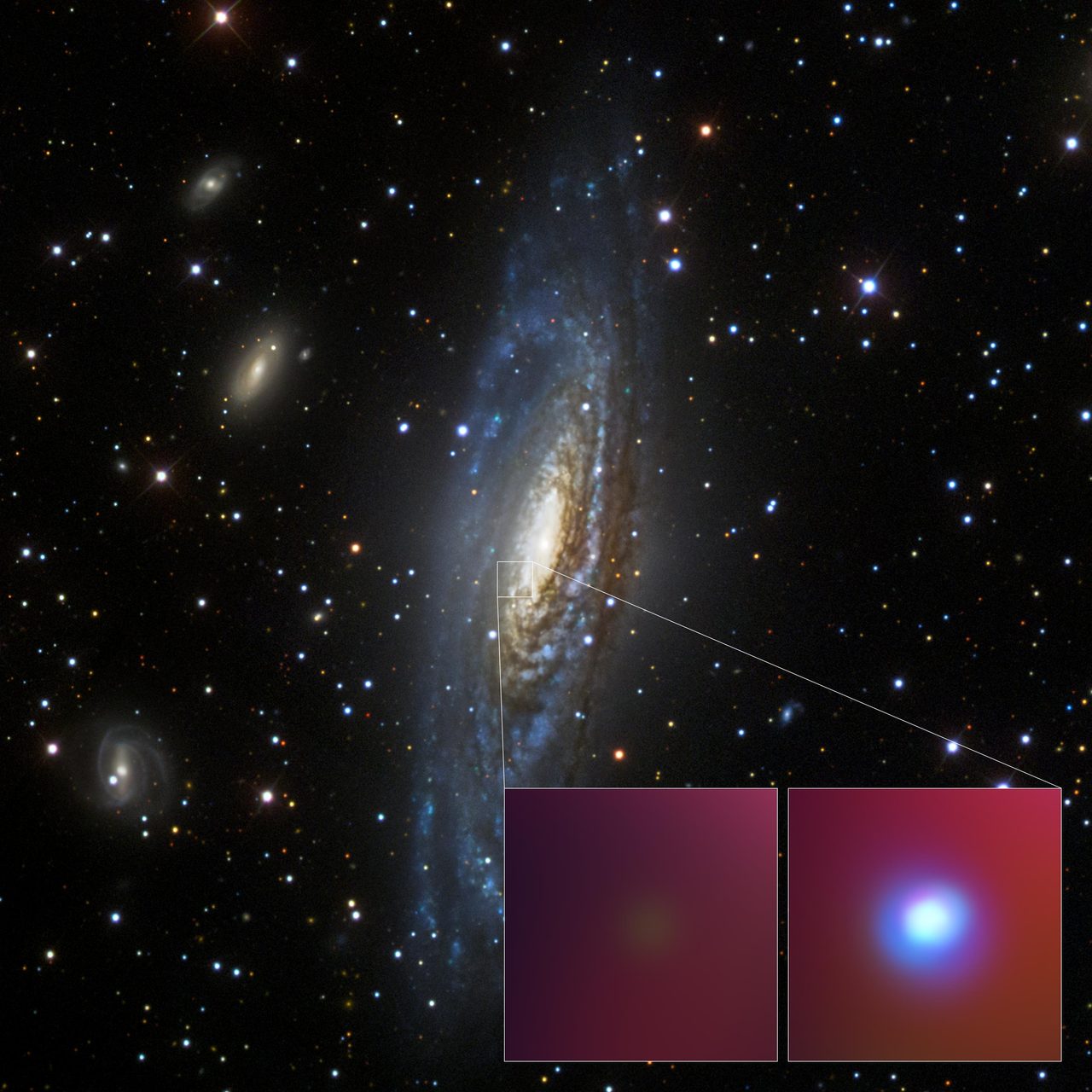
The Chandra X-ray Observatory is a flagship mission of NASA dedicated to X-ray astronomy, observing high-energy regions of the universe such as the remnants of exploded stars, clusters of galaxies, and matter around black holes. Launched on 23 July 1999 aboard the Space Shuttle Columbia (STS-93), Ch
| Active satellites | 15,736 |
| Catalogued objects | 31,281 |
| Starlink active | 9,985 |
What is the Chandra X-ray Observatory?
The Chandra X-ray Observatory is a flagship mission of NASA dedicated to X-ray astronomy, observing high-energy regions of the universe such as the remnants of exploded stars, clusters of galaxies, and matter around black holes. Launched on 23 July 1999 aboard the Space Shuttle Columbia (STS-93), Chandra has been instrumental in advancing our understanding of the cosmos through its observations in the X-ray spectrum. The observatory is named after the Indian-American astrophysicist Subrahmanyan Chandrasekhar, a Nobel laureate known for his work on the structure and evolution of stars.
Mission and Purpose
Chandra's mission is to observe X-rays from high-energy regions of the universe, providing insights into phenomena such as black holes, supernovae, and dark matter. X-rays are produced by some of the hottest and most energetic objects and events in the universe, and Chandra's powerful instruments allow scientists to detect and analyse these emissions with unprecedented clarity. The observatory's findings have helped to map the distribution of dark matter in galaxy clusters and study the environments of black holes, among other achievements.
Orbital Characteristics
Chandra operates in a highly elliptical orbit, which allows it to spend the majority of its time far from the interference of Earth's radiation belts. This orbit has an apogee (farthest point from Earth) of approximately 133,000 kilometres and a perigee (closest point) of about 16,000 kilometres. The observatory's inclination is 28.5 degrees, and it completes an orbit approximately every 64 hours. Chandra's NORAD ID is 25867. Its orbital parameters are designed to maximise observation time and minimise background noise, crucial for detecting faint X-ray sources.
Significance and Legacy
Since its launch, Chandra has made numerous significant contributions to astronomy. It has helped confirm the existence of dark energy, observed the collision of galaxy clusters, and provided detailed images of supernova remnants. These observations have been pivotal in understanding the life cycle of stars and the large-scale structure of the universe. Chandra's data have been used in thousands of scientific papers, making it one of the most productive X-ray observatories in history. Its contributions continue to influence both theoretical and observational astrophysics.
Current Status
As of 2023, the Chandra X-ray Observatory remains operational, continuing to deliver valuable data to the scientific community. Despite being over two decades old, the observatory's instruments and systems have been well-maintained, allowing it to function effectively. Chandra's ongoing mission is a testament to the robust design and engineering of the spacecraft. For more detailed information on Chandra's current status and its observational schedule, interested readers can refer to the Orbital Radar Satellite Library.
📎 Cite this article · data available
Orbital Radar Newsroom. (2026). Chandra X-ray Observatory: High-Energy Astronomy. Orbital Radar. https://orbitalradar.com/blog/chandra-x-ray-observatory"Chandra X-ray Observatory: High-Energy Astronomy." Orbital Radar, 30 September 2026, https://orbitalradar.com/blog/chandra-x-ray-observatory.@misc{orbitalradar_chandra_x_ray_observatory,
title = {Chandra X-ray Observatory: High-Energy Astronomy},
author = {{Orbital Radar}},
year = {2026},
howpublished = {\url{https://orbitalradar.com/blog/chandra-x-ray-observatory}}
}