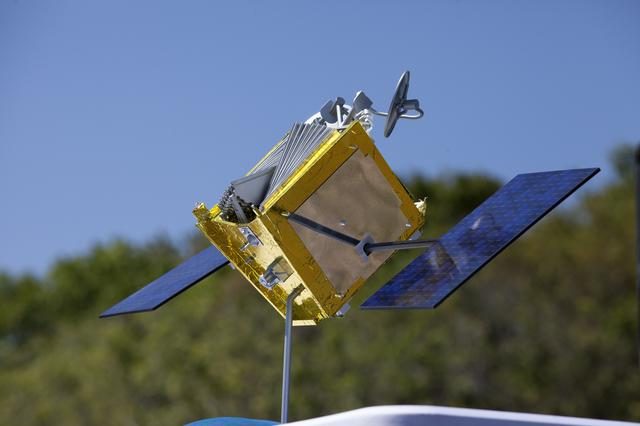
SOHO: Sun-Watching Observatory at L1
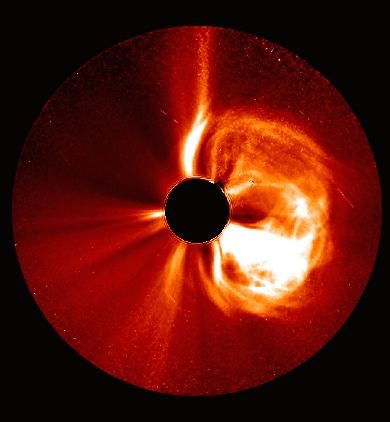
The Solar and Heliospheric Observatory (SOHO) is a collaborative project between the European Space Agency (ESA) and NASA, designed to study the Sun from its deep core to the outer corona and the solar wind. Launched on 2 December 1995, SOHO has been instrumental in providing continuous solar observ
| Active satellites | 15,748 |
| Catalogued objects | 31,356 |
| Starlink active | 9,941 |
What is SOHO?
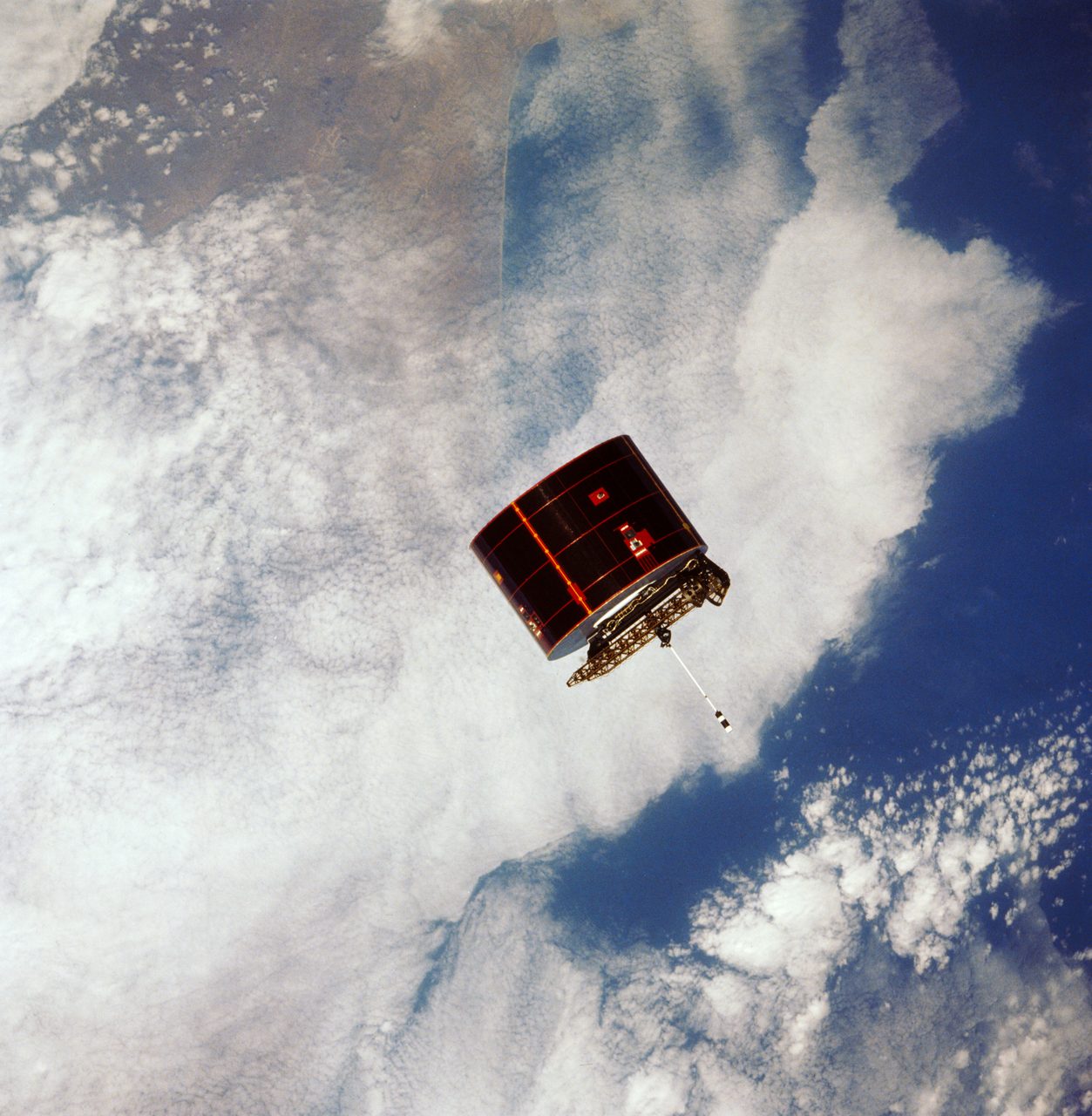
The Solar and Heliospheric Observatory (SOHO) is a collaborative project between the European Space Agency (ESA) and NASA, designed to study the Sun from its deep core to the outer corona and the solar wind. Launched on 2 December 1995, SOHO has been instrumental in providing continuous solar observation, contributing to our understanding of solar phenomena and space weather. It is located at the first Lagrange point (L1), approximately 1.5 million kilometres from Earth, where gravitational forces create a stable environment for continuous solar monitoring.
Mission and Purpose
SOHO's primary mission is to observe the Sun's atmosphere and surface dynamics, providing data critical for understanding solar activity and its impact on space weather. The observatory carries a suite of 12 instruments, including spectrometers and coronagraphs, to study solar oscillations, the solar corona, and the solar wind. These instruments have enabled discoveries such as the detection of over 3,000 comets and insights into the Sun's internal structure and dynamics.
Orbital Characteristics
SOHO is positioned at the L1 Lagrange point, which allows it to maintain a constant view of the Sun without the interference of Earth's shadow. This unique position is approximately 1.5 million kilometres from Earth, enabling uninterrupted solar observation. The satellite does not orbit the Earth in the traditional sense but rather orbits around the L1 point in a halo orbit, a path that requires periodic station-keeping manoeuvres to maintain its position.
Significance and Legacy
SOHO has significantly advanced solar science by providing continuous data on solar activity, contributing to better space weather prediction capabilities. Its long operational life has allowed for the observation of solar cycles and the discovery of thousands of comets, many of which are named 'SOHO comets'. The mission's data have been crucial in understanding solar flares and coronal mass ejections, phenomena that can affect satellite operations and power grids on Earth.
Current Status
As of 2023, SOHO remains operational and continues to provide valuable data on solar activity. Despite being launched over 25 years ago, the observatory's instruments are still functional, and it continues to be a vital asset for solar research. SOHO's data are freely available and widely used by the scientific community, with real-time solar imagery accessible through platforms like Orbital Radar's Satellite Eye.
📎 Cite this article · data available
Orbital Radar Newsroom. (2026). SOHO: Sun-Watching Observatory at L1. Orbital Radar. https://orbitalradar.com/blog/soho-sun-watching-observatory"SOHO: Sun-Watching Observatory at L1." Orbital Radar, 27 September 2026, https://orbitalradar.com/blog/soho-sun-watching-observatory.@misc{orbitalradar_soho_sun_watching_observatory,
title = {SOHO: Sun-Watching Observatory at L1},
author = {{Orbital Radar}},
year = {2026},
howpublished = {\url{https://orbitalradar.com/blog/soho-sun-watching-observatory}}
}