Understanding Conjunction Assessment in Satellite Operations
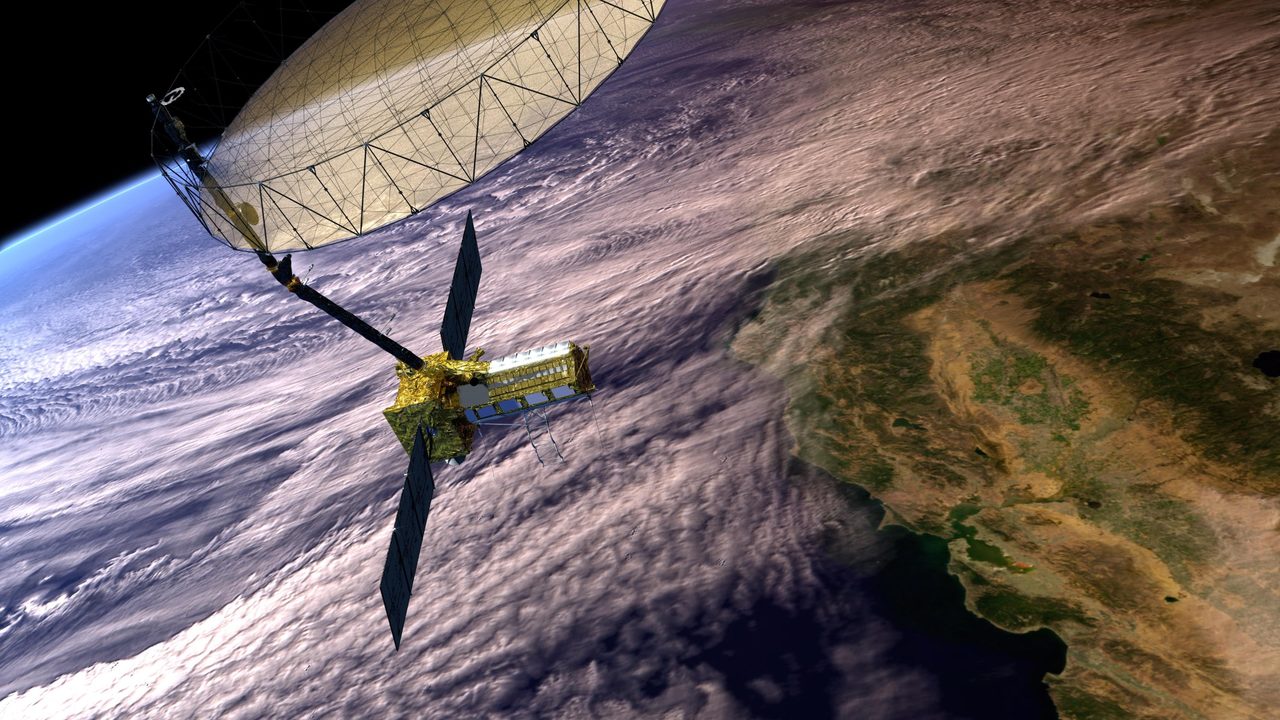
Conjunction assessment predicts potential collisions between satellites and debris, ensuring safe operations in Earth's orbit.
Conjunction assessment is the process of predicting potential collisions between orbiting objects, such as satellites and space debris. With over 29,000 catalogued objects in space, including 18,612 active satellites, this practice is crucial for maintaining orbital safety. The process involves calculating the probability of a collision and determining whether evasive manoeuvres are necessary.
How Does Conjunction Assessment Work?
Conjunction assessment relies on tracking data from radar and optical sensors to predict the paths of objects in orbit. Organisations like the United States Space Surveillance Network (SSN) and the European Space Agency (ESA) provide this data. The process involves calculating the 'conjunction' or close approach of two objects using orbital parameters such as altitude, inclination, and velocity. The Orbital Radar glossary provides detailed definitions of these terms.
Why Does Conjunction Assessment Matter?
With the increasing number of satellites, especially from constellations like Starlink, which has 10,975 active satellites, the risk of collisions has grown. Conjunction assessment helps prevent collisions that could generate more debris, exacerbating the problem. Currently, there are 8,584 pieces of tracked debris, and each collision could increase this number significantly, posing risks to operational satellites and the International Space Station (ISS), where 11 astronauts are currently stationed.
Conjunction Assessment vs. Collision Avoidance
While conjunction assessment predicts potential collisions, collision avoidance involves taking action to prevent them. This often means manoeuvring a satellite to a safer orbit, a process that requires precise calculations and fuel. The decision to manoeuvre is based on the probability of collision, potential impact on the satellite's mission, and available resources. For more on collision avoidance strategies, see our conjunctions page.
Challenges in Conjunction Assessment
One of the main challenges is the accuracy of tracking data. Factors like atmospheric drag, solar activity, and gravitational perturbations can alter an object's orbit, complicating predictions. Additionally, the sheer volume of objects—29,050 tracked, including 1,854 rocket bodies—requires significant computational resources. The Orbital Radar conjunction page discusses these challenges in detail.
The Future of Conjunction Assessment
As space traffic increases, conjunction assessment will become even more critical. Advances in artificial intelligence and machine learning are being integrated to improve prediction accuracy and response times. International cooperation is also essential to standardise data sharing and collision avoidance protocols. With 50 re-entries predicted this month, the need for robust conjunction assessment systems is clear.
Key Takeaways
Conjunction assessment is vital for preventing collisions in space, protecting satellites, and reducing space debris. It involves predicting close approaches and deciding on collision avoidance actions. As the number of satellites grows, so does the importance of accurate and timely conjunction assessments. For further reading, visit our glossary and conjunctions pages.
Frequently Asked Questions
What is conjunction assessment in satellite operations?
How accurate is conjunction assessment?
Why is conjunction assessment important?
What happens if a conjunction is detected?
How often do conjunction assessments occur?
📎 Cite this article
Orbital Radar Newsroom. (2026). Understanding Conjunction Assessment in Satellite Operations. Orbital Radar. https://orbitalradar.com/blog/conjunction-assessment-explainer"Understanding Conjunction Assessment in Satellite Operations." Orbital Radar, 23 August 2026, https://orbitalradar.com/blog/conjunction-assessment-explainer.@misc{orbitalradar_conjunction_assessment_explainer,
title = {Understanding Conjunction Assessment in Satellite Operations},
author = {{Orbital Radar}},
year = {2026},
howpublished = {\url{https://orbitalradar.com/blog/conjunction-assessment-explainer}}
}