Galactic Waltz: The Dance of Three Galaxies in Pavo
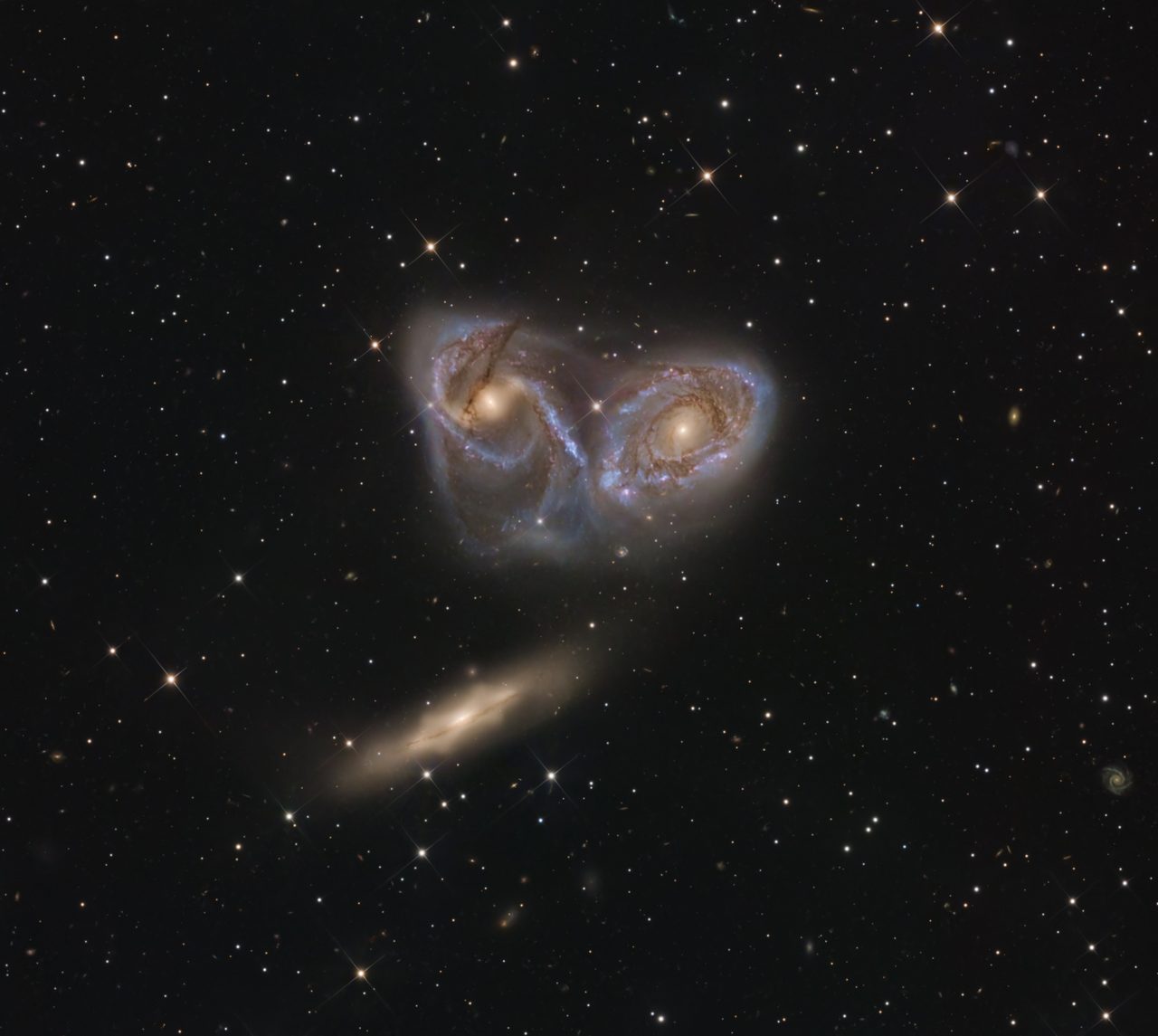
Discover the gravitational ballet of three galaxies in Pavo, 190 million light-years away, revealing cosmic interactions and future mergers.
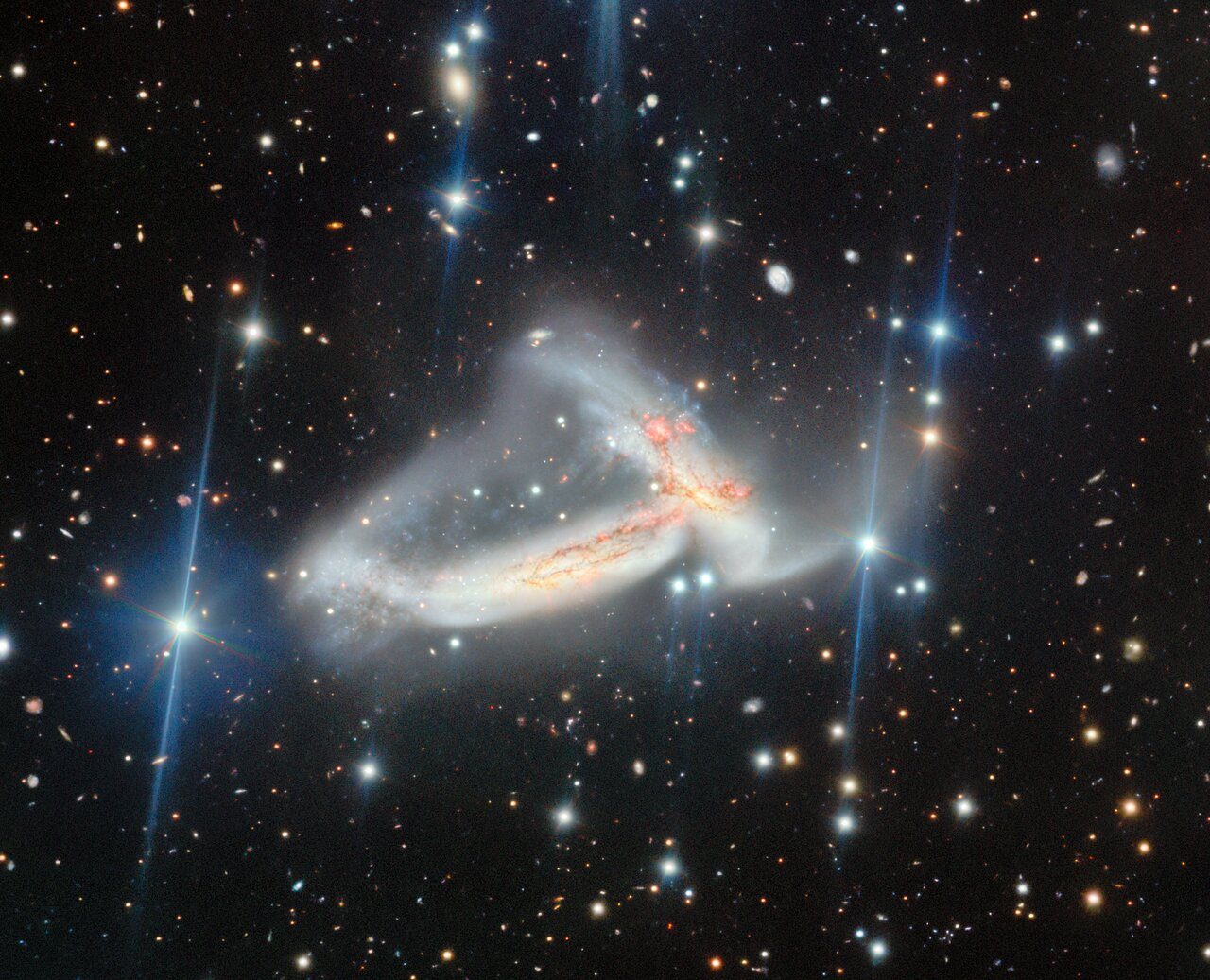
In the depths of the southern constellation Pavo, three galaxies engage in a gravitational ballet. This celestial trio, located approximately 190 million light-years away, consists of the spiral galaxies NGC 6769, NGC 6770, and NGC 6771. These galaxies are drawn together by gravity, resulting in a mesmerising cosmic dance that distorts their shapes. The face-on spirals NGC 6769 and NGC 6770 exhibit luminous disks marred by interstellar dust lanes, while young blue star clusters illuminate their spiral arms. Below, NGC 6771 offers an edge-on view, its central bulge shaped by tidal star streams. As these galaxies continue their interactions, a future merger is inevitable, creating a new cosmic entity.
The Science of Galactic Interactions
Galactic interactions like those seen in Pavo are key to understanding the evolution of galaxies. When galaxies collide, their massive molecular clouds compress, triggering star formation. This process is evident in the blue star clusters of NGC 6769 and NGC 6770. Such interactions also lead to the redistribution of stars and gas, influencing the structure and dynamics of the galaxies involved. These events are not uncommon in the universe; they offer a glimpse into the future of our own Milky Way, which is on a collision course with the Andromeda galaxy. Observing these interactions helps astronomers unravel the complex history of galactic evolution.
Observing the Cosmic Dance
For those interested in observing these distant galaxies, a telescope with good resolution is essential to discern the intricate details of their interactions. While these galaxies are far beyond the reach of amateur telescopes, their study is a testament to the power of modern astronomy. For enthusiasts keen on tracking celestial movements closer to home, the Orbital Radar pass predictor offers insights into visible satellite passes. This tool allows users to observe man-made objects in orbit, providing a different perspective on the dynamic nature of our universe.
Frequently Asked Questions
What are the names of the three galaxies in Pavo?
How far away are the galaxies in Pavo?
📎 Cite this article
Orbital Radar Newsroom. (2026). Galactic Waltz: The Dance of Three Galaxies in Pavo. Orbital Radar. https://orbitalradar.com/blog/cosmic-gallery-2026-04-30"Galactic Waltz: The Dance of Three Galaxies in Pavo." Orbital Radar, 30 April 2026, https://orbitalradar.com/blog/cosmic-gallery-2026-04-30.@misc{orbitalradar_cosmic_gallery_2026_04_30,
title = {Galactic Waltz: The Dance of Three Galaxies in Pavo},
author = {{Orbital Radar}},
year = {2026},
howpublished = {\url{https://orbitalradar.com/blog/cosmic-gallery-2026-04-30}}
}