Exploring the Symphony of Black Holes in Space
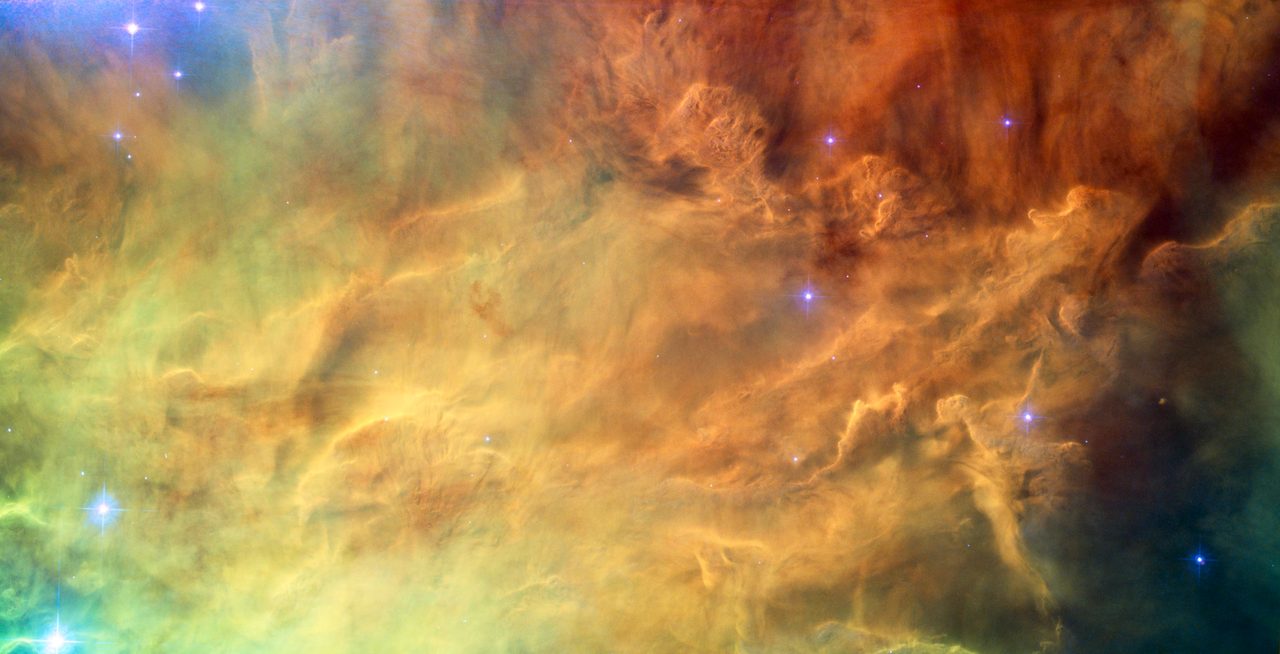
Black holes can emit ripples in space-time at audible frequencies, offering a unique cosmic symphony.
| Active satellites | 18,110 |
| Catalogued objects | 29,469 |
| Starlink active | 9,826 |

Black holes, the enigmatic celestial objects that captivate astronomers, have a unique ability to emit ripples in space-time. These ripples, known as gravitational waves, can occur at frequencies that humans could theoretically hear if converted into sound. This phenomenon provides a remarkable insight into the dynamic processes occurring in the universe, where the immense gravitational forces of black holes can create detectable disturbances in the fabric of space-time.
The Science of Gravitational Waves
Gravitational waves were first predicted by Albert Einstein in 1916 as part of his general theory of relativity. These waves are generated by massive cosmic events, such as the collision of black holes or neutron stars. The detection of gravitational waves has opened a new window into the universe, allowing scientists to observe events that are invisible through traditional electromagnetic observations. Recent advancements in technology, such as the LIGO and Virgo observatories, have made it possible to detect these waves, confirming Einstein's century-old prediction.
Observing the Cosmic Symphony
For those interested in observing these cosmic phenomena, Orbital Radar's Space Situational Awareness hub provides tools to track and understand the dynamics of space objects. While gravitational waves themselves are not visible, the effects of such massive cosmic events can be studied through various space missions and observatories. These observations continue to enhance our understanding of the universe's most powerful and mysterious forces.
Frequently Asked Questions
What are gravitational waves?
How are gravitational waves detected?
📎 Cite this article · data available
Orbital Radar Newsroom. (2026). Exploring the Symphony of Black Holes in Space. Orbital Radar. https://orbitalradar.com/blog/cosmic-gallery-2026-09-11"Exploring the Symphony of Black Holes in Space." Orbital Radar, 11 September 2026, https://orbitalradar.com/blog/cosmic-gallery-2026-09-11.@misc{orbitalradar_cosmic_gallery_2026_09_11,
title = {Exploring the Symphony of Black Holes in Space},
author = {{Orbital Radar}},
year = {2026},
howpublished = {\url{https://orbitalradar.com/blog/cosmic-gallery-2026-09-11}}
}