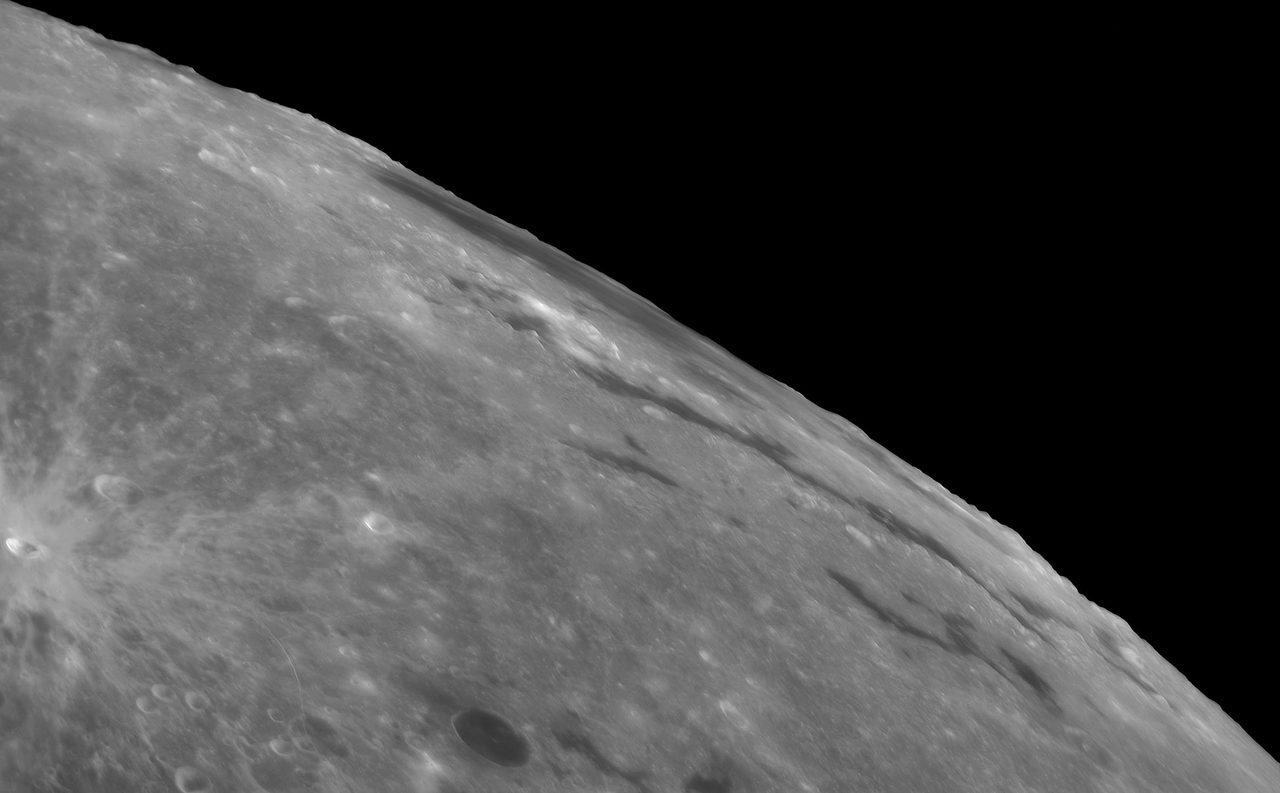
Apollo 11: Illuminating the Lunar Surface
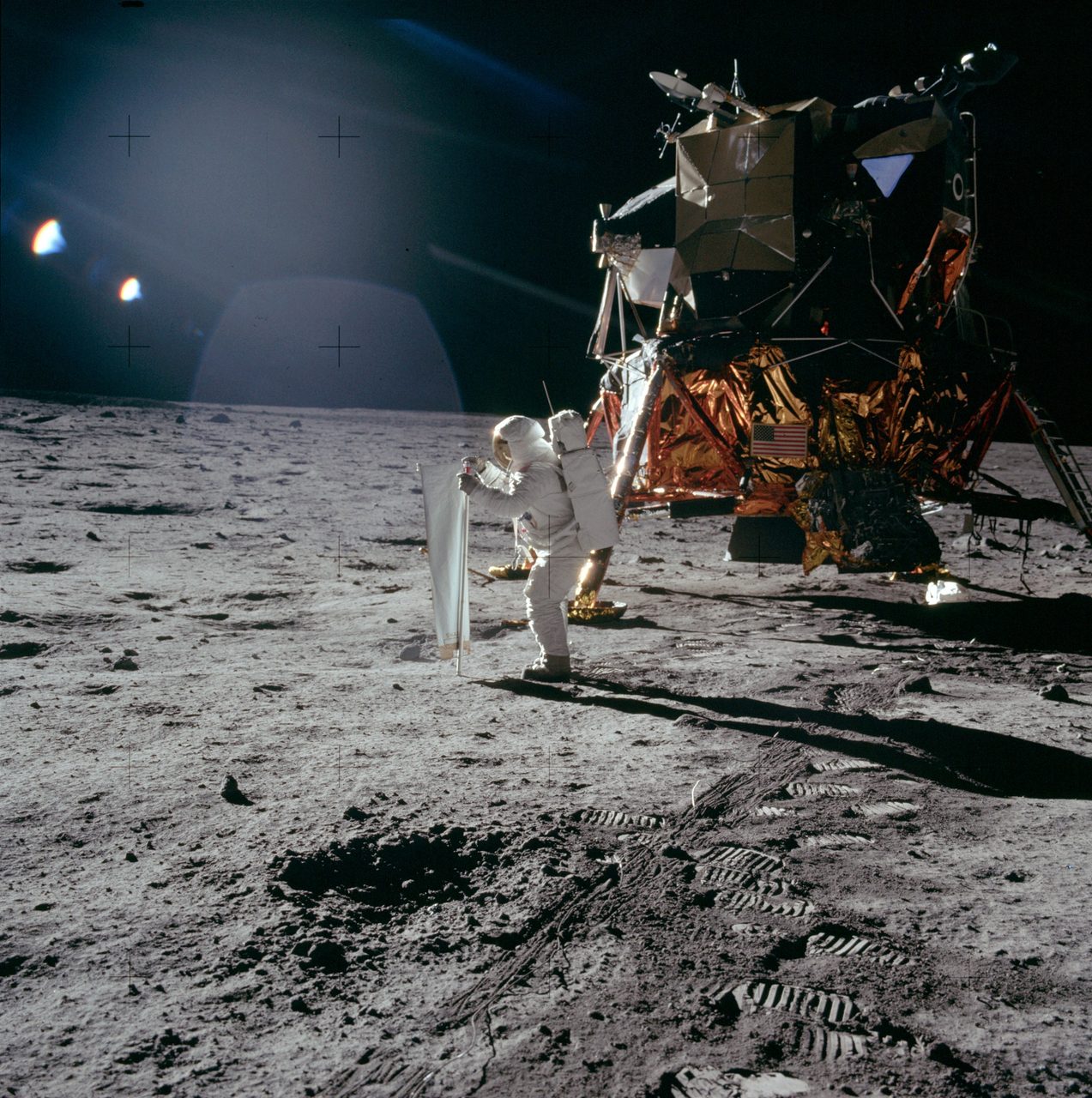
Discover the significance of the Apollo 11 mission's Solar Wind Composition Experiment, captured in a historic image by Neil Armstrong.
| Active satellites | 18,107 |
| Catalogued objects | 29,414 |
| Starlink active | 9,838 |
In this iconic image from the Apollo 11 mission, astronaut Neil Armstrong captures a moment of scientific endeavour on the Moon's surface. The photograph, taken on 20 July 1969, shows Buzz Aldrin beside the lunar module, the Eagle, as he unfurls the Solar Wind Composition Experiment. This experiment was designed to collect particles from the solar wind, providing invaluable data about the Sun's composition. The foil, exposed to the Sun's emissions, was one of the many scientific instruments used during the mission to gather data for analysis back on Earth.
Connecting Apollo's Legacy to Modern Space Science
The Apollo 11 mission set the stage for future lunar exploration, demonstrating the feasibility of human activity on the Moon. The data collected from the Solar Wind Composition Experiment contributed to our understanding of solar particles, which is crucial for current space weather studies and protecting satellites from solar radiation. Today, there are 18,107 active satellites in orbit, according to Orbital Radar's live catalogue. The legacy of Apollo 11 continues to influence missions that study solar phenomena and their impact on space infrastructure.
Observing the Moon and Beyond
While the Apollo missions are a thing of the past, the Moon remains a focal point for scientific research and exploration. For those interested in observing the Moon, tools like the Moon Globe provide real-time data on lunar phases and current orbiters. As we look to the future, the lessons learned from Apollo 11's experiments continue to guide our exploration of space, including the potential for future manned missions to the Moon and beyond.
Frequently Asked Questions
What was the purpose of the Solar Wind Composition Experiment?
How did Apollo 11 contribute to space science?
📎 Cite this article · data available
Orbital Radar Newsroom. (2026). Apollo 11: Illuminating the Lunar Surface. Orbital Radar. https://orbitalradar.com/blog/cosmic-gallery-2026-09-13"Apollo 11: Illuminating the Lunar Surface." Orbital Radar, 13 September 2026, https://orbitalradar.com/blog/cosmic-gallery-2026-09-13.@misc{orbitalradar_cosmic_gallery_2026_09_13,
title = {Apollo 11: Illuminating the Lunar Surface},
author = {{Orbital Radar}},
year = {2026},
howpublished = {\url{https://orbitalradar.com/blog/cosmic-gallery-2026-09-13}}
}