When the Moon and Venus Dance in Daylight
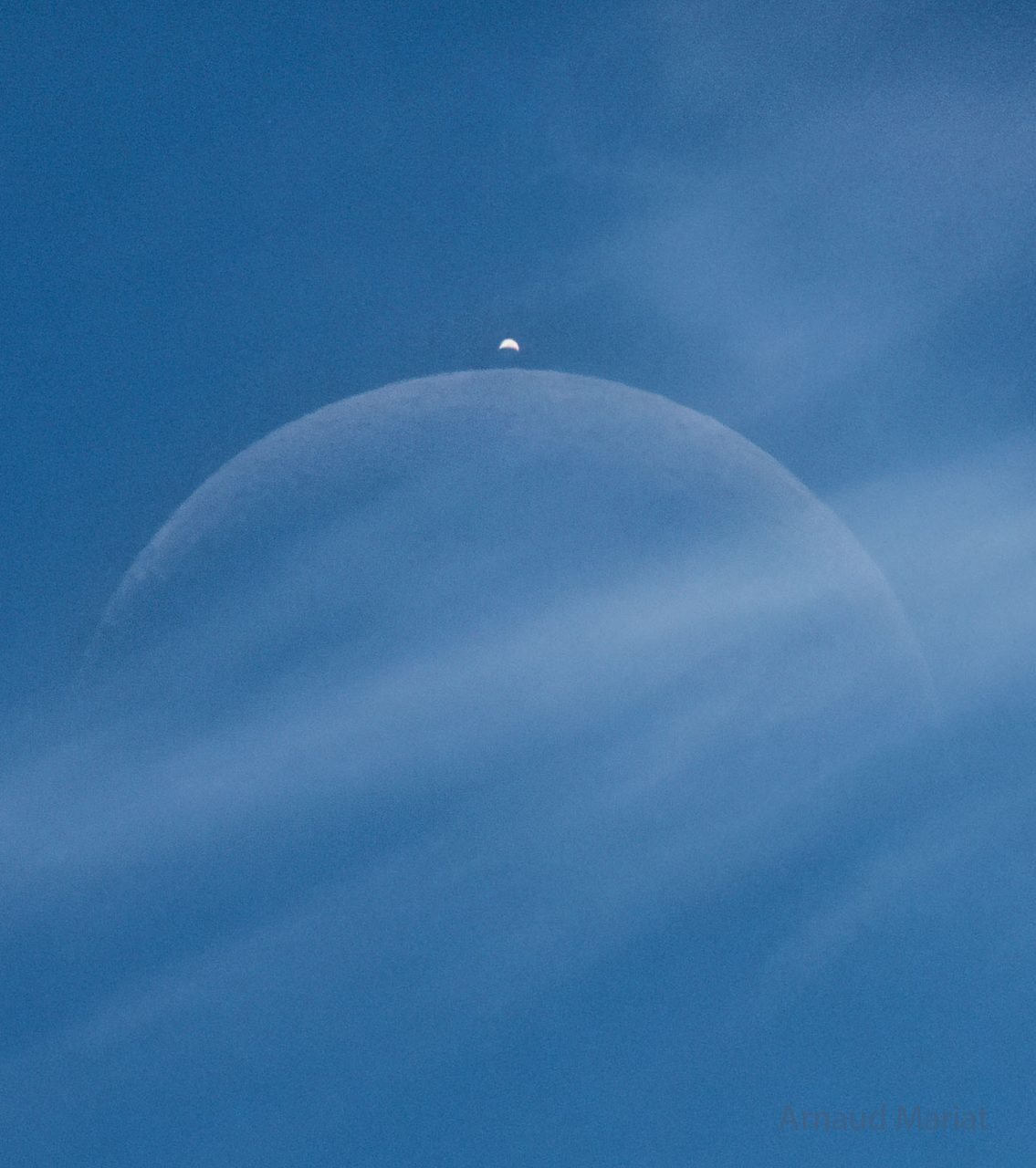
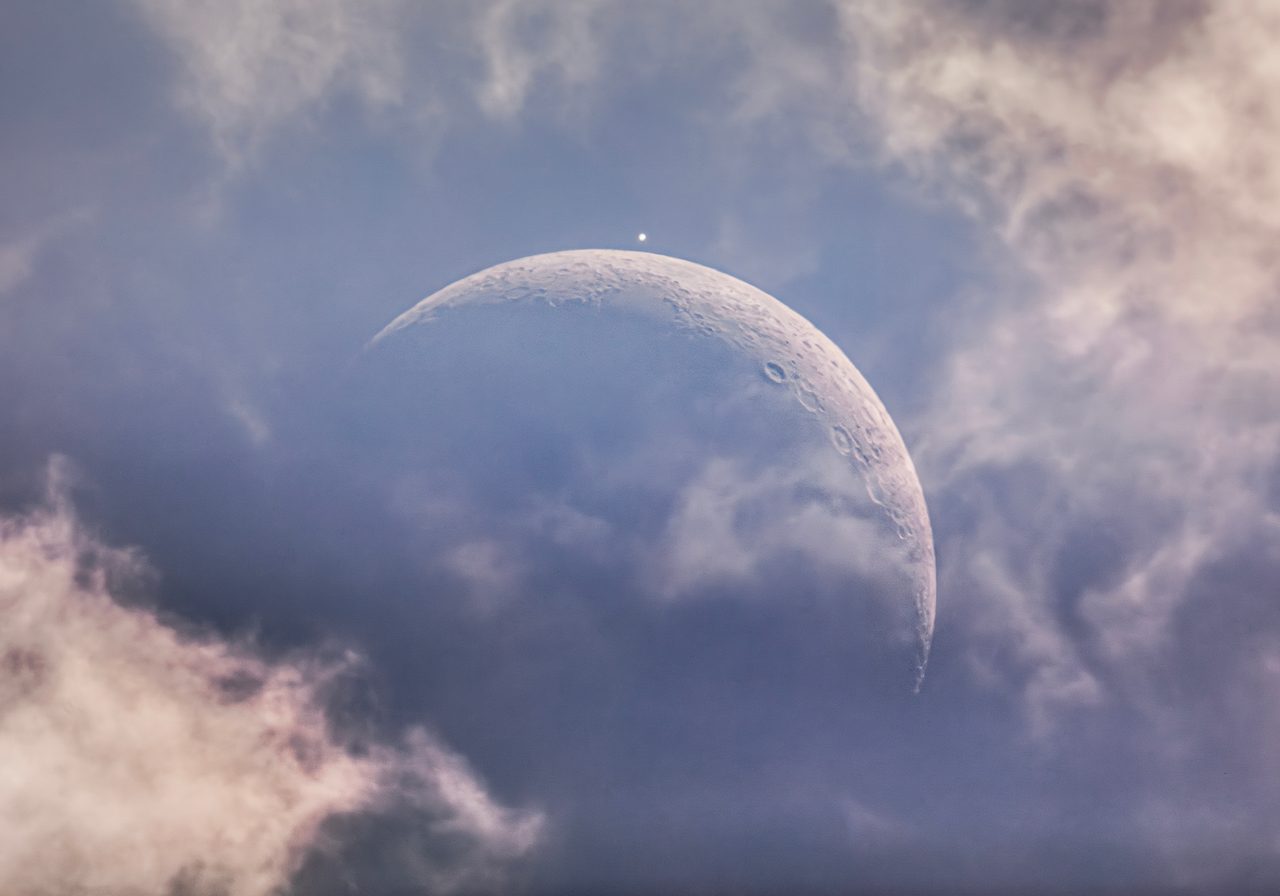
A rare celestial event unfolded over Cessy, France, as the Moon occulted Venus in daylight, revealing the dynamics of planetary phases.
| Active satellites | 18,110 |
| Catalogued objects | 29,390 |
| Starlink active | 9,839 |
In a rare celestial alignment, the Moon passed in front of Venus during daylight hours, an event known as an occultation. This phenomenon was visible from Cessy, France, where both celestial bodies appeared as crescents in the sky. The Moon, with only 10 percent of its surface illuminated, contrasted with Venus, which shone brightly with 25 percent of its phase visible. Such events are rare, as they are visible to only a small fraction of the Earth's surface, and even then, often occur during daylight when celestial observations are more challenging.
The Science Behind the Spectacle
Occultations offer a unique opportunity to observe the relative motions of celestial bodies. The Moon orbits Earth at an average distance of 384,400 km, while Venus, the second planet from the Sun, orbits at about 108 million km from the Sun. Their apparent proximity in the sky during an occultation is a reminder of the intricate dance of planetary orbits. Such events can also aid in refining our understanding of orbital mechanics and celestial navigation, topics explored in our Space Academy.
Observing Celestial Alignments
For those interested in observing similar events, tools like the Pass Predictor can provide visibility forecasts for upcoming celestial events, including occultations and transits. While this particular event was visible to a limited audience, the tools available can help enthusiasts worldwide prepare for future occurrences.
Frequently Asked Questions
What is an occultation?
How often do Venus occultations occur?
📎 Cite this article · data available
Orbital Radar Newsroom. (2026). When the Moon and Venus Dance in Daylight. Orbital Radar. https://orbitalradar.com/blog/cosmic-gallery-2026-09-16"When the Moon and Venus Dance in Daylight." Orbital Radar, 16 September 2026, https://orbitalradar.com/blog/cosmic-gallery-2026-09-16.@misc{orbitalradar_cosmic_gallery_2026_09_16,
title = {When the Moon and Venus Dance in Daylight},
author = {{Orbital Radar}},
year = {2026},
howpublished = {\url{https://orbitalradar.com/blog/cosmic-gallery-2026-09-16}}
}