Glimpsing the Future: The Dumbbell Nebula's Stellar Legacy
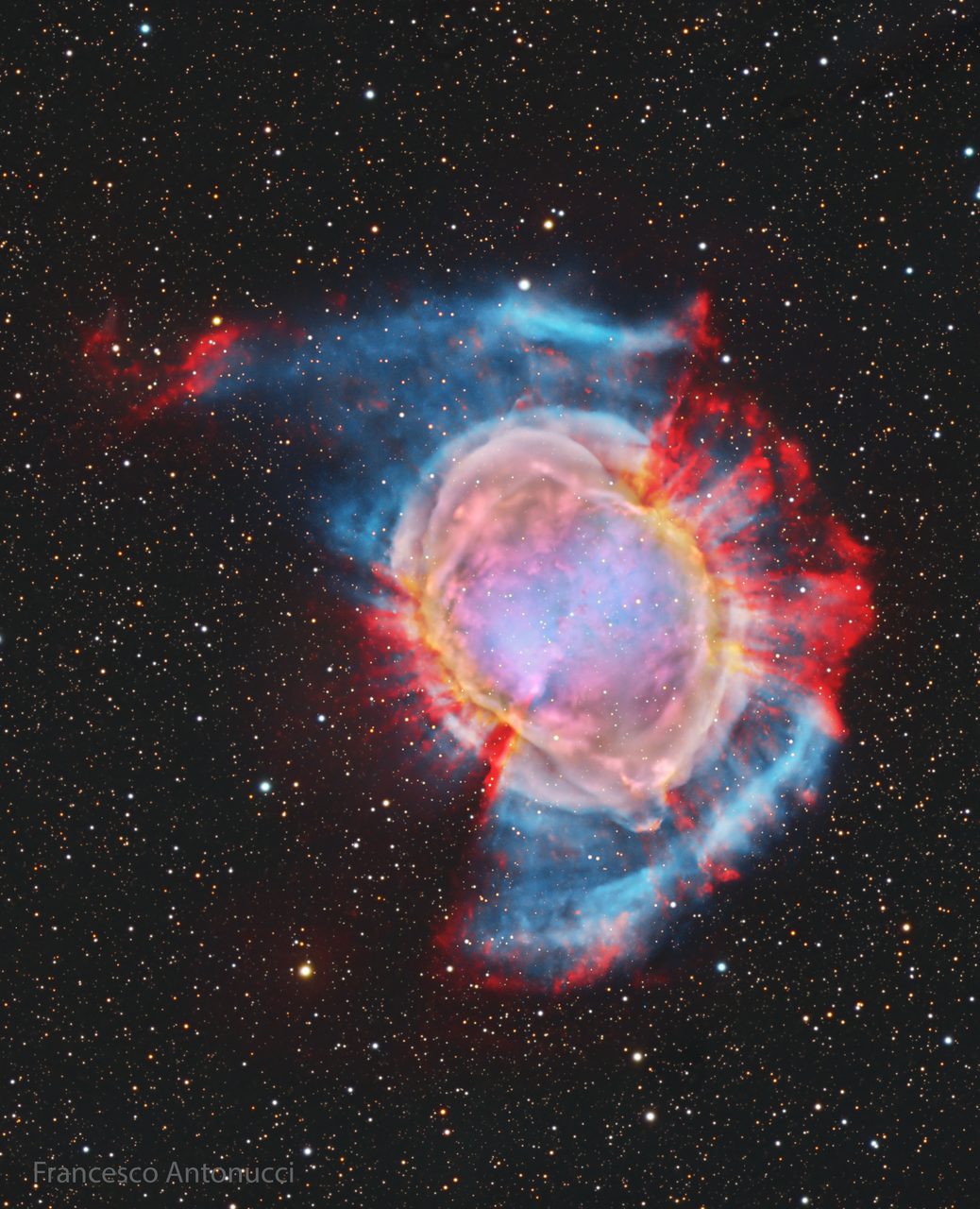
The Dumbbell Nebula, or M27, offers a glimpse into our Sun's distant future. This planetary nebula, visible with binoculars, reveals the fate awaiting stars like our Sun.
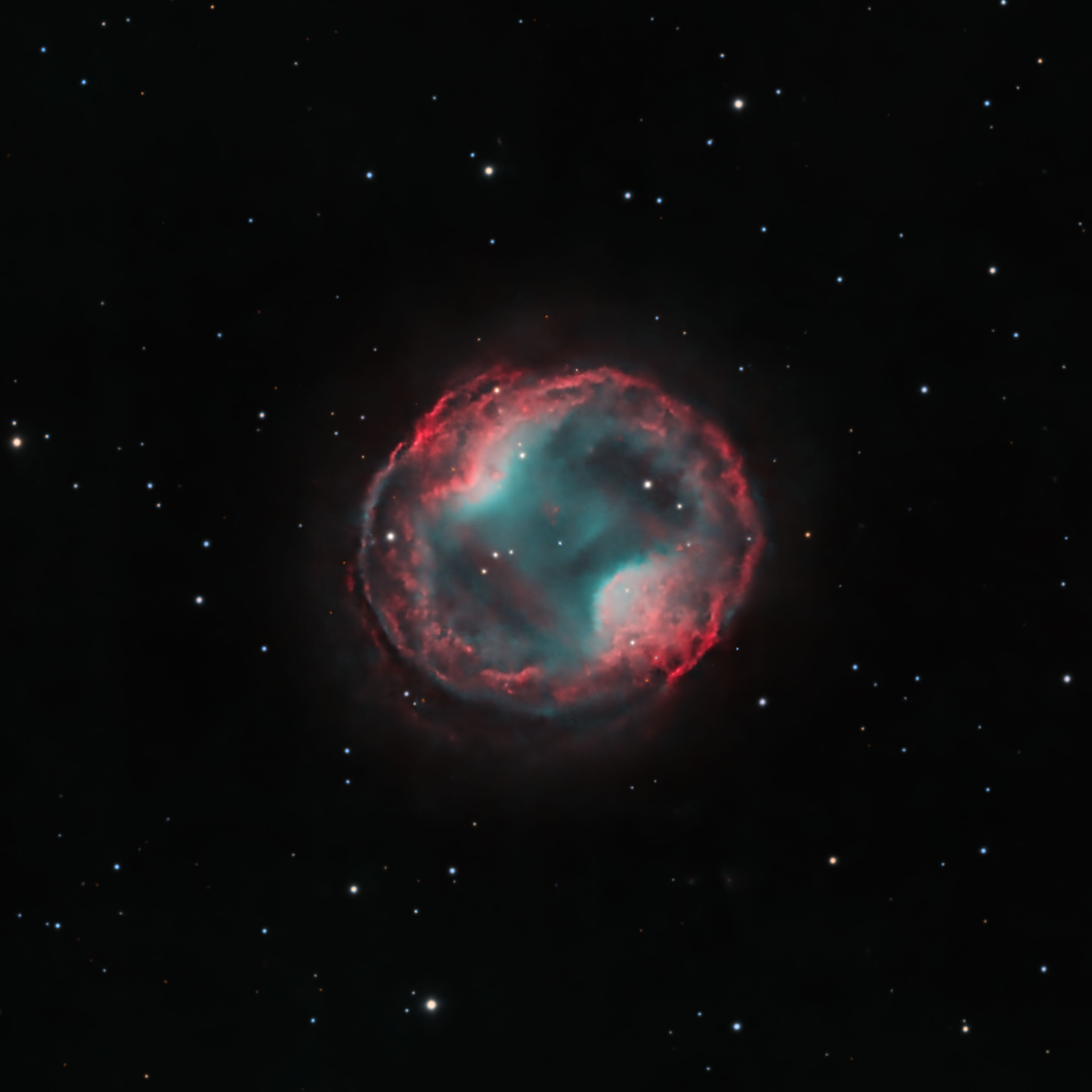
The Dumbbell Nebula, catalogued as M27, presents a fascinating glimpse into the distant future of our own Sun. Discovered by Charles Messier in 1764, this planetary nebula is among the brightest visible from Earth, located in the constellation Vulpecula. Its distinct shape and vibrant colours, enhanced in images by red for hydrogen and blue for oxygen, make it a striking celestial object. At approximately 1,000 light-years away, M27 is a reminder of the eventual fate of stars like our Sun, which will shed their outer layers to form similar nebulas, leaving behind a white dwarf core.
The Science of Stellar Evolution
Understanding the Dumbbell Nebula provides crucial insights into stellar evolution. As stars like the Sun exhaust their nuclear fuel, they expand into red giants before expelling their outer layers. This process forms a planetary nebula, a misnomer from early astronomers who thought they resembled planets. The remaining core becomes a white dwarf, emitting X-rays as it cools over billions of years. Despite centuries of study, the precise mechanics of how these nebulas achieve their intricate shapes remain a subject of ongoing research. Current missions, such as the James Webb Space Telescope, aim to unravel these mysteries further.
Observing the Dumbbell Nebula
For those interested in observing M27, it is visible with binoculars or a small telescope under dark skies. Located in the constellation Vulpecula, it is best viewed during the summer months in the Northern Hemisphere. To track the visibility of celestial events and satellite passes, the Orbital Radar pass predictor offers detailed guidance. This tool can enhance your stargazing experience by providing precise timing and location data for various astronomical phenomena.
Frequently Asked Questions
What is the Dumbbell Nebula?
How can I observe the Dumbbell Nebula?
📎 Cite this article
Orbital Radar Newsroom. (2026). Glimpsing the Future: The Dumbbell Nebula's Stellar Legacy. Orbital Radar. https://orbitalradar.com/blog/cosmic-gallery-2026-06-22"Glimpsing the Future: The Dumbbell Nebula's Stellar Legacy." Orbital Radar, 22 June 2026, https://orbitalradar.com/blog/cosmic-gallery-2026-06-22.@misc{orbitalradar_cosmic_gallery_2026_06_22,
title = {Glimpsing the Future: The Dumbbell Nebula's Stellar Legacy},
author = {{Orbital Radar}},
year = {2026},
howpublished = {\url{https://orbitalradar.com/blog/cosmic-gallery-2026-06-22}}
}