Meteor's Brief Dance with the Lacerta Nebula
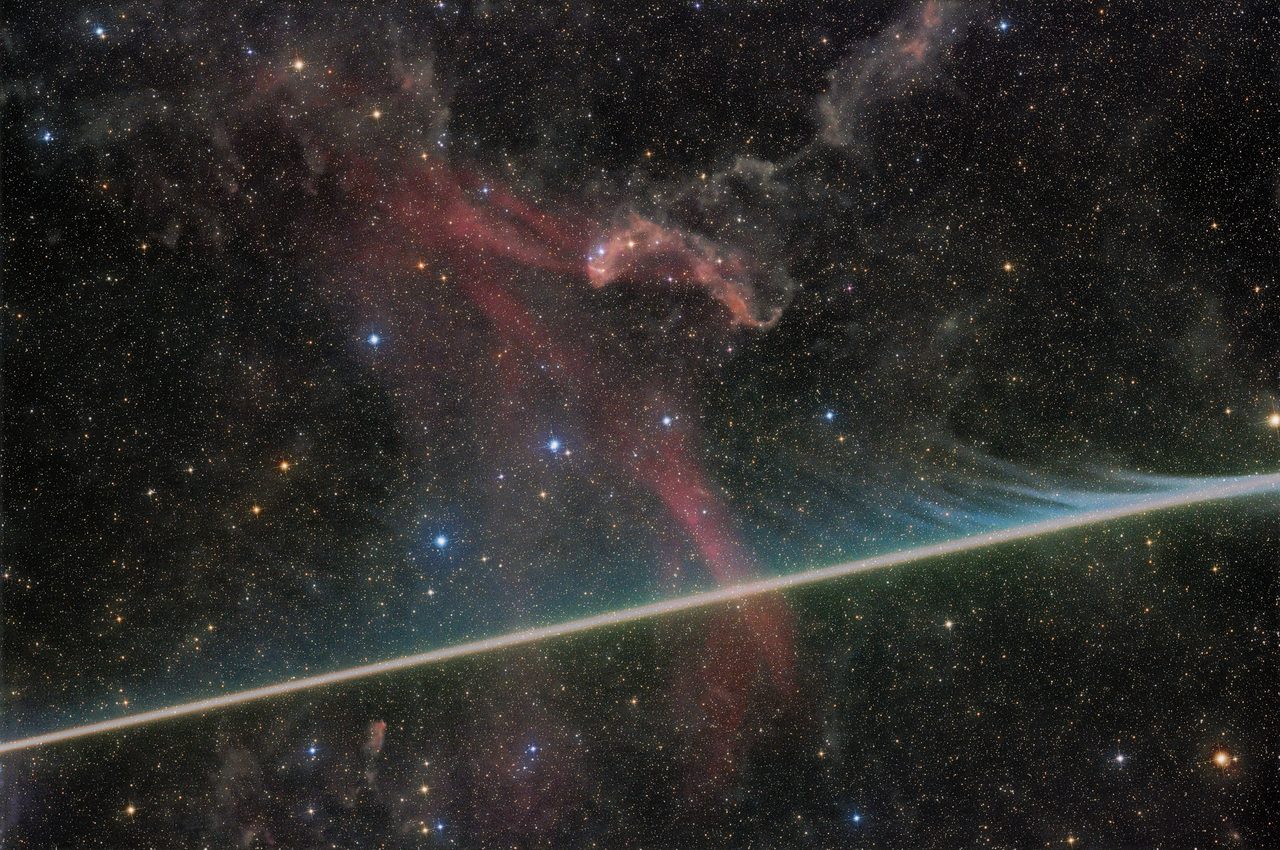
A meteor briefly illuminates the Lacerta Nebula, offering a glimpse into its composition and the atmospheric effects of meteoroids.
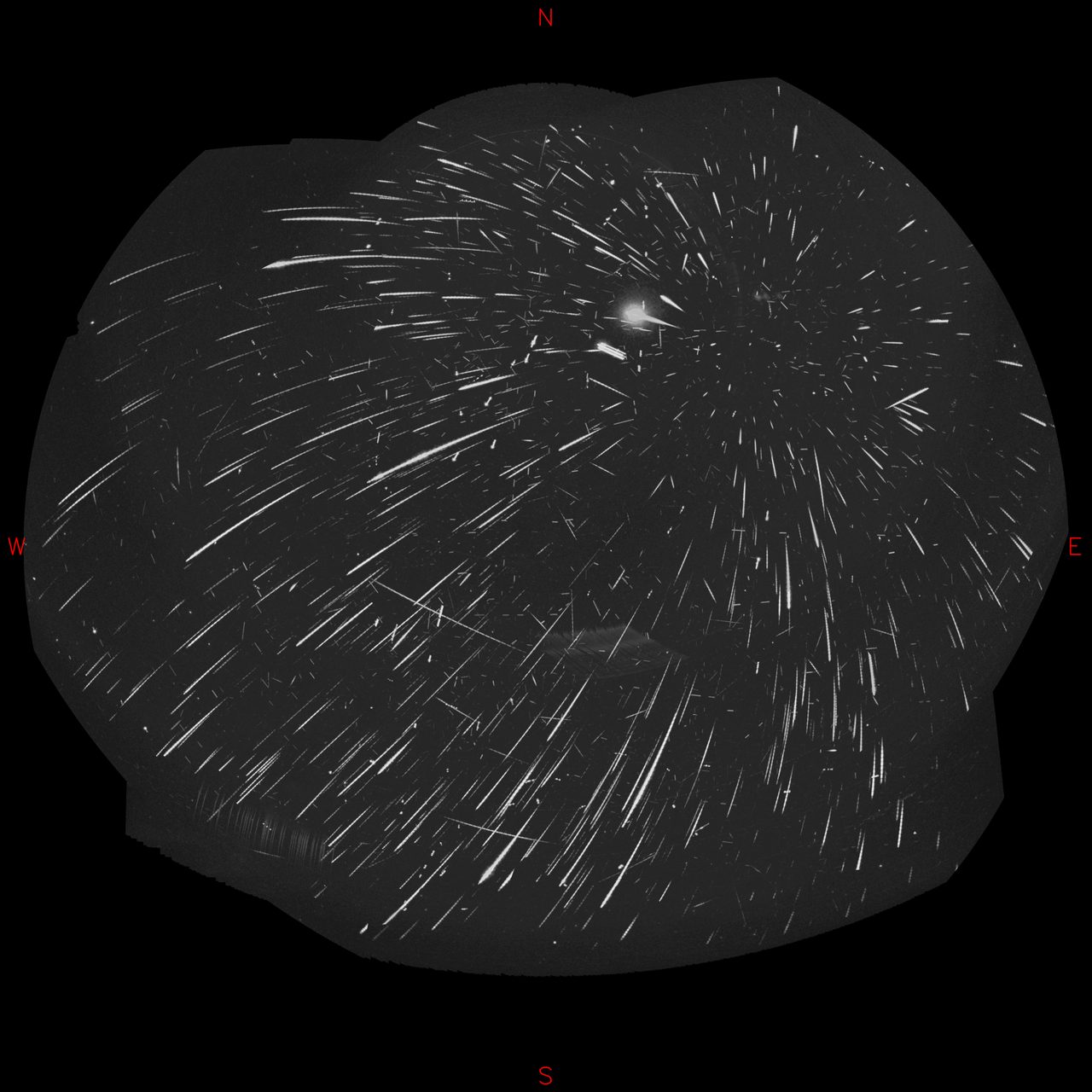
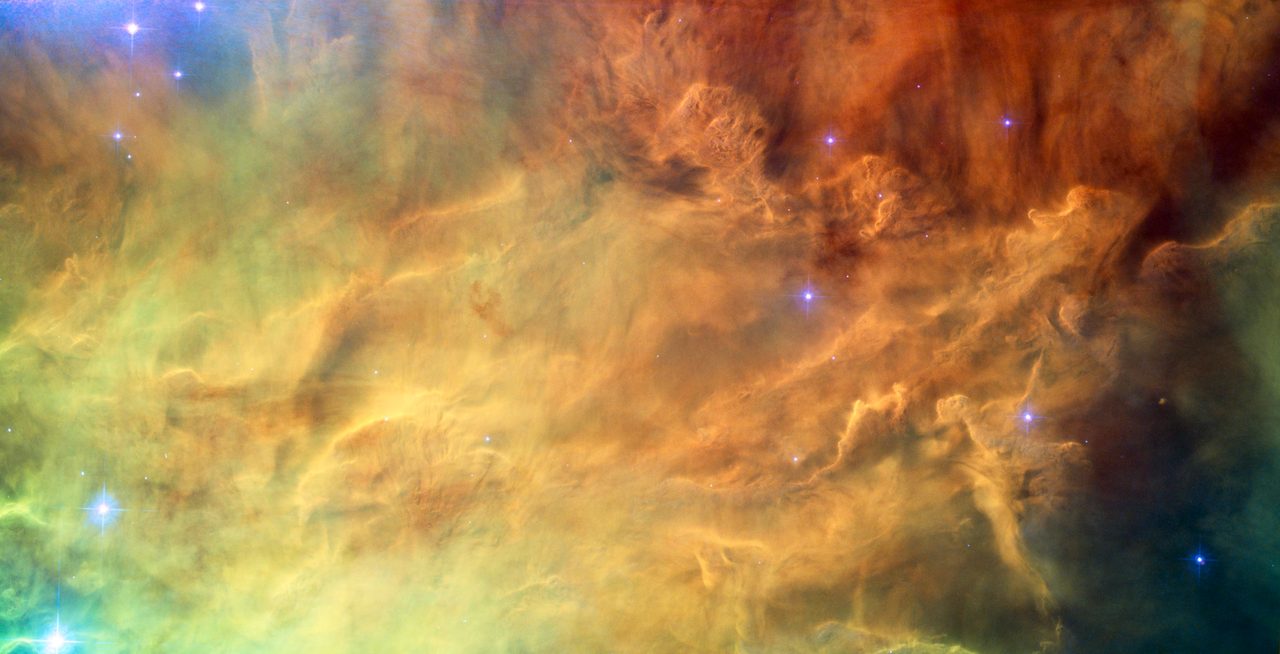
The image captures a fleeting meteor streaking across the Great Lacerta Nebula, a celestial tapestry of gas and dust. This meteor, likely a small pebble-sized meteoroid, burns brightly as it enters Earth's atmosphere, heating and exciting the surrounding air. The resulting glow is not just a visual spectacle but a scientific opportunity, revealing the meteor's composition through the colours of the vaporised material. Captured from Death Valley Observatories in Nevada, this image highlights the dynamic interactions between space debris and our atmosphere.
Meteor Showers and Celestial Mechanics
This month offers a prime viewing opportunity for meteor enthusiasts, with three meteor showers currently active. The Perseids, known for their bright and numerous meteors, will peak in about ten days. This coincides with a new Moon, enhancing visibility by reducing lunar glare. Such events are a reminder of the complex orbital mechanics governing our solar system, where meteoroids, remnants of comets or asteroids, intersect with Earth's orbit. For those interested in tracking these celestial events, the Pass Predictor on Orbital Radar provides valuable insights into upcoming visible passes.
Observing Tips for Meteor Showers
To maximise your meteor-watching experience, find a location with minimal light pollution and a clear view of the night sky. The Perseids are best viewed in the pre-dawn hours when the radiant point in the constellation Perseus is highest. While the Moon's brightness can often obscure fainter meteors, the upcoming new Moon phase will provide optimal conditions. For more detailed predictions and celestial events, consult the Launch Schedule on Orbital Radar.
Frequently Asked Questions
What causes a meteor to glow?
When is the best time to observe the Perseids?
📎 Cite this article
Orbital Radar Newsroom. (2026). Meteor's Brief Dance with the Lacerta Nebula. Orbital Radar. https://orbitalradar.com/blog/cosmic-gallery-2026-08-03"Meteor's Brief Dance with the Lacerta Nebula." Orbital Radar, 4 August 2026, https://orbitalradar.com/blog/cosmic-gallery-2026-08-03.@misc{orbitalradar_cosmic_gallery_2026_08_03,
title = {Meteor's Brief Dance with the Lacerta Nebula},
author = {{Orbital Radar}},
year = {2026},
howpublished = {\url{https://orbitalradar.com/blog/cosmic-gallery-2026-08-03}}
}