Celestial Connection: Barnard's Loop Illuminates Twin Volcanoes
A rare alignment of Barnard's Loop over Parinacota and Pomerape volcanoes offers a stunning celestial spectacle, blending folklore with astrophysics.
The photograph this article describes is by Gonzalo Laserna Vargas and isn’t shown here. View the original photograph
The image of Barnard's Loop stretching over the twin volcanoes of Parinacota and Pomerape offers a mesmerising glimpse into the cosmos. Captured from Bolivia, this celestial alignment is a testament to the wonders of astrophotography and the precision required to capture such fleeting moments. Barnard's Loop, a large arc of glowing hydrogen gas, forms part of the Orion Molecular Cloud Complex and is visible here as a luminous bridge connecting the two volcanic peaks. The Orion Nebula, Betelgeuse, and the Rosette Nebula add to the celestial tapestry, creating a scene that is as scientifically intriguing as it is visually stunning.
Cosmic Alignments and Astrophysical Insights
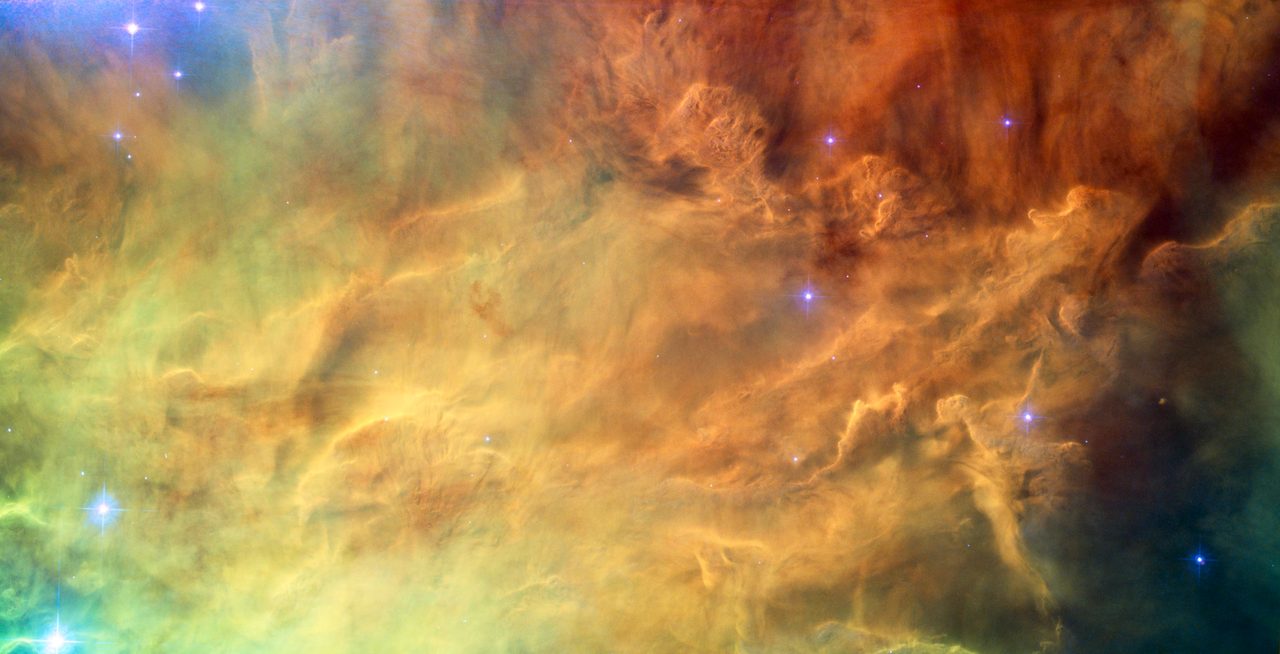
Barnard's Loop, identifiable by its reddish hue, is a remnant of past supernova explosions. Such features are crucial for understanding the lifecycle of stars and the dynamics of interstellar matter. The presence of the Orion Nebula, a stellar nursery, highlights ongoing star formation processes. This image not only captures a moment of celestial beauty but also serves as a reminder of the complex interactions within our galaxy. For those interested in tracking similar celestial phenomena, the Orbital Radar Pass Predictor can assist in identifying optimal viewing times for various astronomical events.
Observing the Night Sky
For enthusiasts keen on observing such cosmic wonders, timing and location are key. The alignment seen in this image required precise planning and clear skies. While Barnard's Loop is not visible to the naked eye, it can be captured using long-exposure photography. Amateur astronomers can utilise tools like the Orbital Radar Debris Map to ensure their viewing is not obstructed by artificial satellites or space debris.
Frequently Asked Questions
What is Barnard's Loop?
How can I observe Barnard's Loop?
📎 Cite this article
Orbital Radar Newsroom. (2026). Celestial Connection: Barnard's Loop Illuminates Twin Volcanoes. Orbital Radar. https://orbitalradar.com/blog/cosmic-gallery-2026-07-28"Celestial Connection: Barnard's Loop Illuminates Twin Volcanoes." Orbital Radar, 29 July 2026, https://orbitalradar.com/blog/cosmic-gallery-2026-07-28.@misc{orbitalradar_cosmic_gallery_2026_07_28,
title = {Celestial Connection: Barnard's Loop Illuminates Twin Volcanoes},
author = {{Orbital Radar}},
year = {2026},
howpublished = {\url{https://orbitalradar.com/blog/cosmic-gallery-2026-07-28}}
}