Saturn's Spooky Spokes: A Dance of Dust and Ice
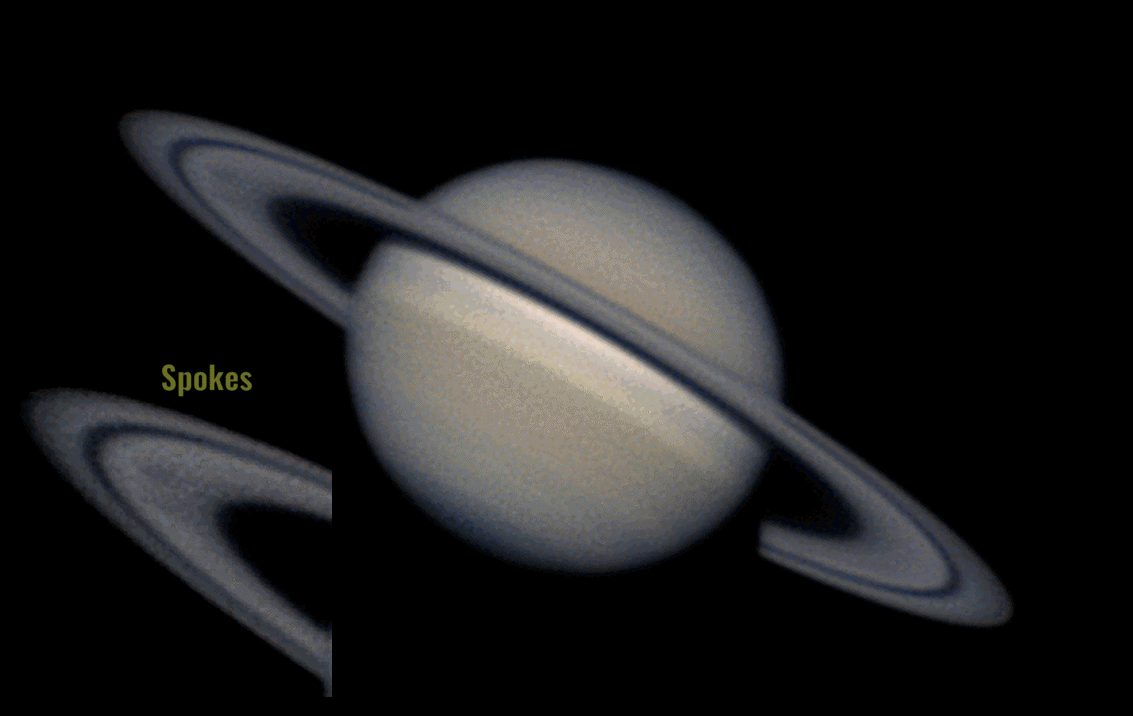
Saturn's B Ring reveals ghostly spokes in a timelapse, showcasing the interplay of electromagnetic forces and seasonal changes.
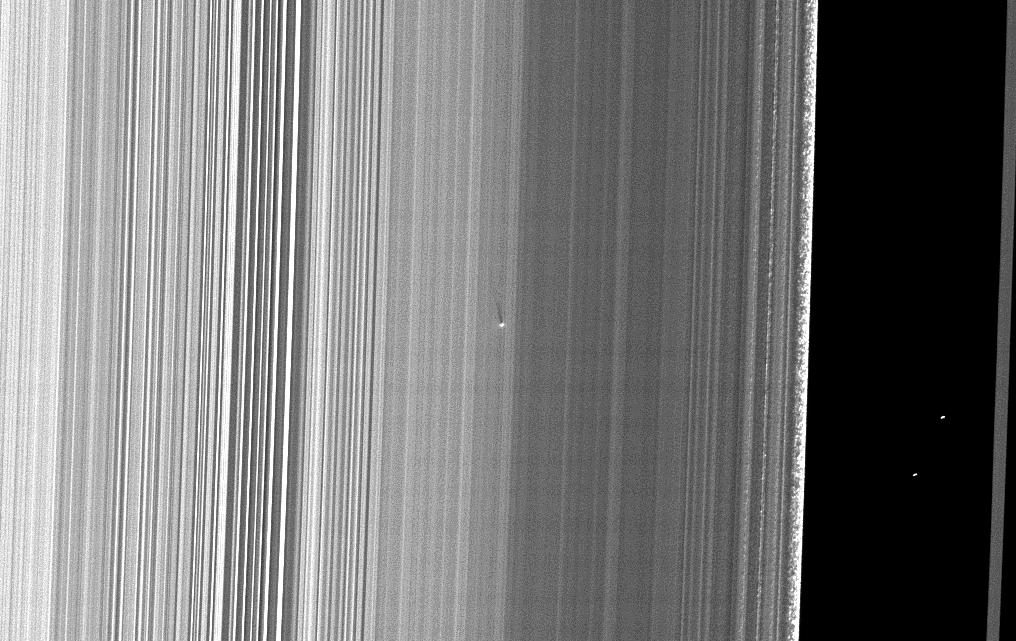
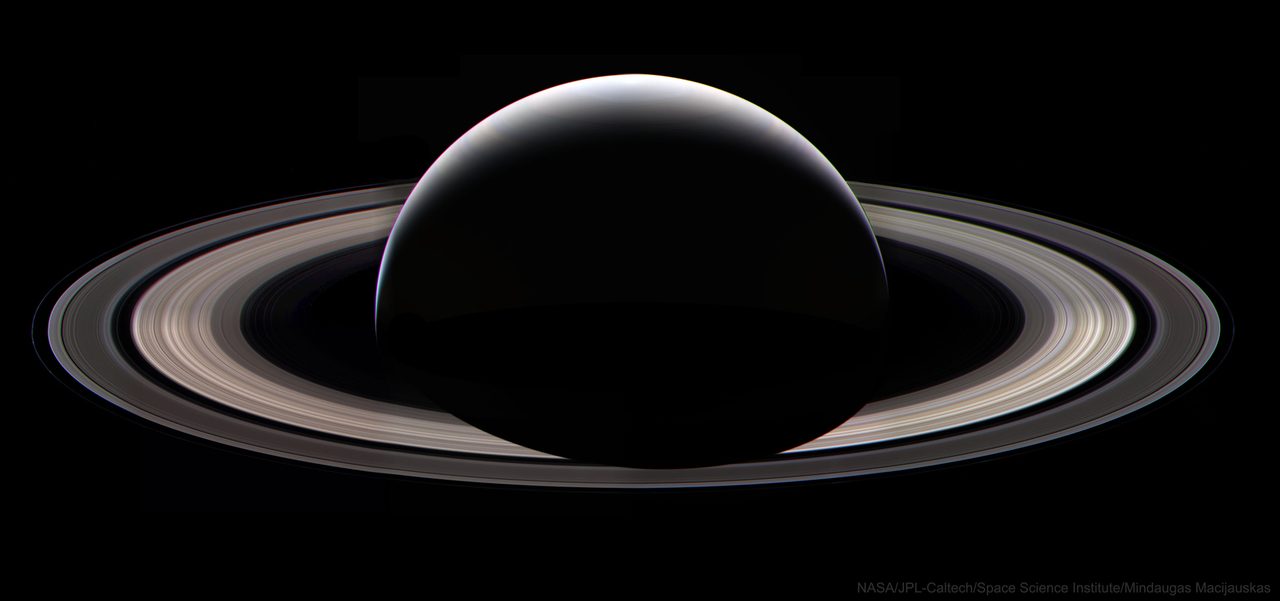
The image of the day captures the enigmatic spokes on Saturn's B Ring, a phenomenon that has intrigued scientists for decades. These ghostly shadows, seen in a timelapse, appear and disappear as the ring rotates. Observations from missions like Voyager 2, Cassini, and the Hubble Space Telescope suggest that these spokes are composed of electrically charged dust and ice particles. The exact mechanism behind their formation remains a subject of study, with theories pointing to the influence of electromagnetic forces and the planet's seasonal changes.
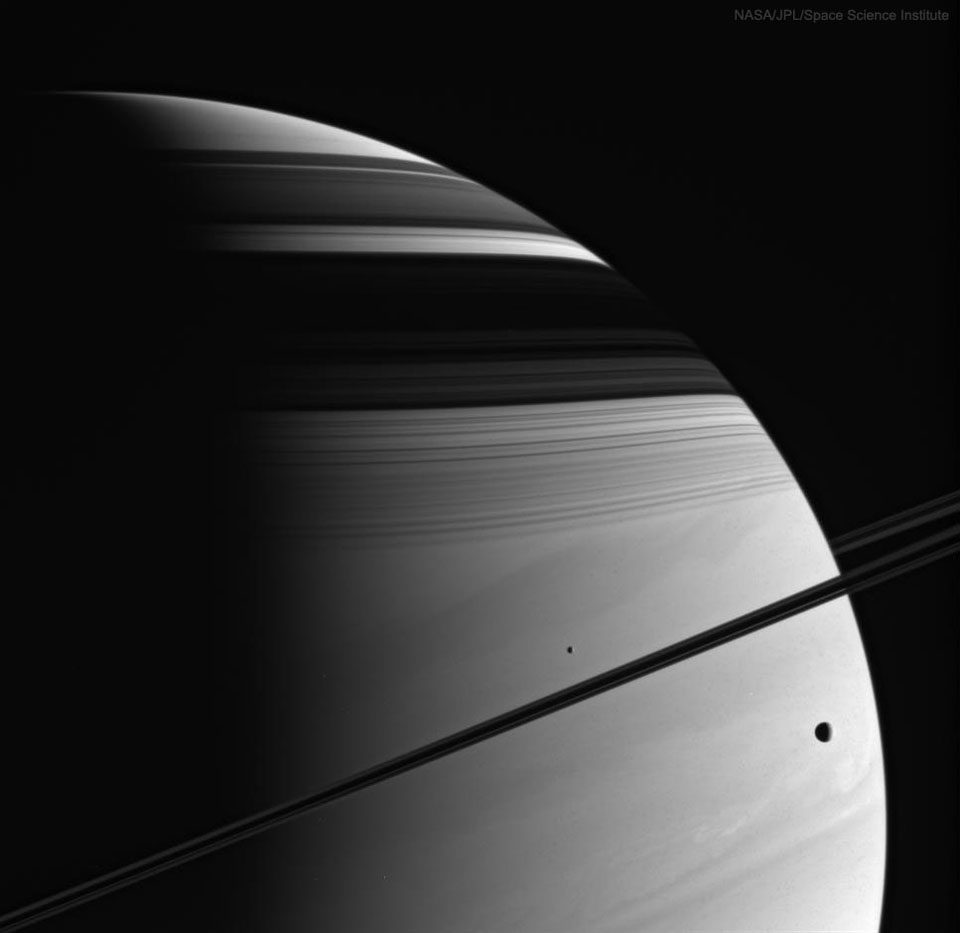
Saturn's axial tilt, similar to Earth's, causes variations in sunlight angles during its orbit around the Sun. During equinoxes, when the rings are less tilted towards the Sun, the spokes become more pronounced. Scientists hypothesise that changes in ultraviolet light, meteoroid impacts, or interactions between the solar wind and Saturn's magnetic field might contribute to the spokes' appearance. The dynamic environment of Saturn's rings offers a unique opportunity to study these interactions in detail.
For those interested in observing the wonders of the night sky, the Perseid meteor shower offers a spectacle this August, free from the interference of the Moon's light. While Saturn's spokes are best observed through spacecraft imagery, enthusiasts can track visible passes of satellites and other celestial events using the Orbital Radar pass predictor.
Frequently Asked Questions
What causes the spokes on Saturn's rings?
Can the spokes on Saturn's rings be seen from Earth?
📎 Cite this article
Orbital Radar Newsroom. (2026). Saturn's Spooky Spokes: A Dance of Dust and Ice. Orbital Radar. https://orbitalradar.com/blog/cosmic-gallery-2026-08-05"Saturn's Spooky Spokes: A Dance of Dust and Ice." Orbital Radar, 6 August 2026, https://orbitalradar.com/blog/cosmic-gallery-2026-08-05.@misc{orbitalradar_cosmic_gallery_2026_08_05,
title = {Saturn's Spooky Spokes: A Dance of Dust and Ice},
author = {{Orbital Radar}},
year = {2026},
howpublished = {\url{https://orbitalradar.com/blog/cosmic-gallery-2026-08-05}}
}