Voyager's Historic Encounter: Triton Revealed
In 1989, Voyager 2 captured stunning images of Triton, Neptune's largest moon, revealing its icy volcanoes and unique surface.
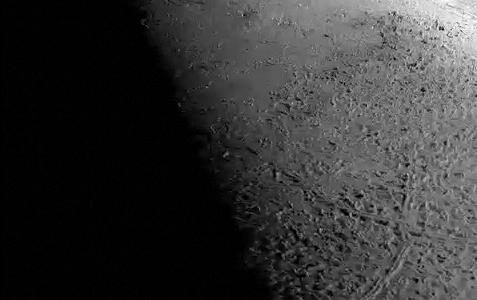
In 1989, NASA's Voyager 2 spacecraft made a historic flyby of Triton, Neptune's largest moon, capturing images that continue to intrigue scientists. Triton, slightly smaller than Earth's Moon, is a world of icy volcanoes and frozen nitrogen. The images, now compiled into a video, show Voyager's approach, revealing Triton's cantaloupe-like terrain and its transition from light to dark as night fell across the surface.
The Legacy of Voyager and Triton's Mysteries
Voyager 2's encounter with Triton marked the only visit to this distant moon, offering a glimpse into its unique geology. Triton's surface, rich in frozen nitrogen, suggests a dynamic history, possibly including cryovolcanism (volcanoes that erupt with ice instead of lava). The flyby also provided comparative data for later missions, such as New Horizons' 2015 flyby of Pluto, a similarly sized body. These missions highlight the importance of robotic exploration in understanding the outer solar system.
Tracking Spacecraft and Celestial Bodies
For those interested in current space missions, the Launch Schedule provides updates on upcoming spacecraft journeys. Meanwhile, the Pass Predictor can help enthusiasts track visible satellites from their location, offering a connection to the ongoing exploration of our solar system.
Frequently Asked Questions
What is unique about Triton's surface?
Has any other spacecraft visited Triton?
📎 Cite this article
Orbital Radar Newsroom. (2026). Voyager's Historic Encounter: Triton Revealed. Orbital Radar. https://orbitalradar.com/blog/cosmic-gallery-2026-06-23"Voyager's Historic Encounter: Triton Revealed." Orbital Radar, 23 June 2026, https://orbitalradar.com/blog/cosmic-gallery-2026-06-23.@misc{orbitalradar_cosmic_gallery_2026_06_23,
title = {Voyager's Historic Encounter: Triton Revealed},
author = {{Orbital Radar}},
year = {2026},
howpublished = {\url{https://orbitalradar.com/blog/cosmic-gallery-2026-06-23}}
}