Unveiling Solar Secrets: The Sharpest Image of Our Sun
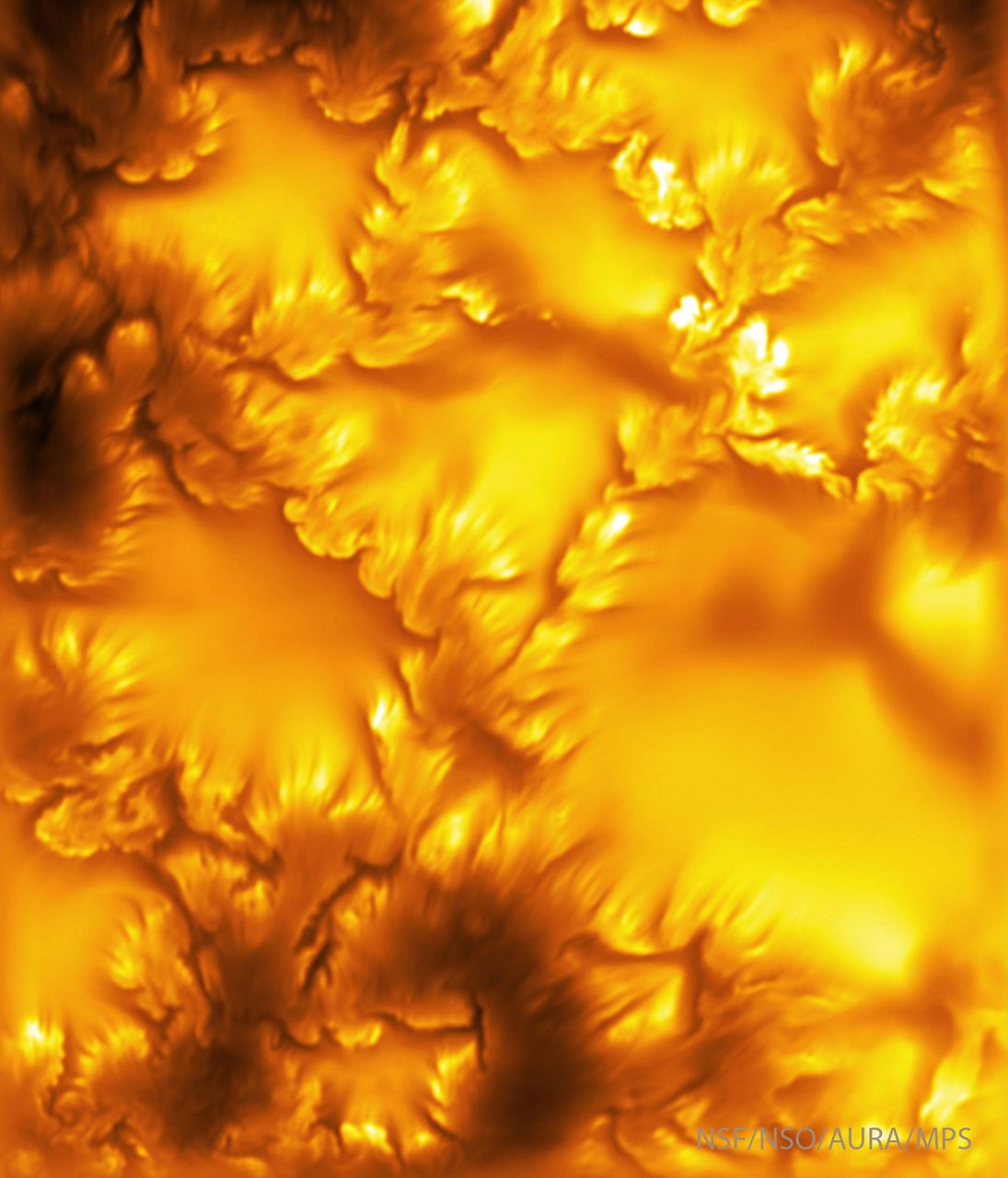
The Inouye Solar Telescope has captured the sharpest image of the Sun, revealing the elusive Kelvin-Helmholtz instability in stunning detail.
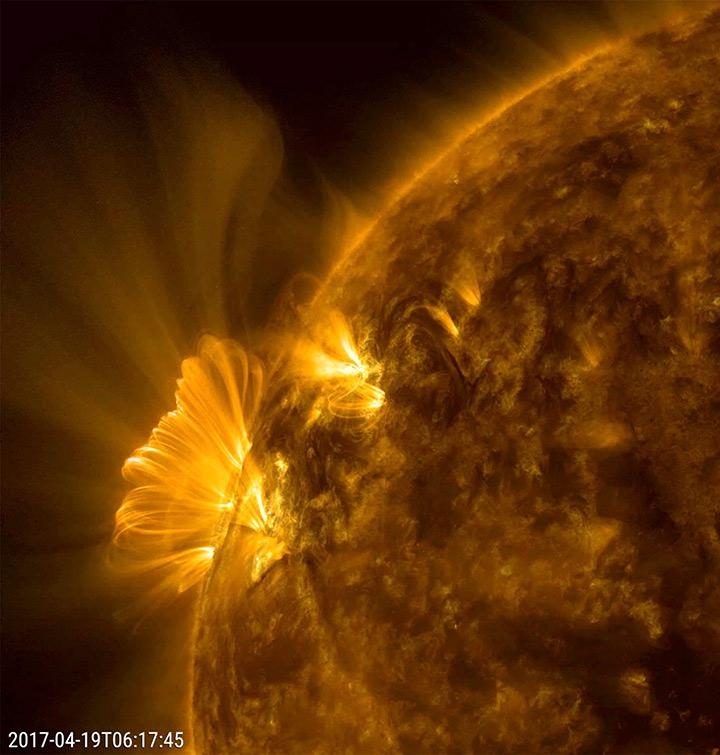
The Inouye Solar Telescope in Hawaii has captured the sharpest image of the Sun to date, revealing a phenomenon known as the Kelvin-Helmholtz instability (KHI). This instability occurs when two streams of solar magnetic plasma flow past each other, creating distinctive waves and swirls. The image, although presented in false-yellow, was originally taken in deep blue and spans an area roughly the size of Earth's radius. It highlights the smooth tops of solar granules and the intricate KHI swirls at their edges, providing unprecedented insight into solar dynamics.
Connecting Solar Dynamics to Space Science
Understanding the Kelvin-Helmholtz instability is crucial for comprehending how energy and magnetic fields move within the Sun. This knowledge could further illuminate the processes that heat the solar corona, the Sun's outer atmosphere, which is paradoxically hotter than its surface. These findings are significant not only for solar physics but also for understanding space weather, which can impact satellite operations and communications on Earth. For those interested in satellite tracking, the Orbital Radar pass predictor provides real-time data on visible satellite passes, which can be affected by solar activity.
Frequently Asked Questions
What is the Kelvin-Helmholtz instability?
How does solar activity affect satellites?
📎 Cite this article
Orbital Radar Newsroom. (2026). Unveiling Solar Secrets: The Sharpest Image of Our Sun. Orbital Radar. https://orbitalradar.com/blog/cosmic-gallery-2026-08-06"Unveiling Solar Secrets: The Sharpest Image of Our Sun." Orbital Radar, 7 August 2026, https://orbitalradar.com/blog/cosmic-gallery-2026-08-06.@misc{orbitalradar_cosmic_gallery_2026_08_06,
title = {Unveiling Solar Secrets: The Sharpest Image of Our Sun},
author = {{Orbital Radar}},
year = {2026},
howpublished = {\url{https://orbitalradar.com/blog/cosmic-gallery-2026-08-06}}
}