Gaia: ESA's Billion-Star Surveyor at L2
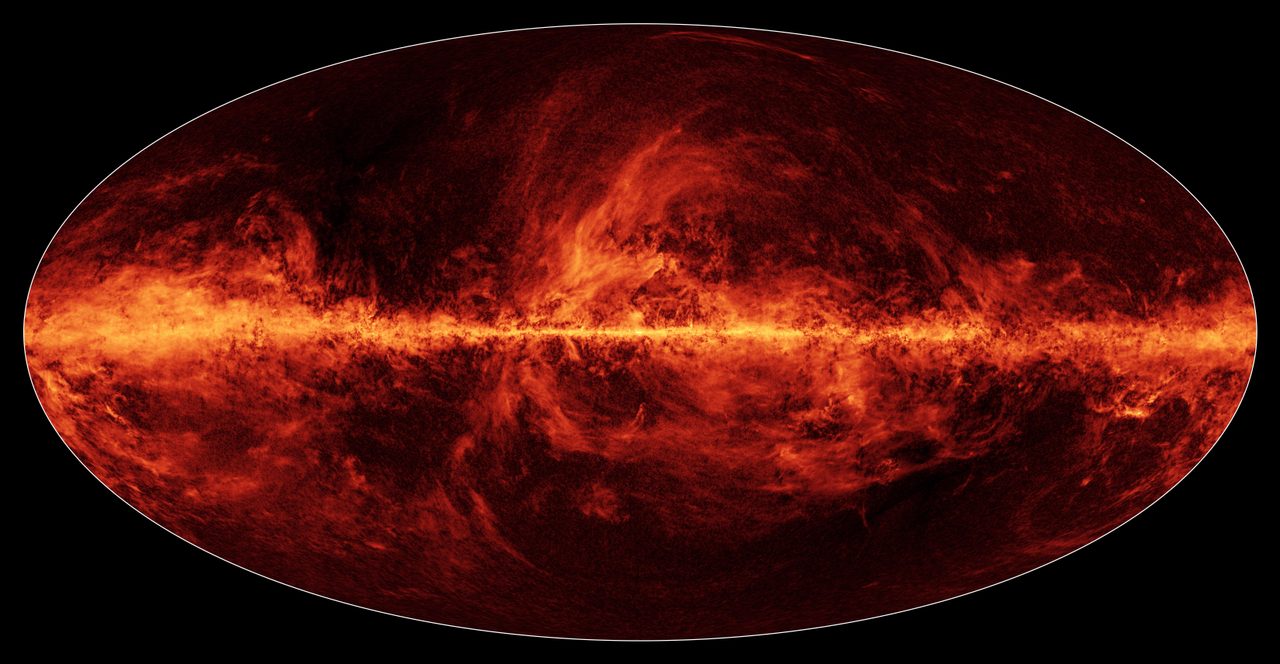
Gaia is a European Space Agency (ESA) satellite dedicated to astrometry, the precise measurement of stellar positions, distances, and motions. Launched on 19 December 2013 aboard a Soyuz-STB/Fregat-MT rocket from French Guiana, Gaia's mission is to create the most accurate and comprehensive 3D map o
What is Gaia?
Gaia is a European Space Agency (ESA) satellite dedicated to astrometry, the precise measurement of stellar positions, distances, and motions. Launched on 19 December 2013 aboard a Soyuz-STB/Fregat-MT rocket from French Guiana, Gaia's mission is to create the most accurate and comprehensive 3D map of our galaxy, the Milky Way. By observing over a billion stars, Gaia aims to provide insights into the galaxy's formation, structure, and evolution.
Mission and Purpose
The primary goal of Gaia is to chart a three-dimensional map of the Milky Way with unprecedented precision. It achieves this by measuring the positions, distances, and motions of stars with an accuracy of up to 20 microarcseconds. This data helps astronomers understand the galaxy's dynamics and history, including the distribution of dark matter. Gaia's observations also aid in the discovery of new exoplanets, asteroids, and comets, contributing to a wide range of astrophysical research.
Orbital Characteristics
Gaia operates in a Lissajous orbit around the second Lagrange point (L2), approximately 1.5 million kilometres from Earth. This location provides a stable environment with minimal interference from Earth's shadow and gravitational pull, allowing for uninterrupted observations. The satellite's orbit has a period of about 180 days. Gaia's NORAD ID is 39482, and its position can be tracked using the Orbital Radar Satellite Library.
Significance and Legacy
Gaia's data releases have revolutionised our understanding of the Milky Way. The mission's first data release in 2016 provided the positions and magnitudes of over a billion stars, while subsequent releases have included detailed information on stellar velocities and distances. This wealth of data has enabled breakthroughs in fields ranging from stellar astrophysics to cosmology. Gaia's legacy will be a transformative impact on how we perceive our galaxy and the universe beyond.
Current Status
As of 2026, Gaia continues to operate successfully, with its mission extended until at least 2025. The satellite remains in good health, and its instruments are functioning well. The next major data release, expected in 2027, will further enhance the precision of the Milky Way's map. Gaia's ongoing observations continue to provide valuable data for the astronomical community, and its status can be monitored through the Orbital Radar Satellite Library.
📎 Cite this article
Orbital Radar Newsroom. (2026). Gaia: ESA's Billion-Star Surveyor at L2. Orbital Radar. https://orbitalradar.com/blog/gaia-billion-star-surveyor"Gaia: ESA's Billion-Star Surveyor at L2." Orbital Radar, 16 June 2026, https://orbitalradar.com/blog/gaia-billion-star-surveyor.@misc{orbitalradar_gaia_billion_star_surveyor,
title = {Gaia: ESA's Billion-Star Surveyor at L2},
author = {{Orbital Radar}},
year = {2026},
howpublished = {\url{https://orbitalradar.com/blog/gaia-billion-star-surveyor}}
}