Hubble Space Telescope: 35+ Years of Discovery
The Hubble Space Telescope (HST) is one of the most significant astronomical instruments ever launched, providing unparalleled views of the universe since its deployment on 24 April 1990. Named after the American astronomer Edwin Hubble, it is a joint project of NASA and the European Space Agency (E
| Active satellites | 15,778 |
| Catalogued objects | 31,569 |
| Starlink active | 10,063 |
What is the Hubble Space Telescope?
The Hubble Space Telescope (HST) is one of the most significant astronomical instruments ever launched, providing unparalleled views of the universe since its deployment on 24 April 1990. Named after the American astronomer Edwin Hubble, it is a joint project of NASA and the European Space Agency (ESA). The telescope's primary mirror is 2.4 metres in diameter, allowing it to capture high-resolution images across a range of wavelengths from ultraviolet to near-infrared. Hubble's mission is to explore the cosmos, from nearby planets to the most distant galaxies, contributing to numerous scientific breakthroughs.
Mission and Purpose
Hubble's mission is to observe astronomical phenomena beyond the capabilities of ground-based telescopes. Its objectives include studying the formation and evolution of stars and galaxies, measuring the expansion rate of the universe, and investigating the properties of dark matter and dark energy. Over its operational life, Hubble has made over 1.5 million observations, leading to the publication of more than 19,000 scientific papers. These observations have helped refine the age of the universe to about 13.8 billion years and provided evidence for the existence of supermassive black holes at the centres of galaxies.
Orbital Characteristics
The Hubble Space Telescope orbits Earth at an altitude of approximately 547 kilometres, with an inclination of 28.5 degrees. It completes an orbit roughly every 95 minutes, allowing it to observe astronomical objects without the distortion caused by Earth's atmosphere. Its NORAD ID is 20580. Hubble's orbit is designed to keep it above most of the Earth's atmosphere, ensuring its instruments can capture clear and detailed images of the universe.
Significance and Legacy
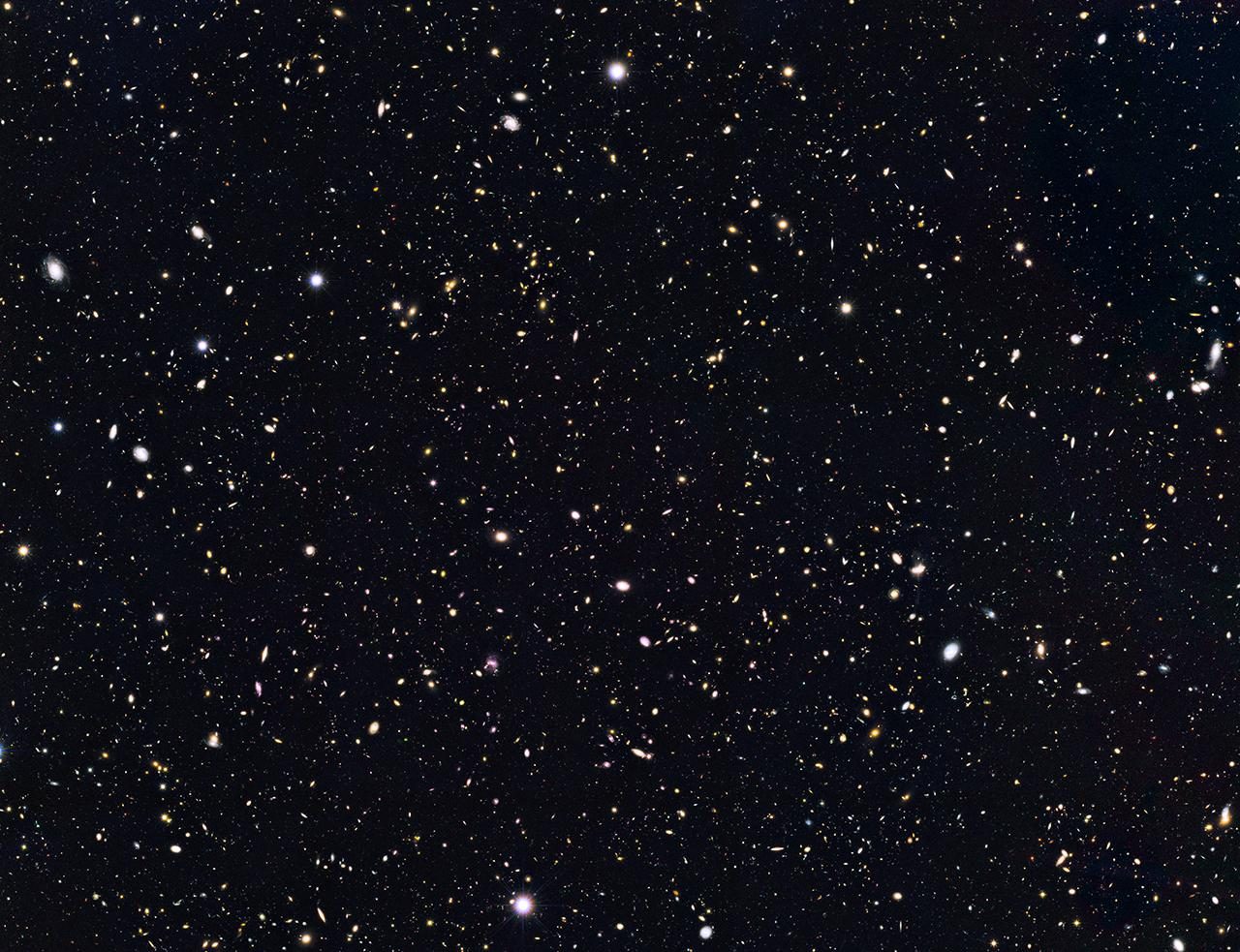
Hubble has transformed our understanding of the universe and remains a vital tool for astronomers worldwide. Its discoveries include the confirmation of the accelerating expansion of the universe, the detailed mapping of dark matter, and the study of exoplanet atmospheres. Hubble's iconic images, such as the 'Pillars of Creation' and the 'Hubble Deep Field', have captivated the public and inspired a generation of scientists. The telescope's legacy continues as it collaborates with newer observatories like the James Webb Space Telescope, ensuring its scientific contributions endure.
Current Status
As of 2023, the Hubble Space Telescope remains operational and continues to provide valuable data to the scientific community. Despite experiencing some technical challenges over the years, NASA has conducted five servicing missions, the last in 2009, to upgrade and repair its instruments. Hubble's continued operation is supported by a dedicated team of scientists and engineers who monitor its health and plan its observations. Orbital Radar's live catalogue confirms that Hubble is one of 15,778 active satellites in orbit as of September 2023.
📎 Cite this article · data available
Orbital Radar Newsroom. (2026). Hubble Space Telescope: 35+ Years of Discovery. Orbital Radar. https://orbitalradar.com/blog/hubble-space-telescope-35-years"Hubble Space Telescope: 35+ Years of Discovery." Orbital Radar, 8 October 2026, https://orbitalradar.com/blog/hubble-space-telescope-35-years.@misc{orbitalradar_hubble_space_telescope_35_years,
title = {Hubble Space Telescope: 35+ Years of Discovery},
author = {{Orbital Radar}},
year = {2026},
howpublished = {\url{https://orbitalradar.com/blog/hubble-space-telescope-35-years}}
}