Hubble Space Telescope: 35+ Years of Discovery
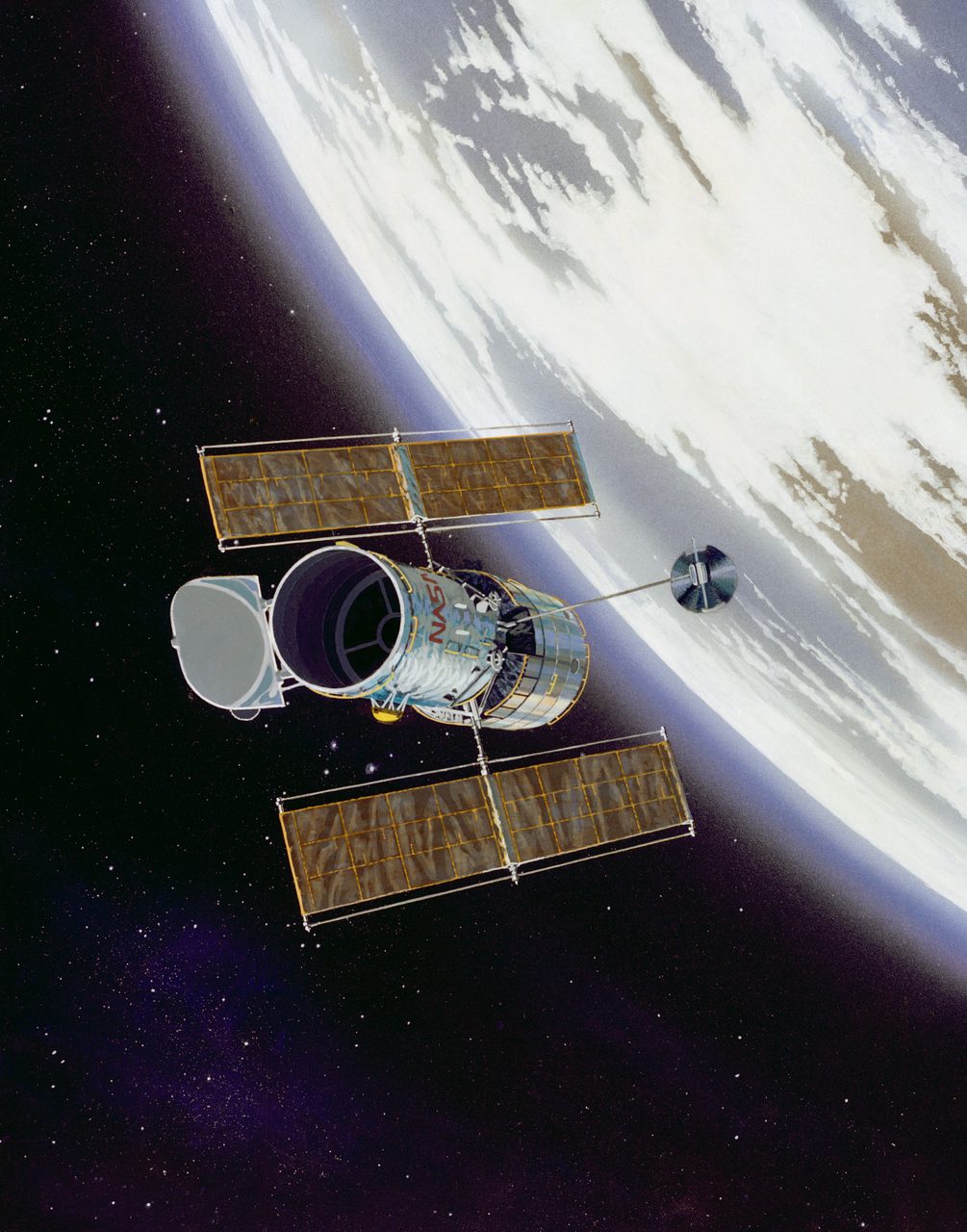
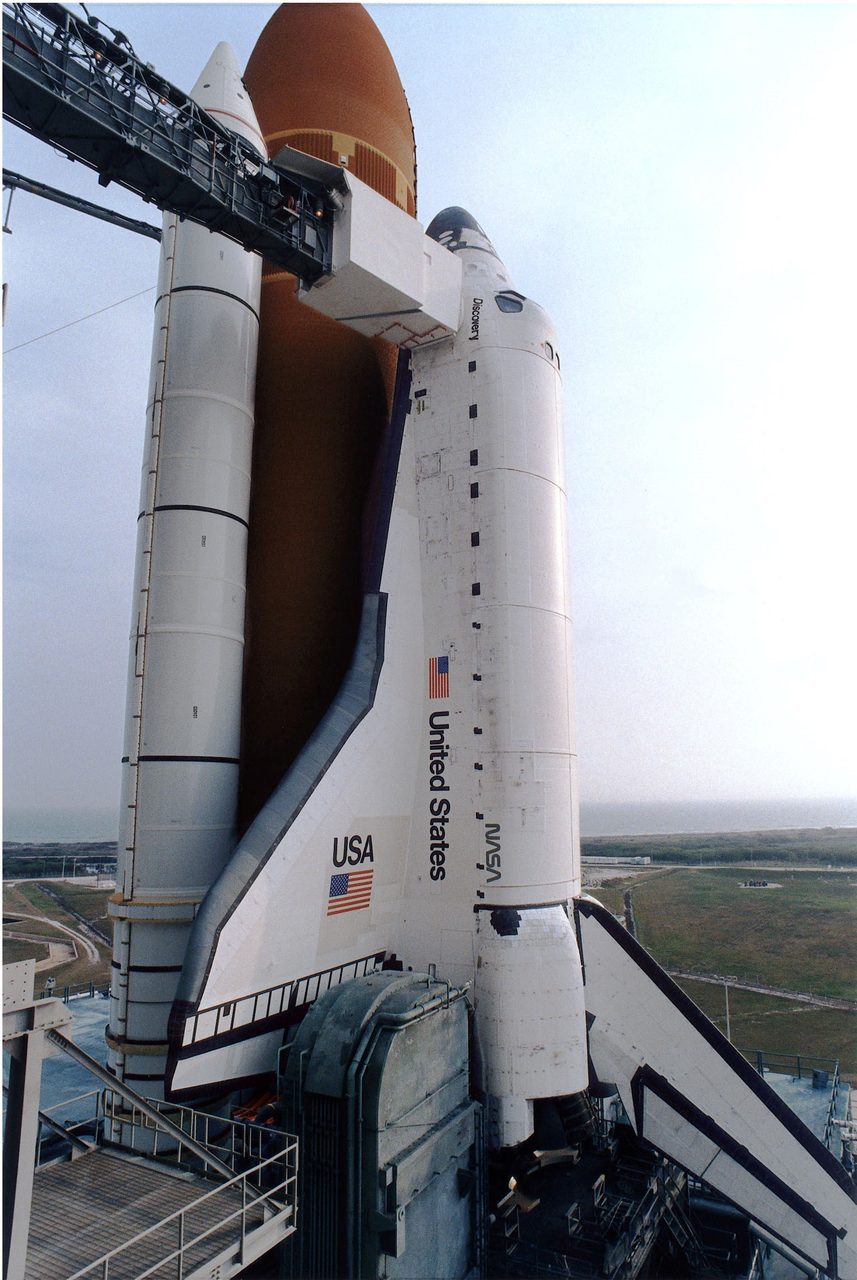
The Hubble Space Telescope (HST) is one of the most significant astronomical instruments ever deployed in space. Launched on 24 April 1990 aboard the Space Shuttle Discovery (STS-31), Hubble is a joint project of NASA and the European Space Agency (ESA).
What is the Hubble Space Telescope?
The Hubble Space Telescope (HST) is one of the most significant astronomical instruments ever deployed in space. Launched on 24 April 1990 aboard the Space Shuttle Discovery (STS-31), Hubble is a joint project of NASA and the European Space Agency (ESA). It was named after the American astronomer Edwin Hubble, whose work in the early 20th century led to the discovery of the expanding universe. The telescope orbits Earth at an altitude of approximately 547 kilometres, with a 28.5-degree inclination, and completes an orbit roughly every 95 minutes. Its primary mirror is 2.4 metres in diameter, allowing it to capture detailed images of distant galaxies, nebulae, and other astronomical phenomena.
Mission and Purpose
Hubble's mission is to observe astronomical objects in visible, ultraviolet, and near-infrared wavelengths. Its position above Earth's atmosphere allows it to avoid atmospheric distortion, providing clearer images than ground-based telescopes. Over its operational life, Hubble has contributed to major discoveries, including determining the rate of expansion of the universe, observing the birth and death of stars, and capturing detailed images of planets within our solar system. The telescope's ability to look deep into space has helped scientists understand the formation and evolution of galaxies, offering insights into the universe's history.
Orbital Characteristics
Hubble orbits Earth at a speed of about 28,000 kilometres per hour, allowing it to complete approximately 15 orbits per day. Its orbital path takes it through the South Atlantic Anomaly, a region where Earth's inner Van Allen radiation belt comes closest to the planet's surface, exposing the telescope to higher levels of radiation. The telescope's NORAD ID is 20580, and its precise orbital parameters can be tracked using Orbital Radar's Satellite Library. These characteristics have been carefully chosen to maximise the telescope's observational capabilities while ensuring its long-term sustainability in space.
Significance and Legacy
The Hubble Space Telescope has revolutionised our understanding of the universe. Its observations have led to the confirmation of the existence of dark energy, a mysterious force driving the acceleration of the universe's expansion. Hubble's images have also provided stunning visual evidence of phenomena such as black holes and exoplanets. The telescope's data has been used in over 18,000 scientific papers, making it one of the most productive scientific instruments ever built. Its legacy extends beyond science, inspiring a generation of astronomers and fostering public interest in space exploration.
Current Status and Future
As of 2026, the Hubble Space Telescope remains operational, continuing to provide valuable data to the scientific community. Despite experiencing technical challenges over the years, including gyroscope failures and the need for several servicing missions by Space Shuttle crews, Hubble has been remarkably resilient. Its operations are expected to continue into the late 2020s, potentially overlapping with its successor, the James Webb Space Telescope. For those interested in observing Hubble's visible passes, the Orbital Radar pass predictor offers detailed schedules and viewing opportunities.
📎 Cite this article
Orbital Radar Newsroom. (2026). Hubble Space Telescope: 35+ Years of Discovery. Orbital Radar. https://orbitalradar.com/blog/hubble-space-telescope-35-years-of-discovery"Hubble Space Telescope: 35+ Years of Discovery." Orbital Radar, 25 June 2026, https://orbitalradar.com/blog/hubble-space-telescope-35-years-of-discovery.@misc{orbitalradar_hubble_space_telescope_35_years_of_disco,
title = {Hubble Space Telescope: 35+ Years of Discovery},
author = {{Orbital Radar}},
year = {2026},
howpublished = {\url{https://orbitalradar.com/blog/hubble-space-telescope-35-years-of-discovery}}
}