ISS: 25+ Years of Continuous Human Presence
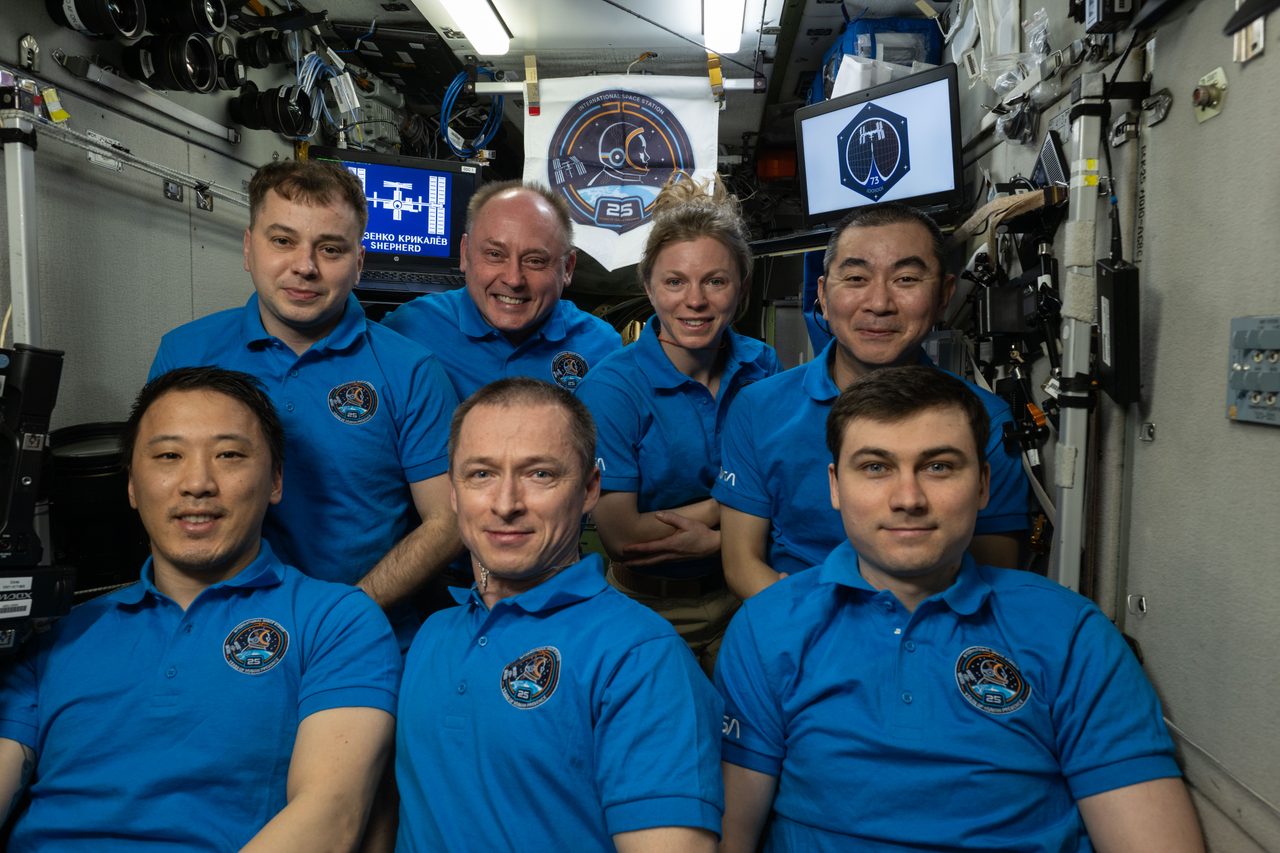
The International Space Station (ISS) is a modular space station in low Earth orbit. It serves as a microgravity and space environment research laboratory where scientific research is conducted in astrobiology, astronomy, meteorology, physics, and other fields.
| Active satellites | 18,110 |
| Catalogued objects | 29,467 |
| Starlink active | 9,831 |
What is the International Space Station?
The International Space Station (ISS) is a modular space station in low Earth orbit. It serves as a microgravity and space environment research laboratory where scientific research is conducted in astrobiology, astronomy, meteorology, physics, and other fields. The station is a joint project among five participating space agencies: NASA, Roscosmos, JAXA, ESA, and CSA. The ISS has been continuously occupied since 2 November 2000, marking over 25 years of human presence in space.
Mission and Purpose
The primary mission of the ISS is to provide a platform for scientific research and international cooperation in space. It allows scientists to conduct experiments that are impossible on Earth due to gravity. The ISS also plays a crucial role in preparing for future missions to the Moon and Mars by testing life support, health, and safety protocols. The station's collaborative nature exemplifies international cooperation, with astronauts from 19 different countries having visited as of 2026.
Orbital Characteristics
The ISS orbits Earth at an average altitude of approximately 420 kilometres (261 miles) and travels at a speed of about 28,000 kilometres per hour (17,500 miles per hour). It completes an orbit roughly every 90 minutes, allowing for 16 sunrises and sunsets each day. The station's orbit has an inclination of 51.6 degrees, which enables it to be visible from most inhabited regions of the Earth. The NORAD ID for the ISS is 25544. For those interested in observing the ISS, visible passes can be checked on the Orbital Radar pass predictor.
Significance and Legacy
The ISS represents one of humanity's most significant achievements in space exploration and international collaboration. It has hosted over 3,000 scientific investigations from researchers in more than 100 countries. The station has also been instrumental in fostering international partnerships and advancing our understanding of life in space. As a testament to its legacy, the ISS has paved the way for future space habitats and missions beyond low Earth orbit.
Current Status
As of 12 September 2026, the ISS is home to 11 astronauts, including Jessica Meir, Anna Kikina, and Zhu Yangzhu. The station continues to operate with regular crew rotations and resupply missions. The ISS is expected to remain operational until at least 2030, with discussions ongoing about its future role and potential successors. Orbital Radar's live catalogue lists 18,110 active satellites in orbit, with the ISS being one of the most prominent.
📎 Cite this article · data available
Orbital Radar Newsroom. (2026). ISS: 25+ Years of Continuous Human Presence. Orbital Radar. https://orbitalradar.com/blog/iss-25-years-continuous-human-presence"ISS: 25+ Years of Continuous Human Presence." Orbital Radar, 12 September 2026, https://orbitalradar.com/blog/iss-25-years-continuous-human-presence.@misc{orbitalradar_iss_25_years_continuous_human_presence,
title = {ISS: 25+ Years of Continuous Human Presence},
author = {{Orbital Radar}},
year = {2026},
howpublished = {\url{https://orbitalradar.com/blog/iss-25-years-continuous-human-presence}}
}