OneWeb: The UK's Broadband Constellation
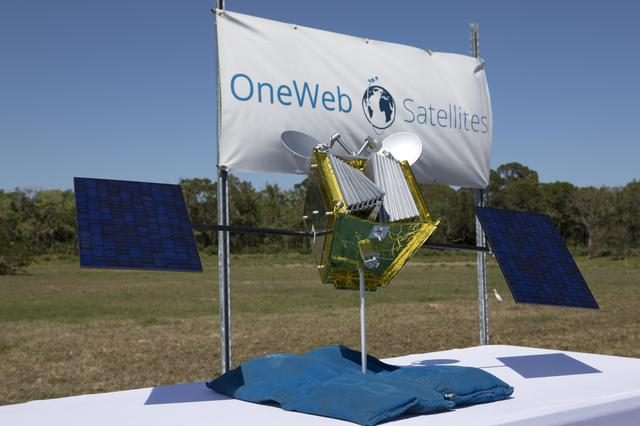
OneWeb is a satellite constellation designed to provide global broadband internet services. The project is led by OneWeb Ltd., a UK-based company, and aims to bridge the digital divide by delivering high-speed internet access to remote and underserved areas around the world.
What is OneWeb?
OneWeb is a satellite constellation designed to provide global broadband internet services. The project is led by OneWeb Ltd., a UK-based company, and aims to bridge the digital divide by delivering high-speed internet access to remote and underserved areas around the world. The constellation is part of a growing trend of low Earth orbit (LEO) satellite networks, which also includes SpaceX's Starlink and Amazon's Project Kuiper.
Mission and Purpose
The primary mission of OneWeb is to offer affordable internet connectivity on a global scale. By deploying a network of satellites in low Earth orbit, OneWeb seeks to provide low-latency and high-speed internet to areas where terrestrial broadband is unavailable or unreliable. This initiative is crucial for educational, economic, and social development in remote regions. OneWeb's ambitious goal is to enable connectivity for schools, businesses, and communities worldwide, thus contributing to the United Nations' Sustainable Development Goals.
Orbital Characteristics
OneWeb's satellites operate in low Earth orbit at an altitude of approximately 1,200 kilometres. The constellation is designed to include around 648 satellites, although this number may vary as the network evolves. These satellites are positioned in 12 orbital planes, each inclined at 87.9 degrees to the equator, allowing for near-global coverage. The satellites have a NORAD ID range starting from 44236, and their orbital period is roughly 109 minutes, enabling them to provide continuous coverage as they orbit the Earth.
Significance and Legacy
OneWeb represents a significant advancement in satellite communications technology. By leveraging LEO satellites, the constellation can offer lower latency compared to traditional geostationary satellites, which orbit much higher above the Earth. This technological shift is expected to transform internet access, particularly in rural and remote areas, by providing faster and more reliable connections. OneWeb's efforts also highlight the increasing role of private companies in the space sector, contributing to the democratisation of space technology and services.
Current Status
As of now, OneWeb has launched over 500 satellites, with plans to complete the initial phase of the constellation in the near future. The company has faced challenges, including a temporary bankruptcy in 2020, but has since secured new funding and partnerships to continue its mission. OneWeb's progress can be tracked on Orbital Radar's Satellite Library, which provides real-time data on the constellation's deployment and operational status. The constellation's development is closely watched as it competes with other major players in the satellite internet market.
Cite this article
Pick a style, then copy it or download it for your reference manager.Orbital Radar. (2026, August 9). OneWeb: The UK's Broadband Constellation. Retrieved November 13, 2026, from https://orbitalradar.com/blog/oneweb-uk-broadband-constellation
“OneWeb: The UK's Broadband Constellation.” Orbital Radar, 9 Aug. 2026, orbitalradar.com/blog/oneweb-uk-broadband-constellation. Accessed 13 Nov. 2026.
Orbital Radar (2026) OneWeb: The UK's Broadband Constellation. Available at: https://orbitalradar.com/blog/oneweb-uk-broadband-constellation (Accessed: 13 November 2026).
Orbital Radar. “OneWeb: The UK's Broadband Constellation.” Last modified August 9, 2026. https://orbitalradar.com/blog/oneweb-uk-broadband-constellation.
@misc{orbitalradar_blog_oneweb_uk_broadband_constellation,
  author       = {{Orbital Radar}},
  title        = {OneWeb: The UK's Broadband Constellation},
  year         = {2026},
  month        = aug,
  howpublished = {\url{https://orbitalradar.com/blog/oneweb-uk-broadband-constellation}},
  url          = {https://orbitalradar.com/blog/oneweb-uk-broadband-constellation},
  urldate      = {2026-11-13},
  note         = {Accessed 2026-11-13}
}
TY - ELEC AU - Orbital Radar, TI - OneWeb: The UK's Broadband Constellation PY - 2026 DA - 2026/08/09 PB - Orbital Radar UR - https://orbitalradar.com/blog/oneweb-uk-broadband-constellation Y2 - 2026/11/13 LA - en ER -
Live figures change, so keep the date you accessed the page. How to cite Orbital Radar