From Theory to Reality: The Journey of Black Hole Discoveries
Black holes, once theoretical constructs, have been confirmed through observations of gravitational waves and stellar interactions.
Black holes transitioned from theoretical predictions to confirmed astronomical phenomena through a series of pivotal discoveries. The journey began with Albert Einstein's general theory of relativity in 1915, which predicted the existence of regions in space where gravity is so strong that nothing, not even light, can escape. These regions were later termed 'black holes'.
Theoretical Foundations and Early Predictions
The concept of black holes was first mathematically described by Karl Schwarzschild in 1916, shortly after Einstein's theory of relativity was published. Schwarzschild's solution to Einstein's equations revealed the possibility of a 'singularity', a point where gravitational forces compress mass to an infinite density. Despite this, black holes remained largely theoretical for decades, as direct evidence was elusive.
Observational Breakthroughs
The first indirect evidence of black holes emerged in the 1960s with the discovery of quasars, extremely luminous objects powered by accretion of matter into supermassive black holes at the centres of distant galaxies. In 1971, Cygnus X-1 became the first strong black hole candidate when it was identified as an X-ray binary system, where a massive star orbits an invisible companion with a mass too large to be a neutron star.
Gravitational Waves and Direct Imaging
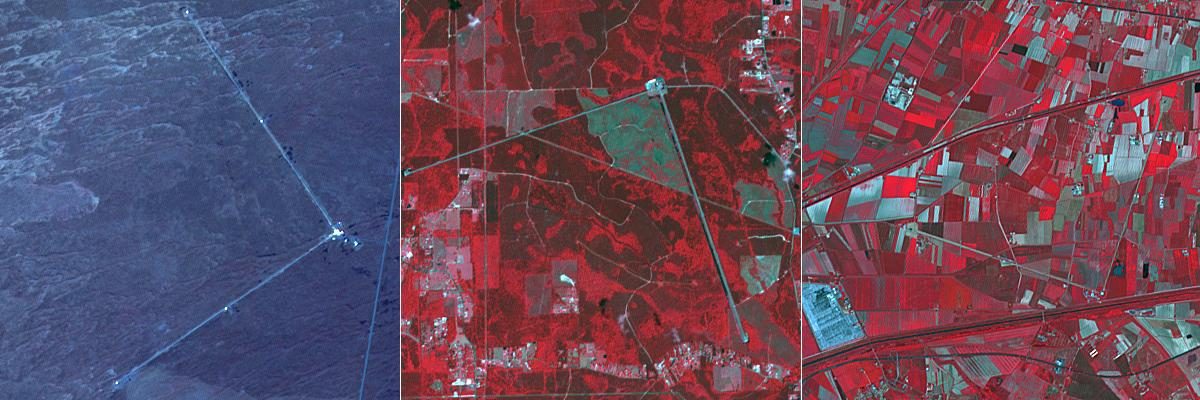
A significant leap in black hole research occurred in 2015 when the LIGO observatory detected gravitational waves from a black hole merger, confirming a major prediction of Einstein's theory. This discovery earned the 2017 Nobel Prize in Physics. In 2019, the Event Horizon Telescope captured the first image of a black hole's shadow in the centre of the galaxy M87, providing direct visual evidence of black holes.
Current Research and Future Prospects
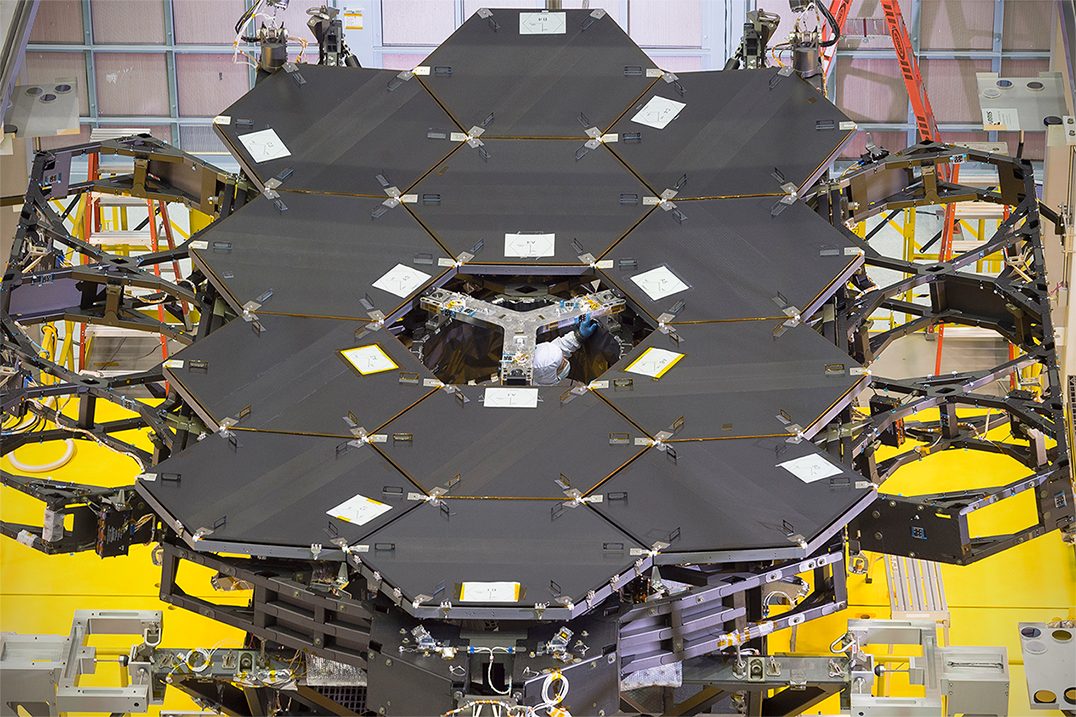
Today, black holes are a major focus of astrophysical research, with scientists using advanced observatories to study their properties and effects on surrounding matter. The James Webb Space Telescope and other upcoming missions aim to explore black holes in greater detail. For those interested in the latest black hole-related missions, the Orbital Radar launch schedule provides updates on relevant launches.
Key Takeaways
Black holes have evolved from theoretical constructs to confirmed cosmic entities through a combination of theoretical insights and technological advancements. Observations such as gravitational waves and direct imaging have solidified our understanding, while ongoing research continues to uncover the mysteries of these fascinating objects.
Frequently Asked Questions
What is a black hole?
How were black holes first discovered?
What was the first image of a black hole?
How do scientists study black holes?
What role do black holes play in the universe?
📎 Cite this article
Orbital Radar Newsroom. (2026). From Theory to Reality: The Journey of Black Hole Discoveries. Orbital Radar. https://orbitalradar.com/blog/journey-black-hole-discoveries"From Theory to Reality: The Journey of Black Hole Discoveries." Orbital Radar, 7 September 2026, https://orbitalradar.com/blog/journey-black-hole-discoveries.@misc{orbitalradar_journey_black_hole_discoveries,
title = {From Theory to Reality: The Journey of Black Hole Discoveries},
author = {{Orbital Radar}},
year = {2026},
howpublished = {\url{https://orbitalradar.com/blog/journey-black-hole-discoveries}}
}