The Long March Rocket Family: A Comprehensive Guide
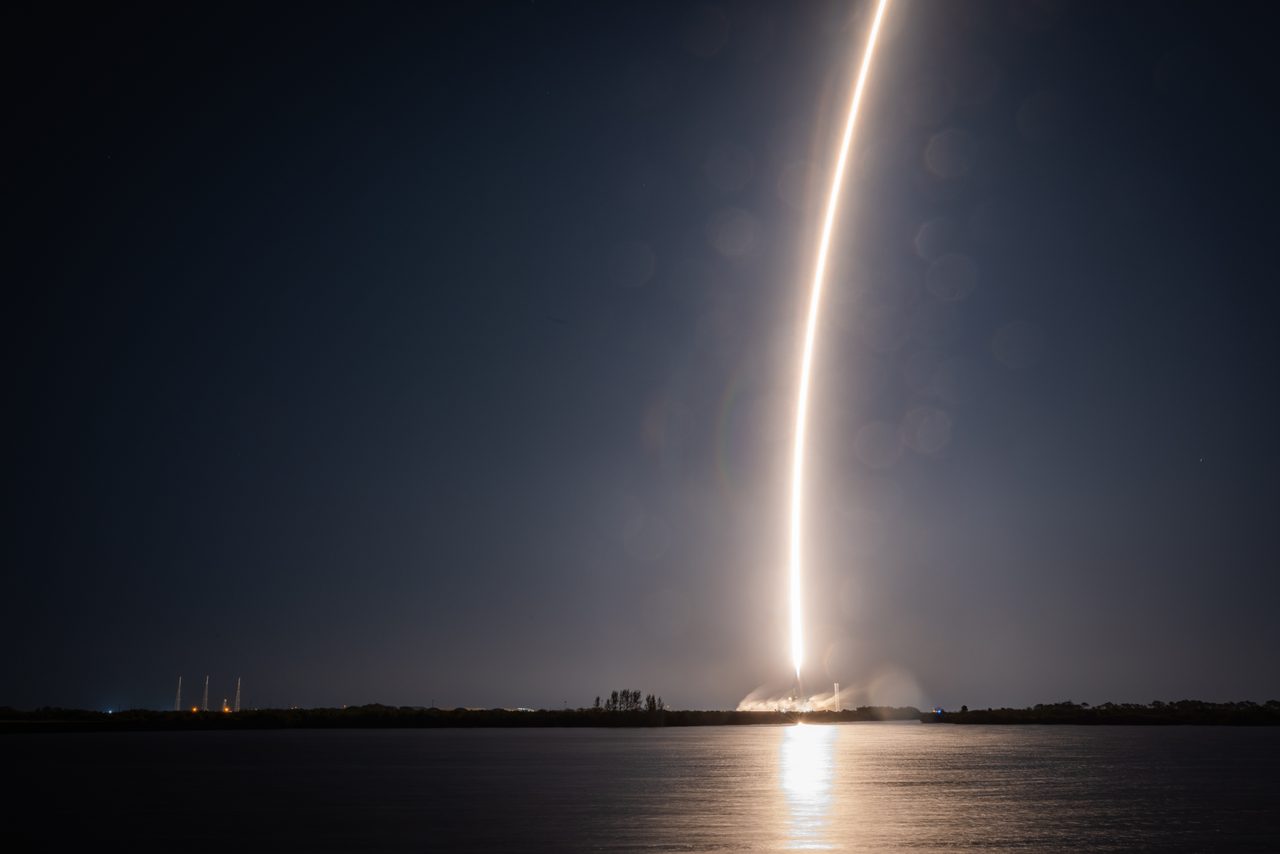
The Long March rocket family is China's primary launch vehicle series, enabling numerous satellite and crewed missions since 1970.
| Active satellites | 18,057 |
| Starlink active | 9,821 |
| Catalogued objects | 29,412 |
| Active close approaches | 19 |
| People in space | 10 |
The Long March rocket family, developed by the China National Space Administration (CNSA), is a series of expendable launch vehicles used for launching satellites and crewed missions. First launched in 1970, these rockets have become a cornerstone of China's space programme, supporting a wide range of missions from low Earth orbit (LEO) to interplanetary exploration.
The History of Long March Rockets
The Long March series began with the launch of Long March 1 on 24 April 1970, which successfully placed China's first satellite, Dong Fang Hong 1, into orbit. Since then, over 400 Long March launches have been conducted, marking significant milestones in China's space capabilities. The series has evolved through various iterations, including Long March 2, 3, and 4, each designed to cater to different payload requirements and mission profiles.
Technical Specifications and Variants

The Long March family includes a range of rockets, from the smaller Long March 2D, capable of launching payloads of up to 3,500 kg to LEO, to the more powerful Long March 5, which can deliver up to 25,000 kg. Each variant is tailored for specific missions, such as the Long March 3B, which is frequently used for geostationary transfer orbit (GTO) missions. Detailed specifications of these rockets can be found in the Long March hub.
Notable Missions and Achievements
Long March rockets have been instrumental in launching key missions, including the Chang'e lunar missions and the Tianwen-1 Mars mission. The Long March 5, in particular, played a critical role in launching the Chang'e 5 mission, which successfully returned lunar samples to Earth in December 2020. These missions underscore China's growing ambitions in space exploration, as detailed in our China in Space hub.
The Role of Long March in China's Space Strategy
The Long March series is central to China's strategy for expanding its space presence, supporting both civilian and military objectives. The rockets have been used to deploy satellites for communication, Earth observation, and navigation, such as the BeiDou constellation. As of today, 18,057 active satellites are in orbit, with Long March rockets contributing significantly to this number.
Future Developments and Innovations
China continues to innovate with the Long March series, developing new variants like the Long March 9, intended for deep space exploration and crewed lunar missions. The Long March 6 and 7 are also being refined for more efficient satellite launches. These advancements are part of China's broader goals to establish a permanent presence on the Moon and explore Mars, as tracked in our satellite launch log.
Key Takeaways
The Long March rocket family has been pivotal in establishing China's space capabilities, with over 400 launches since 1970. It supports a diverse range of missions, from launching the BeiDou navigation satellites to enabling interplanetary exploration. As China continues to expand its space ambitions, the Long March rockets will remain a key component of its strategy.
Frequently Asked Questions
What is the Long March rocket?
How many Long March rockets have been launched?
What are the payload capacities of Long March rockets?
What are some notable missions launched by Long March rockets?
What future developments are planned for Long March rockets?
📎 Cite this article · data available
Orbital Radar Newsroom. (2026). The Long March Rocket Family: A Comprehensive Guide. Orbital Radar. https://orbitalradar.com/blog/long-march-rocket-family-explainer"The Long March Rocket Family: A Comprehensive Guide." Orbital Radar, 10 September 2026, https://orbitalradar.com/blog/long-march-rocket-family-explainer.@misc{orbitalradar_long_march_rocket_family_explainer,
title = {The Long March Rocket Family: A Comprehensive Guide},
author = {{Orbital Radar}},
year = {2026},
howpublished = {\url{https://orbitalradar.com/blog/long-march-rocket-family-explainer}}
}