New Horizons: The Pluto Flyby Probe
New Horizons is a NASA spacecraft launched on 19 January 2006 with the primary mission to perform a flyby study of Pluto and its moons. It was the first mission to explore the dwarf planet and is part of NASA's New Frontiers programme.
What is New Horizons?
New Horizons is a NASA spacecraft launched on 19 January 2006 with the primary mission to perform a flyby study of Pluto and its moons. It was the first mission to explore the dwarf planet and is part of NASA's New Frontiers programme. The spacecraft was designed to study the atmospheres, surfaces, interiors, and environments of Pluto and its moons, as well as objects in the Kuiper Belt, a region of the Solar System beyond the orbit of Neptune.
Mission and Purpose
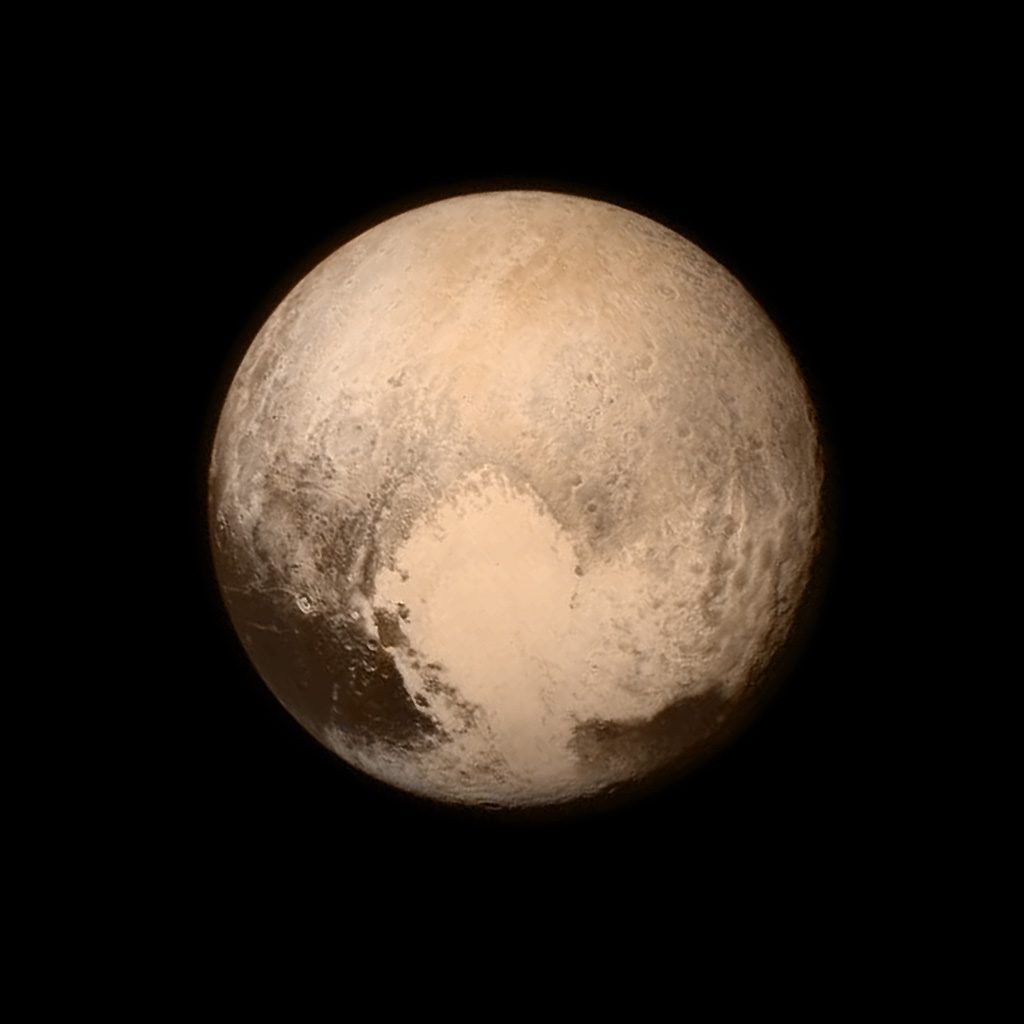
The New Horizons mission aimed to answer fundamental questions about the surface properties, geology, and atmospheres of Pluto and its largest moon, Charon. After a journey of nearly a decade, New Horizons made its closest approach to Pluto on 14 July 2015, coming within 12,500 kilometres of the dwarf planet's surface. The mission provided the first detailed images and scientific data about Pluto and Charon, revealing a complex and varied surface with features such as mountains, plains, and possible ice volcanoes.
Orbital Characteristics
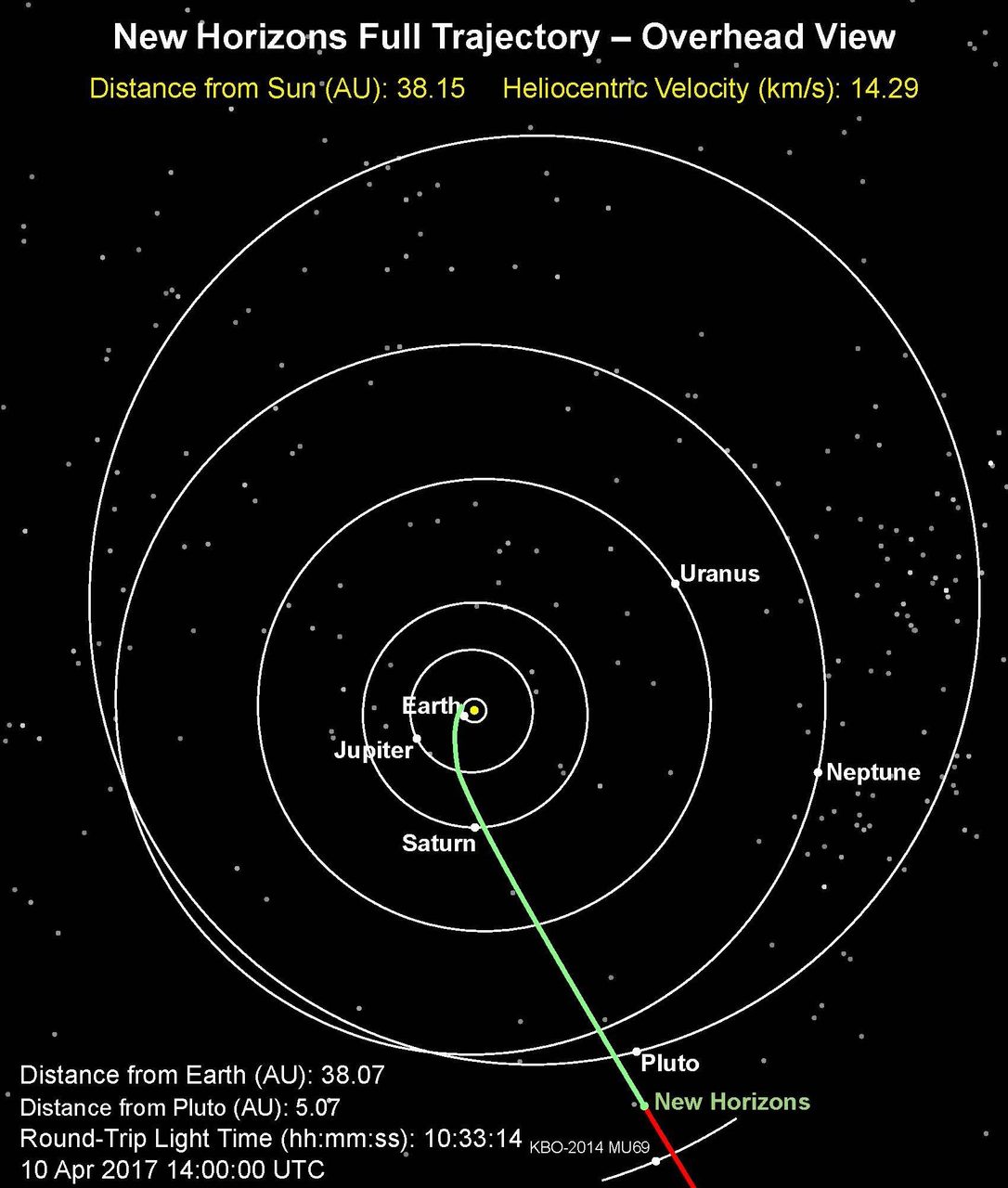
New Horizons does not orbit Pluto but followed a trajectory that allowed a close flyby. After its encounter with Pluto, the spacecraft continued on a trajectory through the Kuiper Belt. It is currently on an extended mission to study other Kuiper Belt objects (KBOs). As of now, New Horizons is over 50 astronomical units (AU) from Earth, travelling at a speed of about 14.5 kilometres per second relative to the Sun. The spacecraft's NORAD ID is 28928.
Significance and Legacy
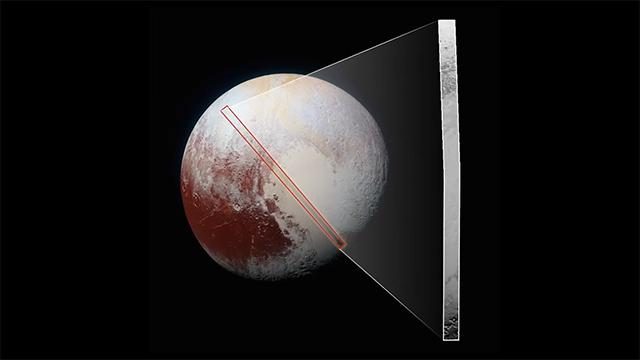
The New Horizons mission has significantly expanded our understanding of the outer Solar System. Its flyby of Pluto provided unprecedented insights into the dwarf planet's geology and atmosphere, reshaping our understanding of these distant worlds. The mission's success has paved the way for future exploration of the Kuiper Belt and beyond. The data collected has been invaluable for scientists and is still being analysed to uncover new information about the outer reaches of our Solar System.
Current Status
New Horizons remains operational and continues to send data back to Earth. It completed a successful flyby of a second KBO, Arrokoth, on 1 January 2019. The spacecraft is now in a hibernation mode, conserving energy as it travels further into the Kuiper Belt. The mission team is planning additional observations of other KBOs and is considering potential future flybys. For more details on New Horizons' current trajectory and mission updates, visit the Orbital Radar Satellite Library.
📎 Cite this article
Orbital Radar Newsroom. (2026). New Horizons: The Pluto Flyby Probe. Orbital Radar. https://orbitalradar.com/blog/new-horizons-pluto-flyby-probe"New Horizons: The Pluto Flyby Probe." Orbital Radar, 28 August 2026, https://orbitalradar.com/blog/new-horizons-pluto-flyby-probe.@misc{orbitalradar_new_horizons_pluto_flyby_probe,
title = {New Horizons: The Pluto Flyby Probe},
author = {{Orbital Radar}},
year = {2026},
howpublished = {\url{https://orbitalradar.com/blog/new-horizons-pluto-flyby-probe}}
}