Chandra X-ray Observatory: Unveiling the High-Energy Universe
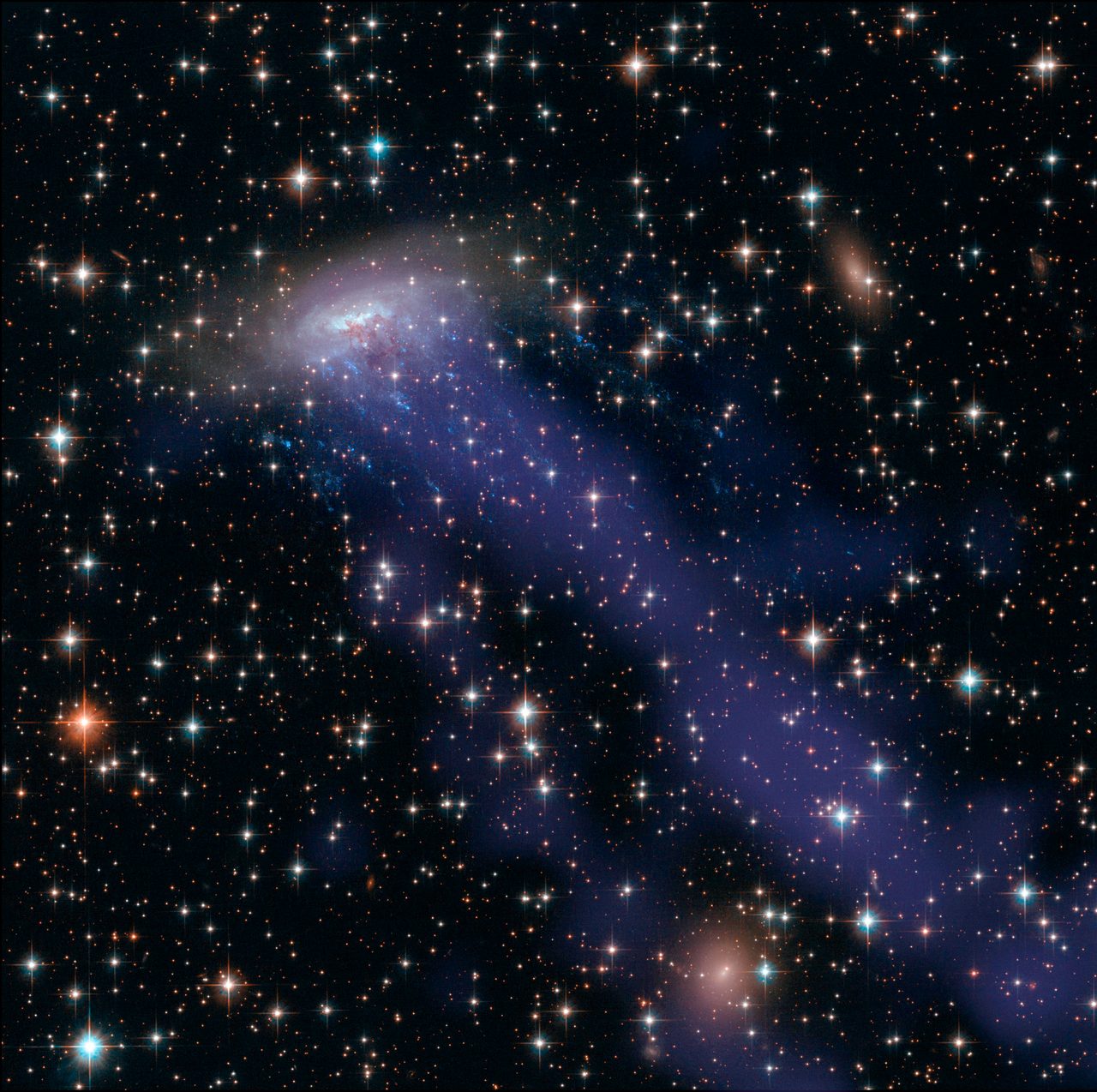
The Chandra X-ray Observatory, launched on 23 July 1999 aboard the Space Shuttle Columbia (STS-93), is a flagship mission of NASA dedicated to X-ray astronomy. Named after the Nobel laureate Subrahmanyan Chandrasekhar, Chandra is designed to observe X-rays from high-energy regions of the universe, s
What is the Chandra X-ray Observatory?
The Chandra X-ray Observatory, launched on 23 July 1999 aboard the Space Shuttle Columbia (STS-93), is a flagship mission of NASA dedicated to X-ray astronomy. Named after the Nobel laureate Subrahmanyan Chandrasekhar, Chandra is designed to observe X-rays from high-energy regions of the universe, such as the remnants of exploded stars, clusters of galaxies, and matter around black holes. It is part of NASA's Great Observatories programme, which includes the Hubble Space Telescope and the Spitzer Space Telescope.
Mission and Purpose

Chandra's primary mission is to provide high-resolution X-ray images that help scientists understand the structure and evolution of the universe. By observing X-rays, which are emitted by some of the hottest and most energetic phenomena in the cosmos, Chandra can reveal details about the life cycles of stars, the behaviour of black holes, and the distribution of dark matter. Its advanced instruments allow it to detect X-ray emissions from regions that are billions of light-years away.
Orbital Characteristics
Chandra operates in a highly elliptical orbit, which takes it to an altitude of approximately 133,000 kilometres at its apogee and 16,000 kilometres at its perigee. This orbit allows it to spend a significant amount of time above the Earth's radiation belts, minimising interference from the planet's background radiation. The observatory completes an orbit approximately every 64 hours and is identified by NORAD ID 25867. For more detailed orbital data, you can visit the Orbital Radar Satellite Library.
Significance and Legacy
Since its launch, Chandra has significantly advanced our understanding of the universe. It has provided insights into the nature of dark matter, the dynamics of galaxy clusters, and the processes occurring around black holes. Chandra's observations have contributed to over 16,000 scientific papers, making it one of the most productive scientific missions. Its ability to capture detailed X-ray images has been pivotal in confirming theories about the universe's structure and evolution.
Current Status
As of 2026, the Chandra X-ray Observatory remains operational and continues to provide valuable data to the scientific community. Despite being designed for a five-year mission, it has far exceeded its expected lifespan, thanks to careful management and robust engineering. The observatory's instruments are still functioning well, and it continues to make significant contributions to high-energy astrophysics. For updates on its current status, refer to the Orbital Radar Satellite Library.
📎 Cite this article
Orbital Radar Newsroom. (2026). Chandra X-ray Observatory: Unveiling the High-Energy Universe. Orbital Radar. https://orbitalradar.com/blog/chandra-x-ray-observatory-high-energy-astronomy"Chandra X-ray Observatory: Unveiling the High-Energy Universe." Orbital Radar, 22 July 2026, https://orbitalradar.com/blog/chandra-x-ray-observatory-high-energy-astronomy.@misc{orbitalradar_chandra_x_ray_observatory_high_energy_as,
title = {Chandra X-ray Observatory: Unveiling the High-Energy Universe},
author = {{Orbital Radar}},
year = {2026},
howpublished = {\url{https://orbitalradar.com/blog/chandra-x-ray-observatory-high-energy-astronomy}}
}