Venus and the Moon: A Celestial Ballet in Daylight
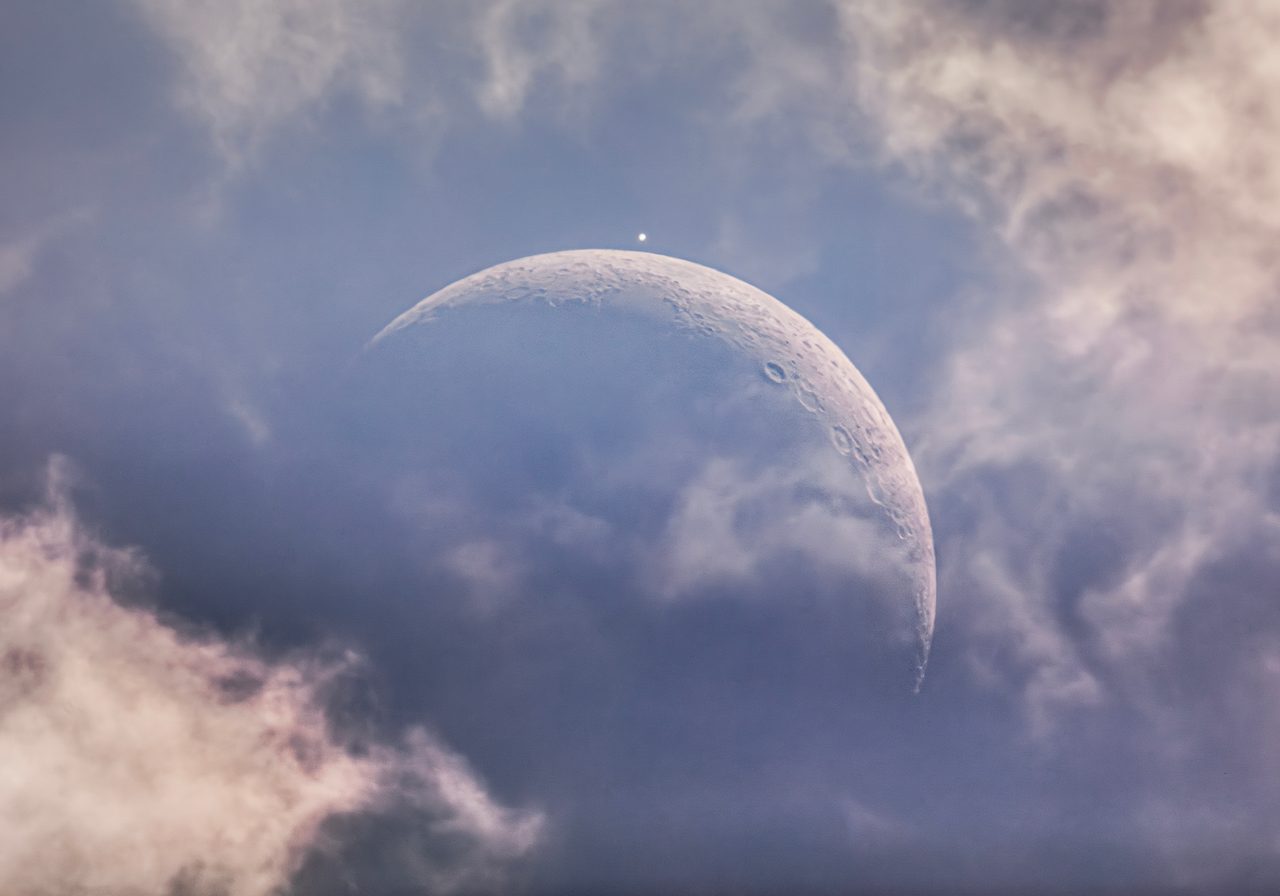
Witness the rare sight of Venus and the Moon in daylight, showcasing the beauty and complexity of celestial mechanics.
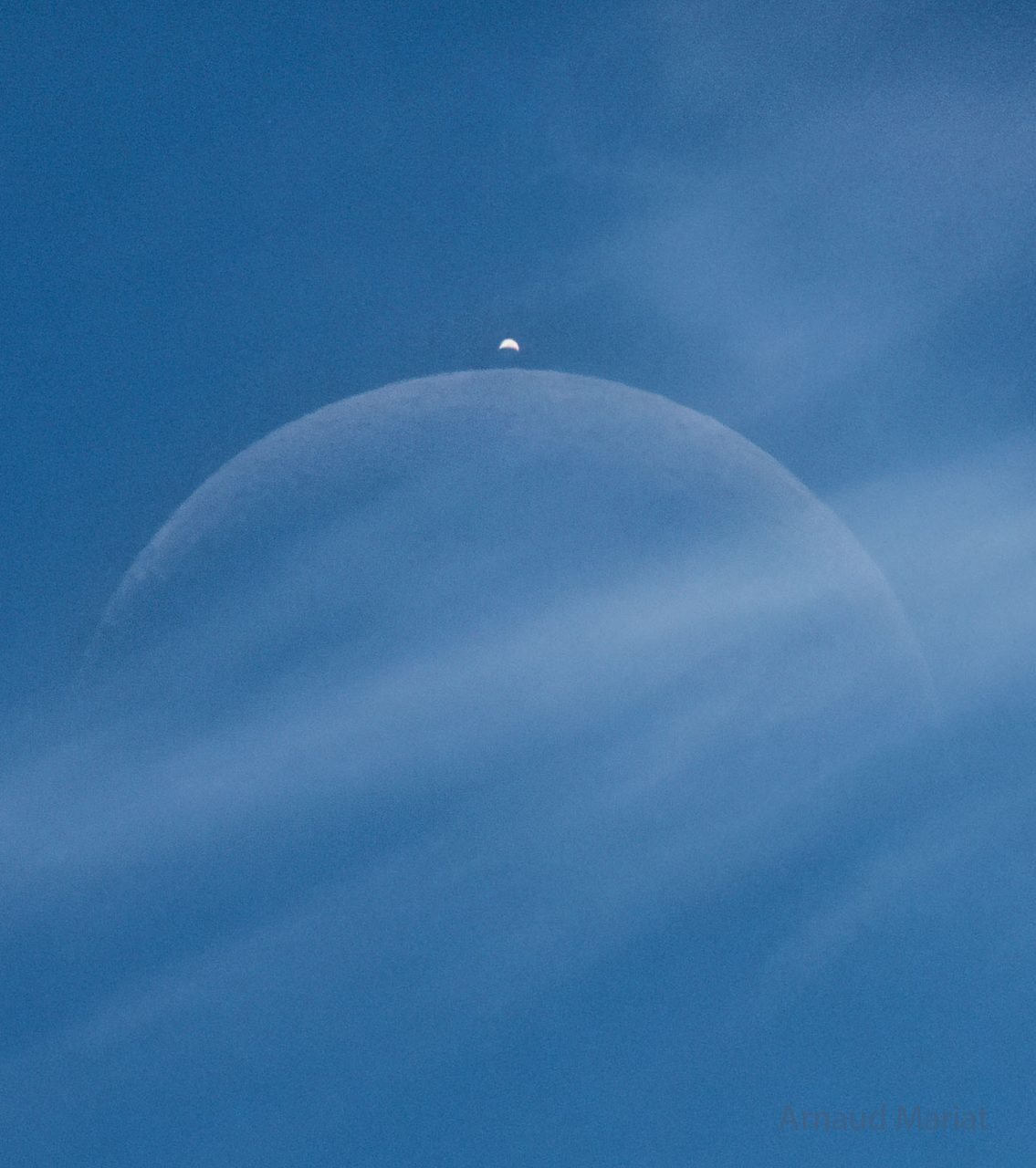
The image captures a rare celestial event where Venus, often dubbed Earth's evening star, aligns with the crescent Moon in daylight. On June 17, observers in southern British Columbia, Canada, witnessed the Moon occulting Venus, a phenomenon where one celestial body passes in front of another. This event is a testament to the dynamic nature of our solar system, where the intricate dance of celestial bodies can be observed even during the day.
Orbital Mechanics and Celestial Dynamics
The alignment of Venus and the Moon is not just a visual delight but also an opportunity to delve into the mechanics of celestial orbits. Venus, the second planet from the Sun, follows an orbit that brings it into close proximity with Earth at regular intervals, making such alignments possible. Understanding these orbital paths is crucial for space missions, as precise calculations ensure successful satellite launches and interplanetary travel. For those interested in tracking similar events, the Orbital Radar pass predictor offers insights into upcoming celestial alignments.
Observing Tips
To observe such phenomena, a telescope can enhance the experience, revealing details of the lunar surface and Venus' phase. Even without advanced equipment, knowing when and where to look is key. Checking the Orbital Radar launch schedule can also provide context on how current satellite positions might affect visibility.
Frequently Asked Questions
What is a lunar occultation?
Why is Venus called the evening star?
📎 Cite this article
Orbital Radar Newsroom. (2026). Venus and the Moon: A Celestial Ballet in Daylight. Orbital Radar. https://orbitalradar.com/blog/cosmic-gallery-2026-06-20"Venus and the Moon: A Celestial Ballet in Daylight." Orbital Radar, 20 June 2026, https://orbitalradar.com/blog/cosmic-gallery-2026-06-20.@misc{orbitalradar_cosmic_gallery_2026_06_20,
title = {Venus and the Moon: A Celestial Ballet in Daylight},
author = {{Orbital Radar}},
year = {2026},
howpublished = {\url{https://orbitalradar.com/blog/cosmic-gallery-2026-06-20}}
}