Tracing the Ancient Echoes of Supernova RCW 86
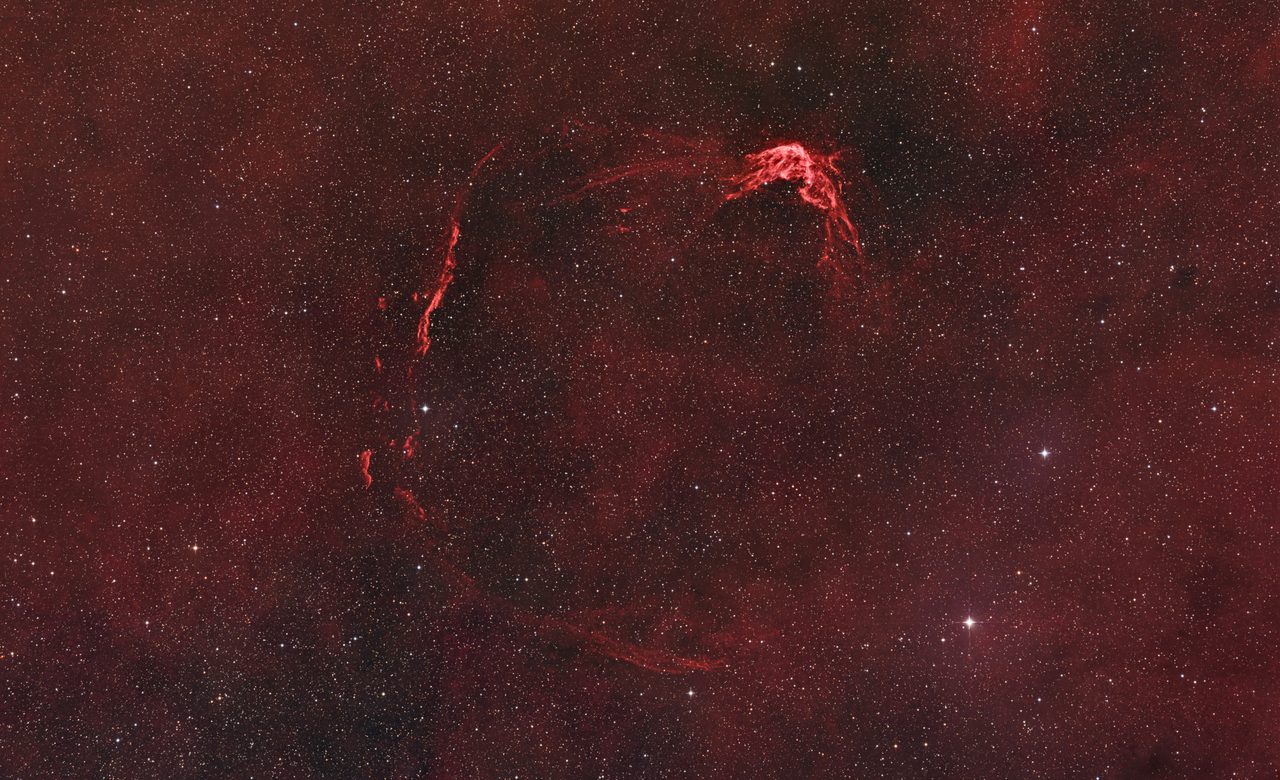
RCW 86, a supernova remnant first recorded in 185 AD, offers insights into the universe's explosive past and the nature of Type Ia supernovae.
In 185 AD, Chinese astronomers documented a 'guest star' in the sky, marking what is now recognised as the earliest recorded supernova. Today, this ancient cosmic event is identified as RCW 86, a supernova remnant located in the constellation Centaurus. The remnant's faint, wispy outlines are the result of interstellar gas ionised by the expanding shock wave from the original explosion. Modern observations reveal an abundance of iron and the absence of a neutron star, indicating that RCW 86 was a Type Ia supernova—a thermonuclear explosion on a white dwarf star.
The study of RCW 86 provides crucial insights into the life cycles of stars and the dynamics of supernovae. Type Ia supernovae play a pivotal role in cosmology as standard candles for measuring astronomical distances. By understanding remnants like RCW 86, astronomers can refine models of cosmic expansion and the distribution of elements in the galaxy. This remnant, spanning approximately 100 light-years, remains a focal point for research into the processes that govern stellar evolution and death.
Though RCW 86 is not visible to the naked eye, its presence can be appreciated through telescopic observations and data analysis. For those interested in tracking celestial phenomena, tools like the Orbital Radar pass predictor can help plan observations of other astronomical events. While RCW 86 lies beyond direct visual observation, its story continues to illuminate the intricate workings of our universe.