Unveiling the Bubble Nebula: A Cosmic Masterpiece
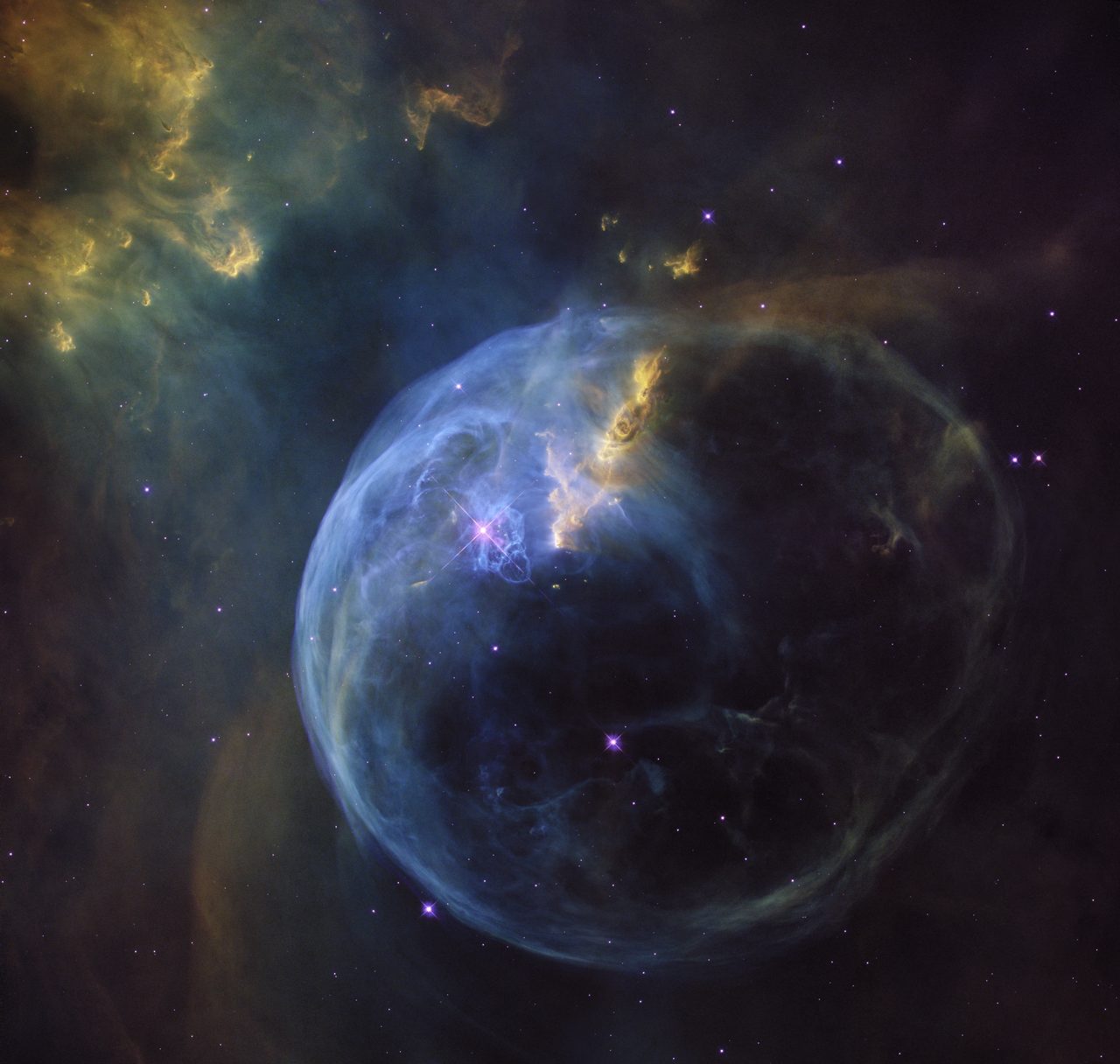
The Bubble Nebula, NGC 7635, is a stunning cosmic structure created by stellar winds from a massive star, located 11,000 light-years away in Cassiopeia.
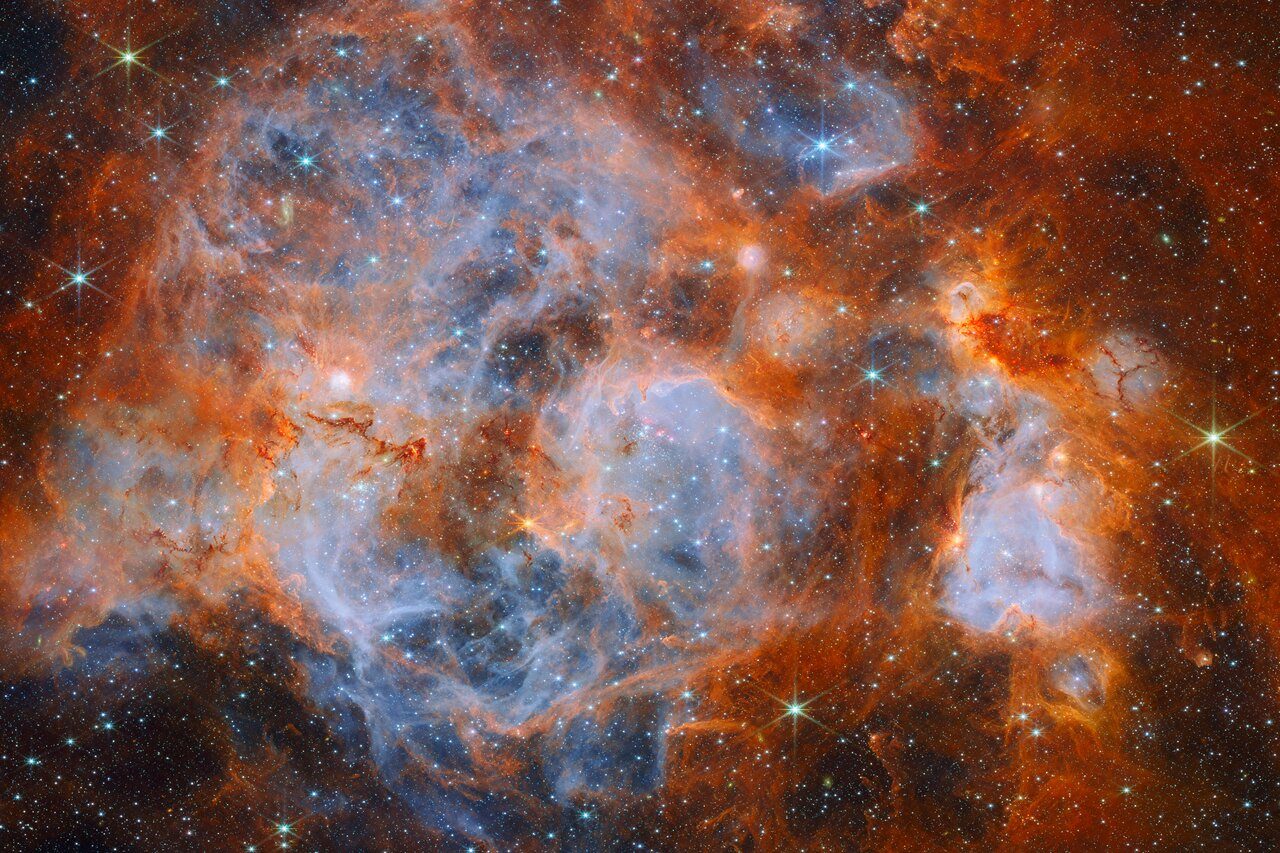
The Bubble Nebula, or NGC 7635, is a captivating astronomical feature located 11,000 light-years away in the constellation Cassiopeia. This image reveals the nebula's intricate structure, a testament to the powerful processes at play in the cosmos. The nebula spans 10 light-years and is formed by the fierce stellar winds and intense radiation from a central massive star, likely 10 to 20 times the mass of our Sun. These forces have sculpted the glowing gas into a bubble, pushing against the denser material of a surrounding molecular cloud.
The Science Behind the Bubble
The Bubble Nebula offers a vivid example of the dynamic interactions between stars and their environments. The star at the heart of this nebula is a source of powerful stellar winds, streams of charged particles that can shape and influence the interstellar medium. Such phenomena are not only visually stunning but also crucial to understanding stellar evolution and the lifecycle of cosmic matter. As stars like the one in NGC 7635 evolve, they shed material that contributes to the formation of new stars and planets, a cycle that perpetuates the cosmos.
Observing the Bubble Nebula
For those interested in observing the Bubble Nebula, it is best viewed in the northern hemisphere during the autumn months when Cassiopeia is prominently positioned in the night sky. While a small telescope can reveal the brighter star at the nebula's centre, capturing the full extent of the bubble's structure requires more advanced equipment and long exposure photography. For those without access to telescopic equipment, the Satellite Eye provides a way to explore live satellite imagery of the night sky, offering a virtual window to these distant wonders.
Frequently Asked Questions
What causes the Bubble Nebula's shape?
Where is the Bubble Nebula located?
📎 Cite this article
Orbital Radar Newsroom. (2026). Unveiling the Bubble Nebula: A Cosmic Masterpiece. Orbital Radar. https://orbitalradar.com/blog/cosmic-gallery-2026-07-27"Unveiling the Bubble Nebula: A Cosmic Masterpiece." Orbital Radar, 28 July 2026, https://orbitalradar.com/blog/cosmic-gallery-2026-07-27.@misc{orbitalradar_cosmic_gallery_2026_07_27,
title = {Unveiling the Bubble Nebula: A Cosmic Masterpiece},
author = {{Orbital Radar}},
year = {2026},
howpublished = {\url{https://orbitalradar.com/blog/cosmic-gallery-2026-07-27}}
}