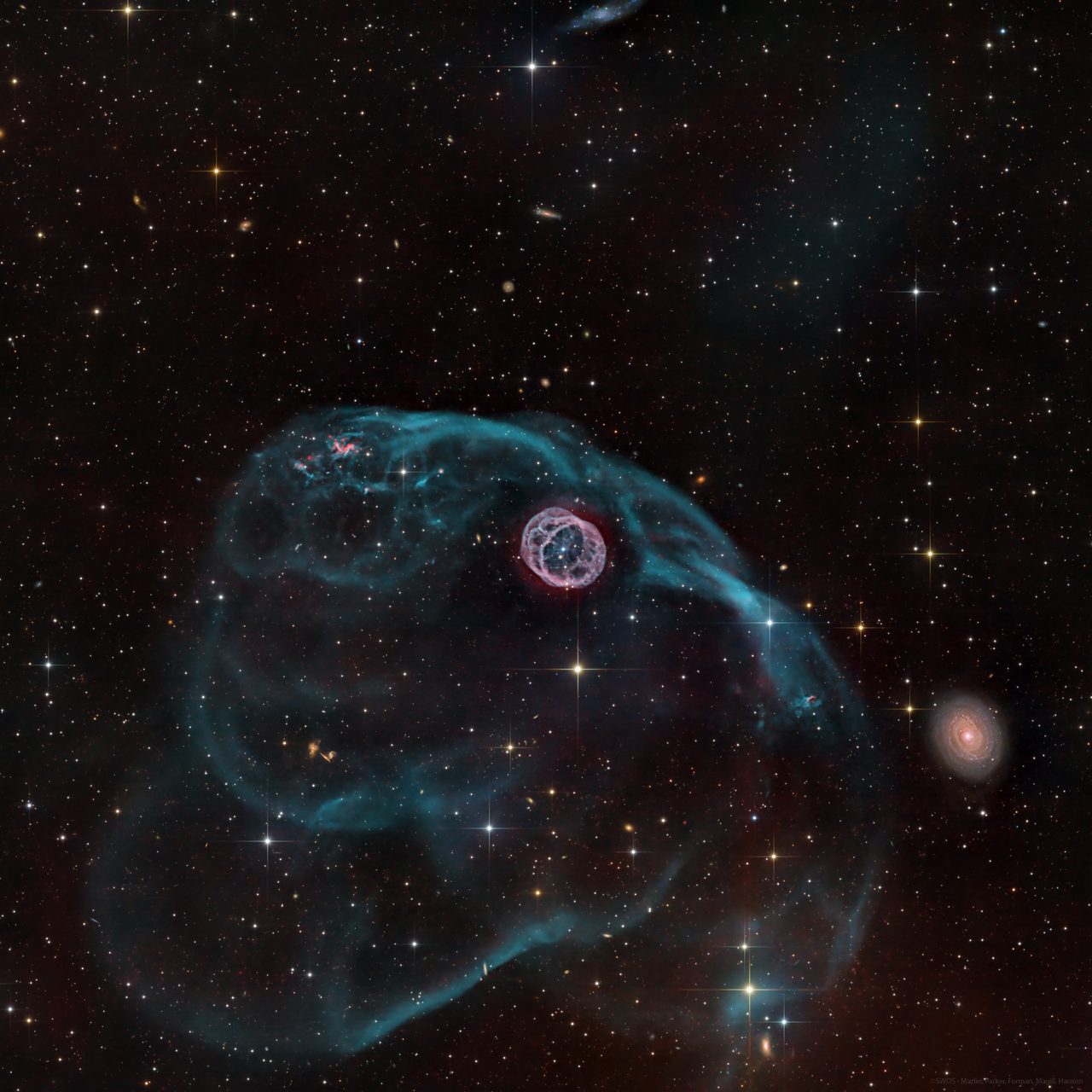
Unveiling the Cosmic Bat Nebula's Celestial Secrets
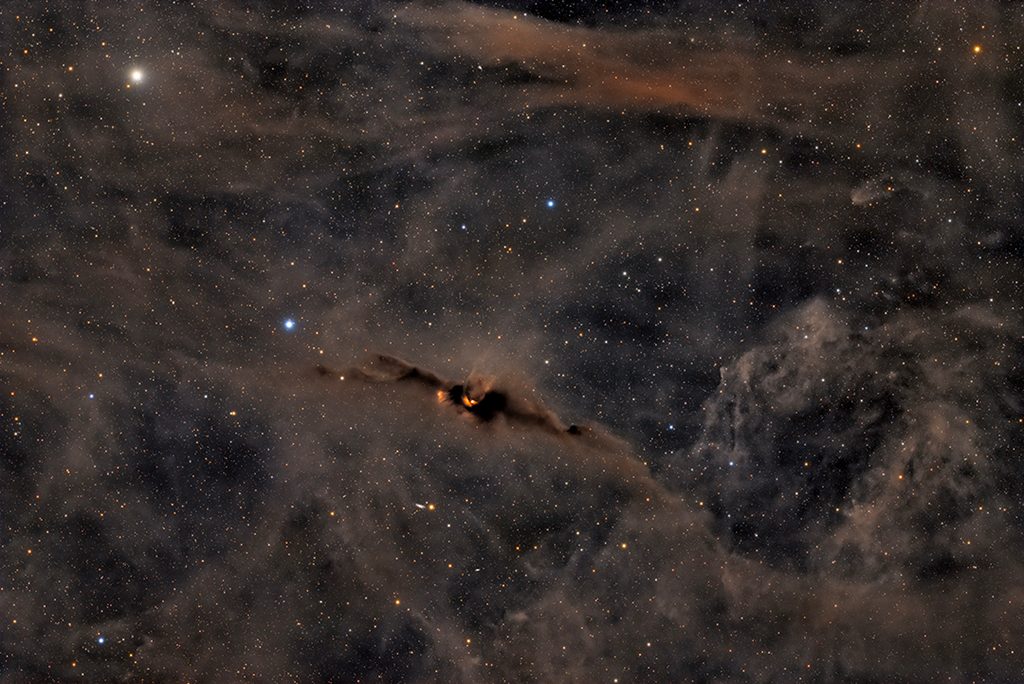
The Cosmic Bat Nebula, a vibrant star-forming region, emits a red glow from energised hydrogen, spanning 12 lightyears.
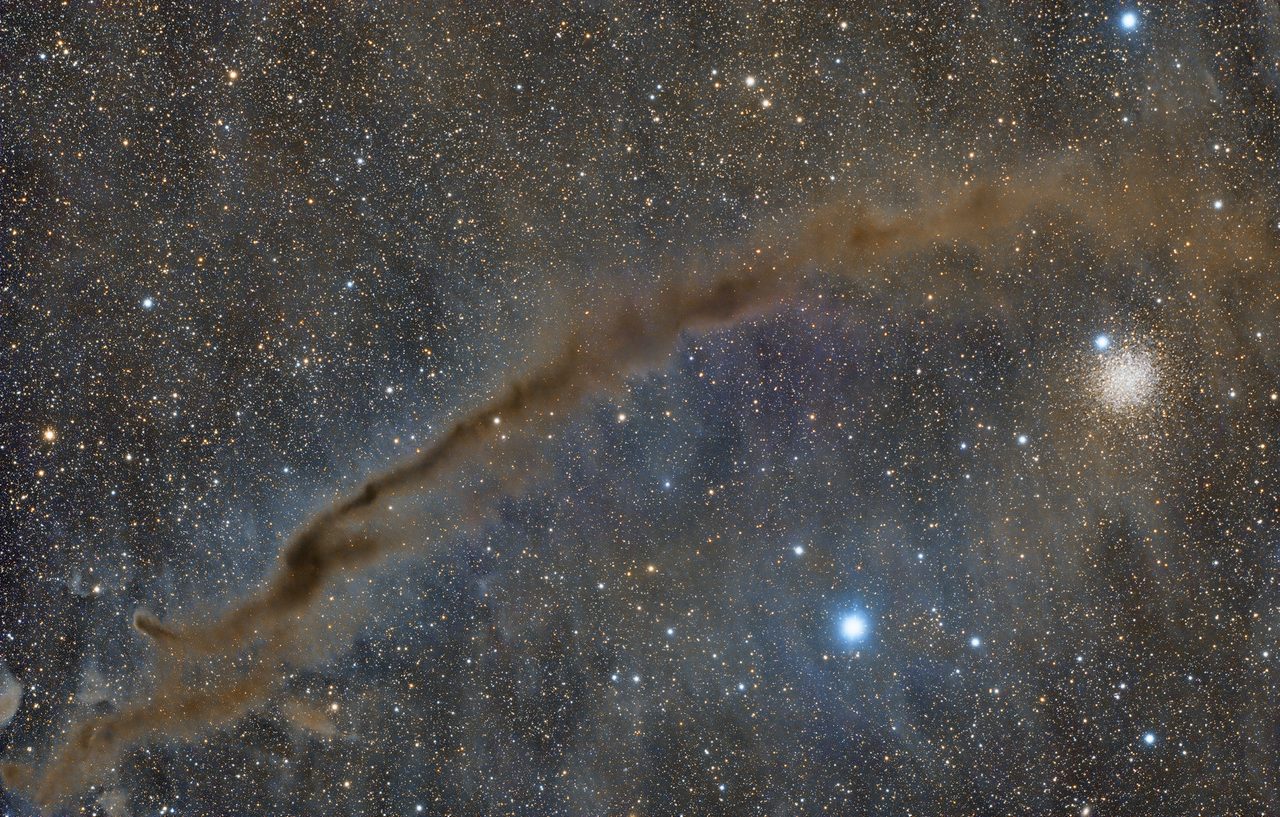
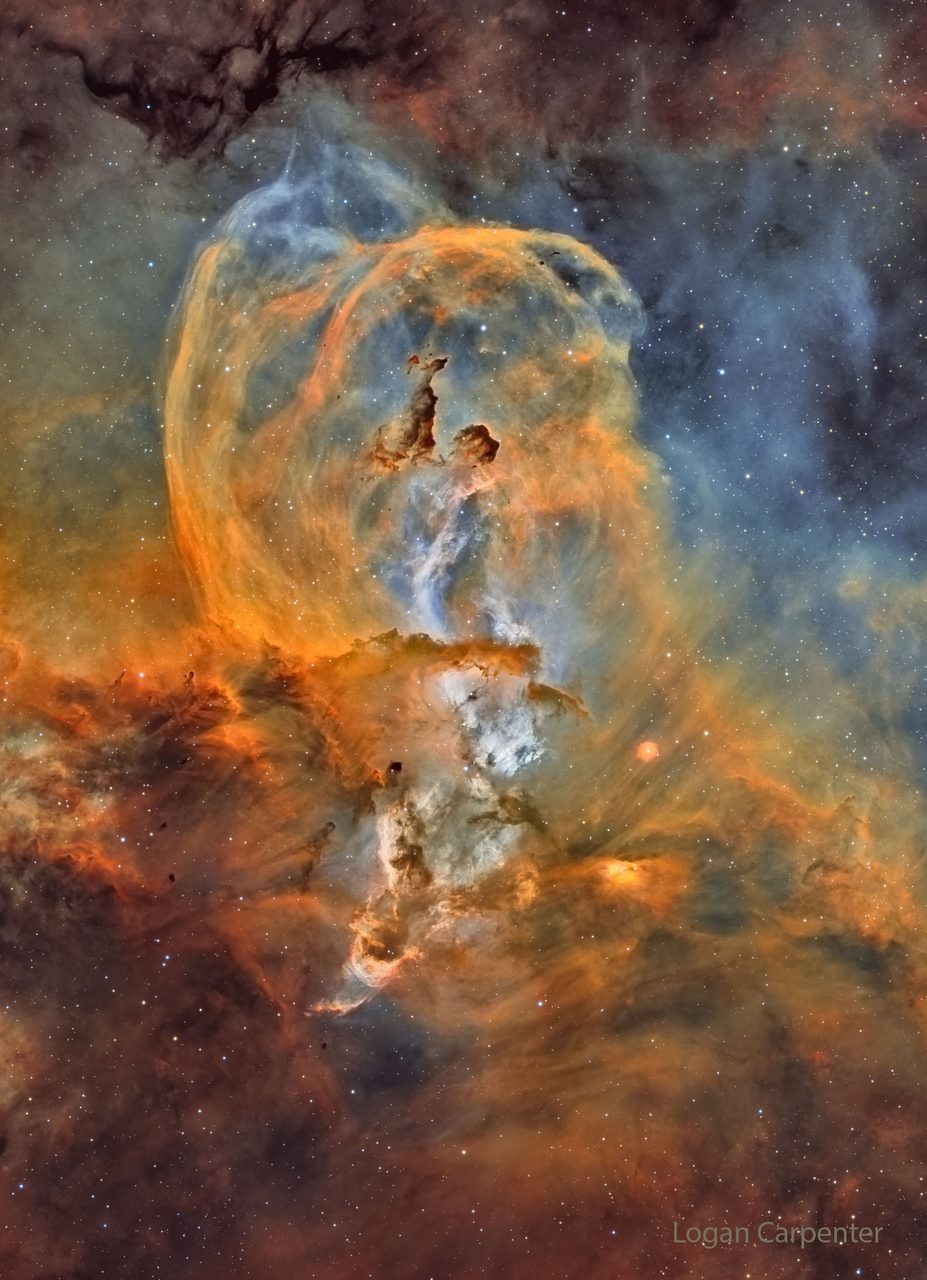
The Cosmic Bat Nebula, officially known as LDN 43, presents a striking image with its red glow, caused by ultraviolet light from young stars energising the surrounding hydrogen gas. This nebula, not to be confused with the similarly named Bat Nebula (NGC 6995), is a stellar nursery where new stars are born. Spanning an impressive 12 lightyears, the nebula's 'wings' are dense clouds of gas and dust, through which the light of young stars occasionally pierces. The image captures the nebula's red hue, a result of hydrogen gas being energised by the intense ultraviolet radiation from these nascent stars.
The Broader Cosmic Context
The Cosmic Bat Nebula is a prime example of the dynamic processes that govern star formation in our galaxy. Such nebulae are crucial for understanding the life cycle of stars, from their formation to eventual demise. The energised hydrogen gas that gives the nebula its red glow is a common feature in star-forming regions, providing astronomers with clues about the conditions necessary for star birth. As we continue to study these celestial phenomena, tools like the Satellite Eye allow us to observe and analyse these distant regions in unprecedented detail, enhancing our understanding of the universe.
Observing the Cosmic Bat
While the Cosmic Bat Nebula is not visible to the naked eye, it can be observed through powerful telescopes equipped with infrared capabilities. These instruments can penetrate the dense dust clouds, revealing the young stars hidden within. For those interested in tracking the movements of satellites that might pass near such regions, the Pass Predictor tool on Orbital Radar offers valuable insights into when and where to look.
Frequently Asked Questions
What causes the red glow of the Cosmic Bat Nebula?
How far is the Cosmic Bat Nebula from Earth?
📎 Cite this article
Orbital Radar Newsroom. (2026). Unveiling the Cosmic Bat Nebula's Celestial Secrets. Orbital Radar. https://orbitalradar.com/blog/cosmic-gallery-2026-07-09"Unveiling the Cosmic Bat Nebula's Celestial Secrets." Orbital Radar, 10 July 2026, https://orbitalradar.com/blog/cosmic-gallery-2026-07-09.@misc{orbitalradar_cosmic_gallery_2026_07_09,
title = {Unveiling the Cosmic Bat Nebula's Celestial Secrets},
author = {{Orbital Radar}},
year = {2026},
howpublished = {\url{https://orbitalradar.com/blog/cosmic-gallery-2026-07-09}}
}