Unveiling the Hamster Wheel Nebula: A Cosmic Enigma
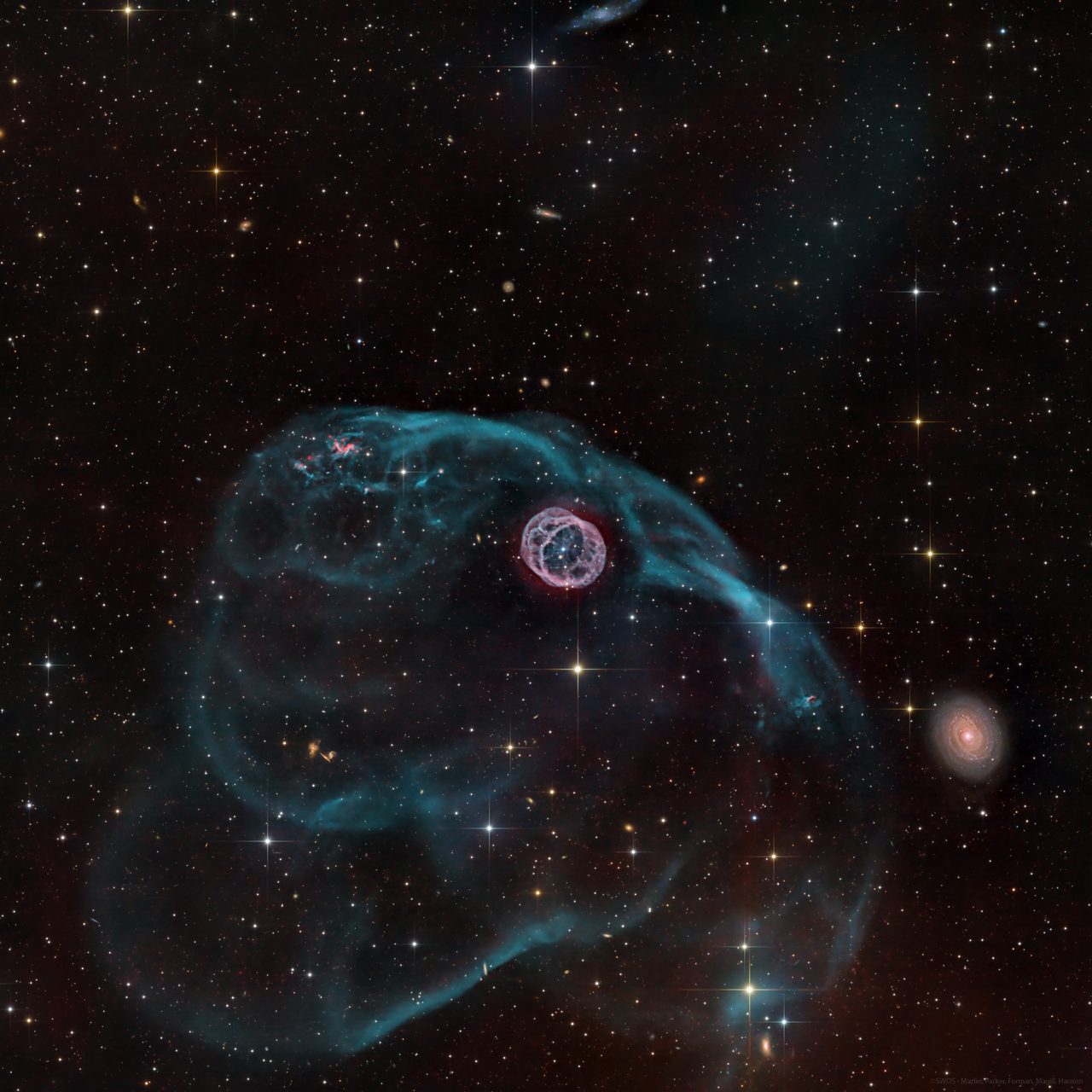
The Hamster Wheel Nebula, or Longmore 8, showcases a dying star's remnants with intricate hydrogen and oxygen structures, highlighting advances in astronomical imaging.
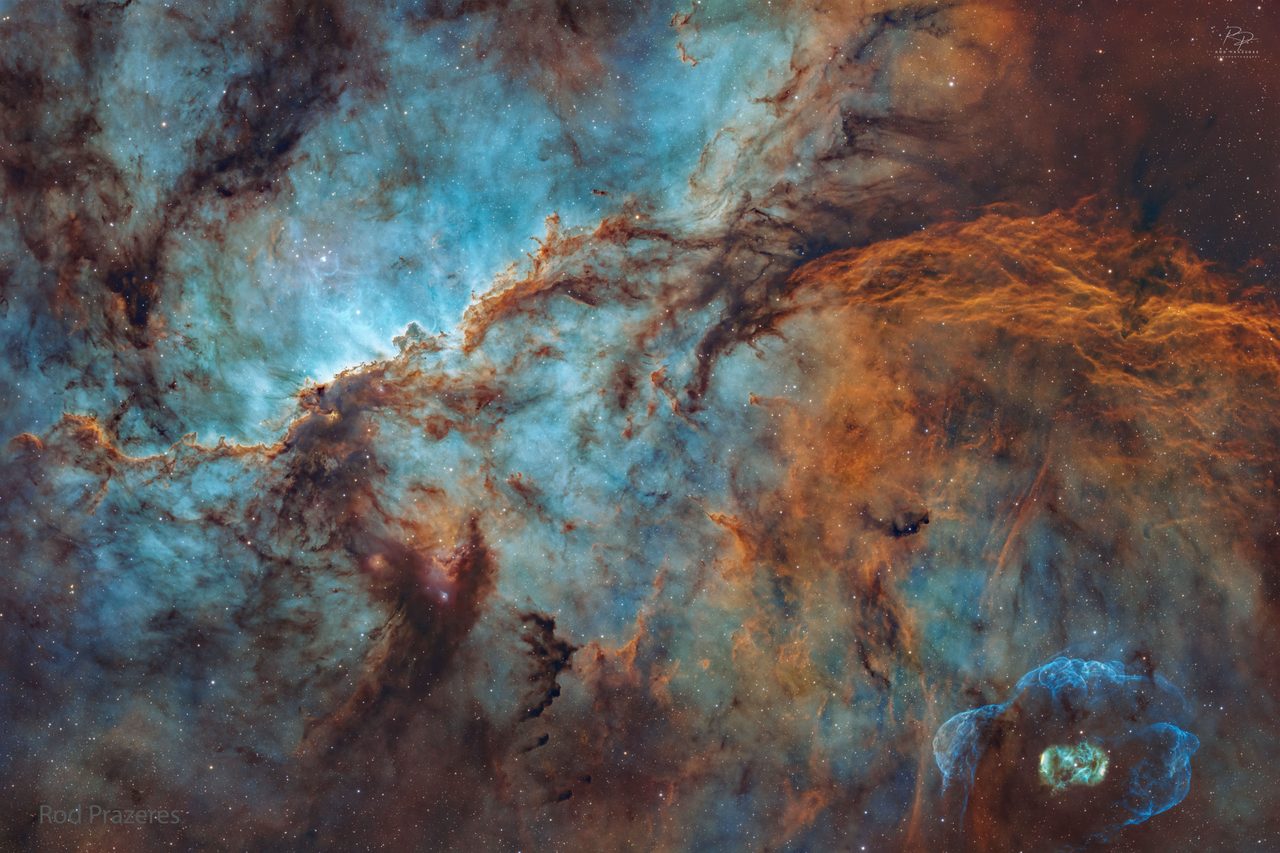
The Hamster Wheel Nebula, officially known as Longmore 8, is a captivating celestial object discovered in 1976 by Andrew Longmore. This nebula presents an intricate wheel-like structure composed of glowing hydrogen gas, expelled by a dying star. The image, captured at Observatorio El Sauce in Chile, reveals two opposing red clumps of hydrogen gas, encased in a blue veil of ionized oxygen, suggesting the presence of a companion star. The nebula's central white dwarf ionizes the surrounding gases, creating a stunning visual spectacle that was only hinted at in the original photographic plates from Longmore's survey.
The Science Behind the Beauty
The Hamster Wheel Nebula exemplifies the life cycle of stars, illustrating how stellar remnants can create complex and beautiful structures in space. As stars exhaust their nuclear fuel, they expel outer layers, forming nebulae like Longmore 8. The intricate patterns observed are a result of interactions between the expelled gases and the remaining stellar core, or white dwarf. This process highlights the dynamic nature of our universe and the continuous cycle of stellar evolution. For those interested in observing such phenomena, the Satellite Eye tool provides live satellite imagery, offering a glimpse into the ever-changing cosmos.
Observing the Nebula
While the Hamster Wheel Nebula is not visible to the naked eye, amateur astronomers equipped with telescopes can attempt to observe it under optimal conditions. Located in the southern sky, it requires a dark site and a telescope with sufficient aperture to capture its faint glow. Observing tips and predictions for visible passes of satellites can be found using the Pass Predictor on Orbital Radar, which assists in planning your stargazing sessions.
Frequently Asked Questions
What is the Hamster Wheel Nebula?
How was the Hamster Wheel Nebula discovered?
📎 Cite this article
Orbital Radar Newsroom. (2026). Unveiling the Hamster Wheel Nebula: A Cosmic Enigma. Orbital Radar. https://orbitalradar.com/blog/cosmic-gallery-2026-06-17"Unveiling the Hamster Wheel Nebula: A Cosmic Enigma." Orbital Radar, 17 June 2026, https://orbitalradar.com/blog/cosmic-gallery-2026-06-17.@misc{orbitalradar_cosmic_gallery_2026_06_17,
title = {Unveiling the Hamster Wheel Nebula: A Cosmic Enigma},
author = {{Orbital Radar}},
year = {2026},
howpublished = {\url{https://orbitalradar.com/blog/cosmic-gallery-2026-06-17}}
}