Celestial Duet: Milky Way and Zodiacal Light Over Atacama
The Atacama Desert offers a stunning view of the Milky Way and zodiacal light, revealing insights into cosmic dust origins.
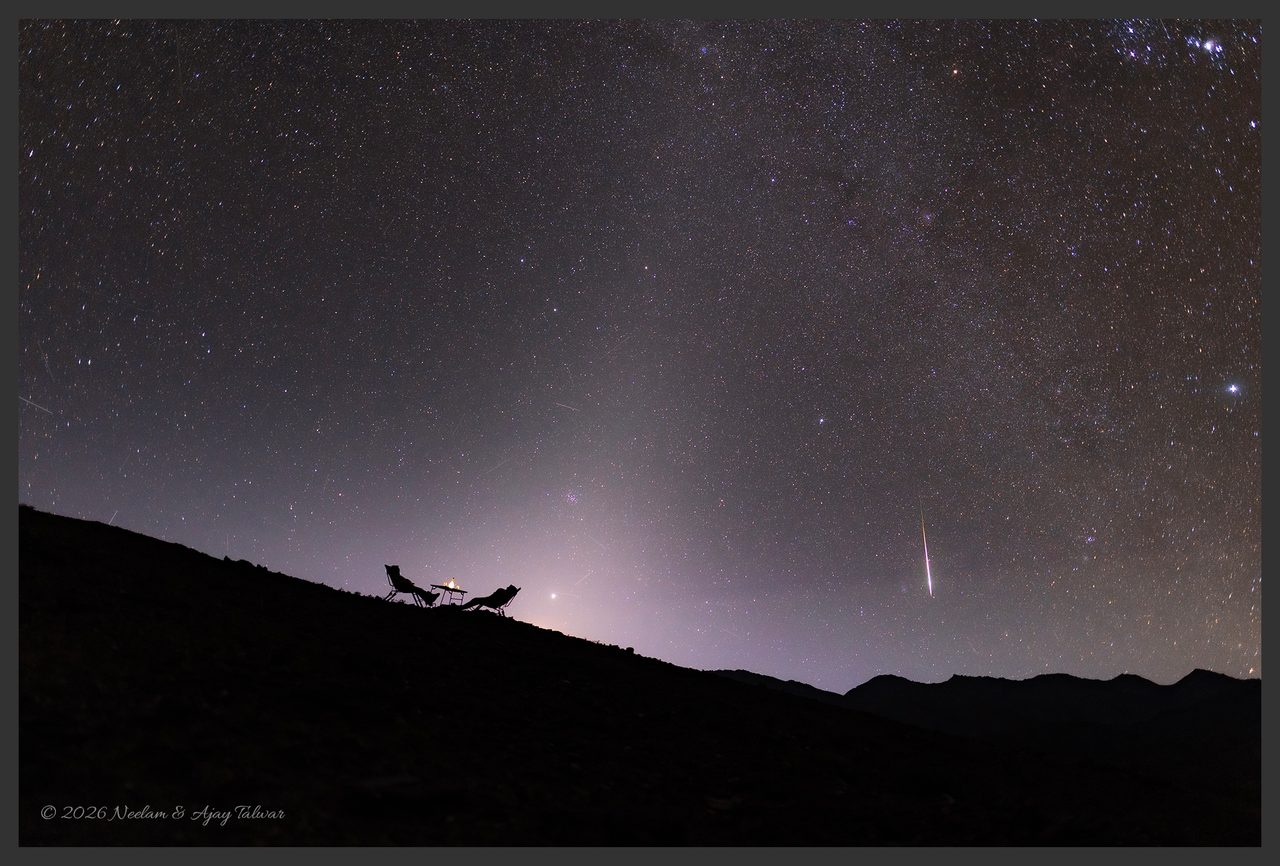
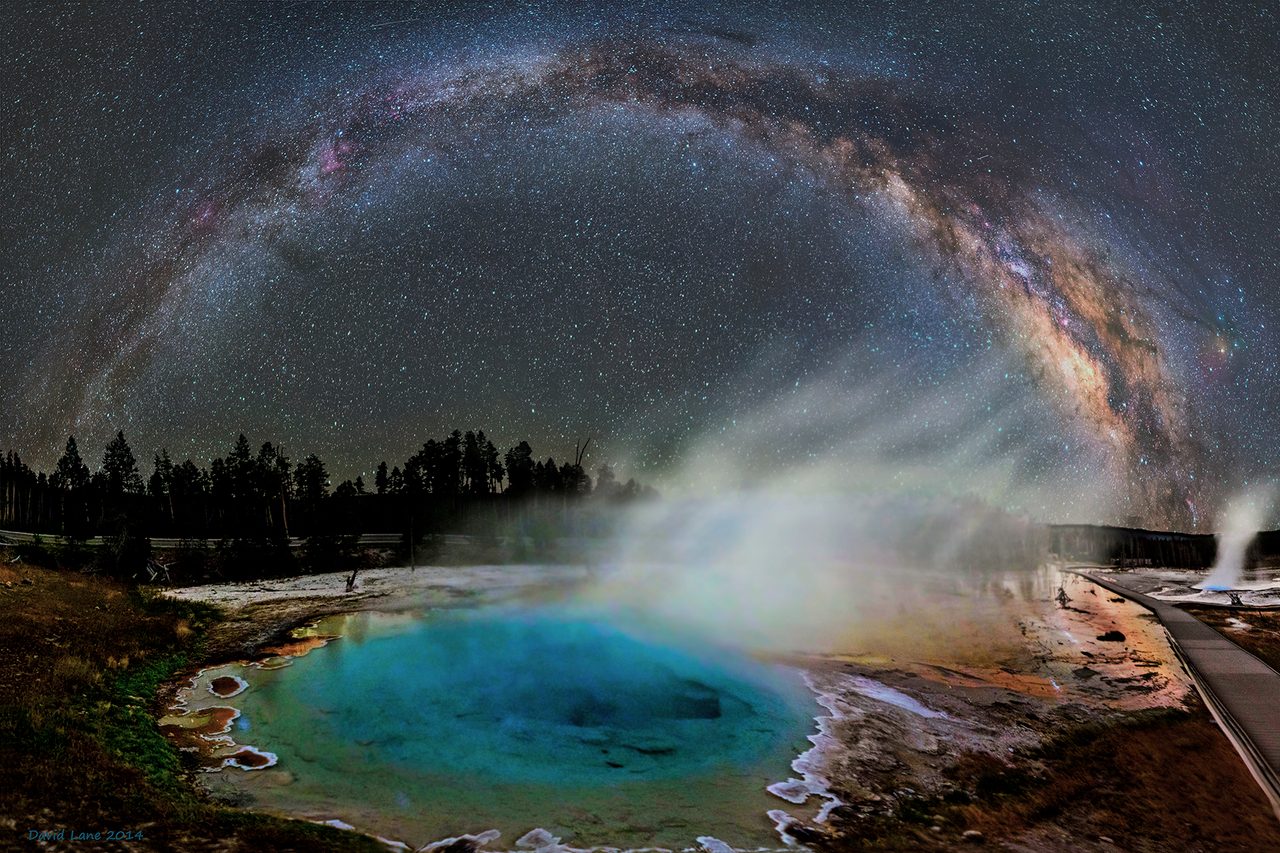
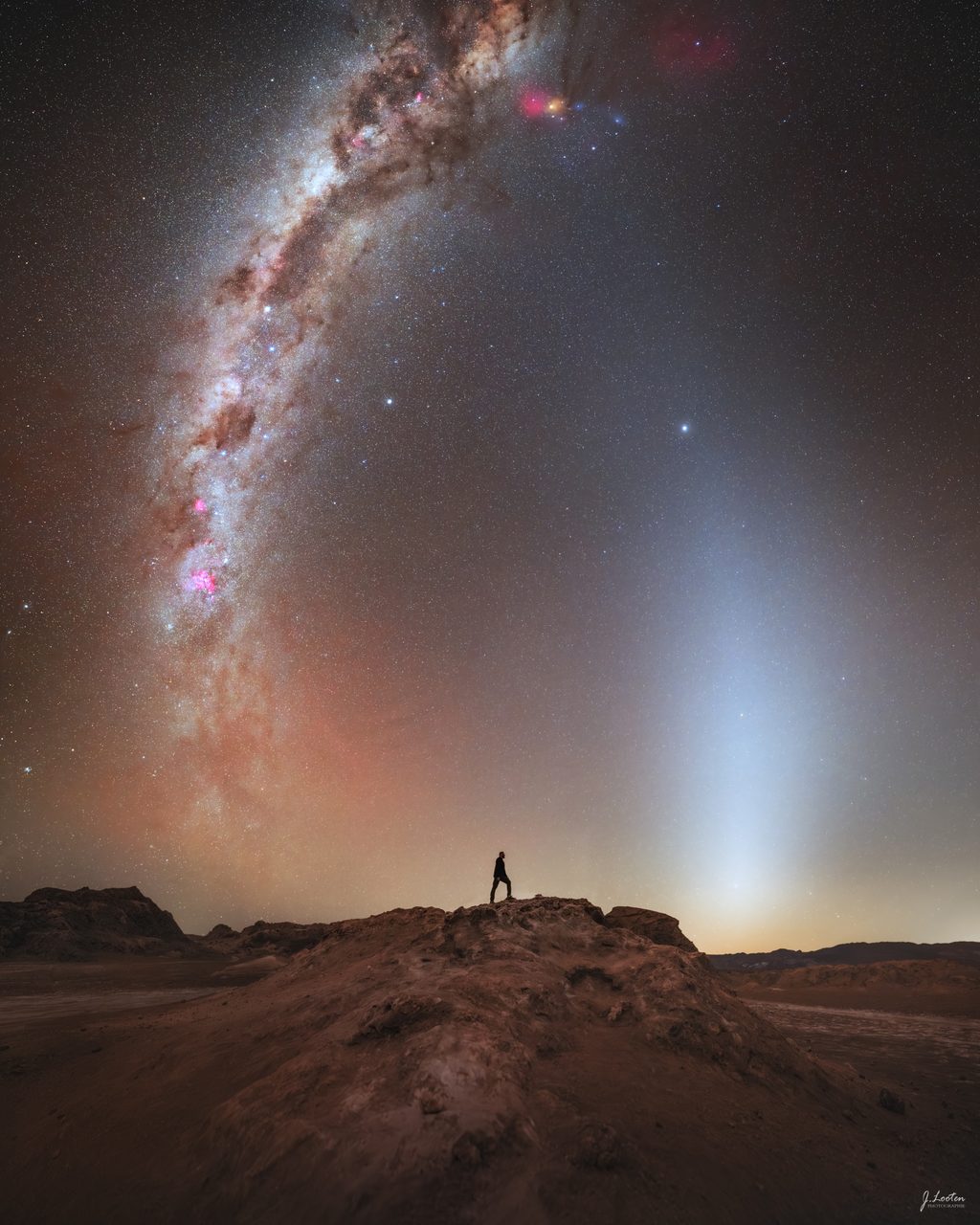
The Atacama Desert in Chile, renowned for its clear skies, presents a remarkable view of two celestial bands. On the left, the central band of our Milky Way galaxy stretches across the sky. This band is the result of our Sun's position within the galaxy's disk, offering a luminous path visible from Earth. On the right, a less familiar sight appears: the zodiacal light. This phenomenon is caused by sunlight reflecting off dust particles that orbit the Sun within our Solar System. These particles, primarily expelled by comets near Jupiter, create a faint yet distinct glow best observed just after sunset or before sunrise.
Unveiling Cosmic Dust Origins
The zodiacal light, while often overlooked, provides significant insights into the origins and behaviour of cosmic dust. Recent studies have determined that much of this interplanetary dust is a byproduct of cometary activity, particularly from comets influenced by Jupiter's gravitational pull. This discovery adds a layer of complexity to our understanding of the Solar System's dynamics and the interplay between celestial bodies. For those interested in tracking such phenomena, the Near-Earth Objects tool on Orbital Radar offers a wealth of data on similar cosmic interactions.
Observing Tips for Stargazers
For enthusiasts wishing to witness this celestial duet, the Atacama Desert remains one of the best locations due to its minimal light pollution and high altitude. However, similar views can be enjoyed from any dark-sky area. The zodiacal light is most visible in the hour after sunset or before sunrise, particularly during equinoxes. To plan your stargazing session, the Pass Predictor on Orbital Radar can guide you on the best times to observe other celestial events.
Frequently Asked Questions
What is zodiacal light?
Why is the Atacama Desert ideal for stargazing?
📎 Cite this article
Orbital Radar Newsroom. (2026). Celestial Duet: Milky Way and Zodiacal Light Over Atacama. Orbital Radar. https://orbitalradar.com/blog/cosmic-gallery-2026-07-06"Celestial Duet: Milky Way and Zodiacal Light Over Atacama." Orbital Radar, 7 July 2026, https://orbitalradar.com/blog/cosmic-gallery-2026-07-06.@misc{orbitalradar_cosmic_gallery_2026_07_06,
title = {Celestial Duet: Milky Way and Zodiacal Light Over Atacama},
author = {{Orbital Radar}},
year = {2026},
howpublished = {\url{https://orbitalradar.com/blog/cosmic-gallery-2026-07-06}}
}