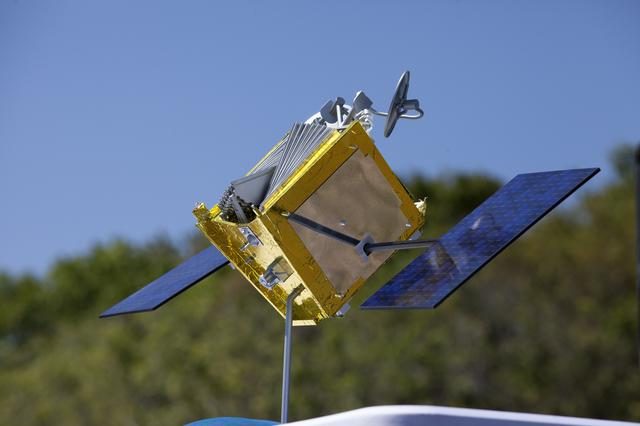
Gaia: ESA's Billion-Star Surveyor at L2
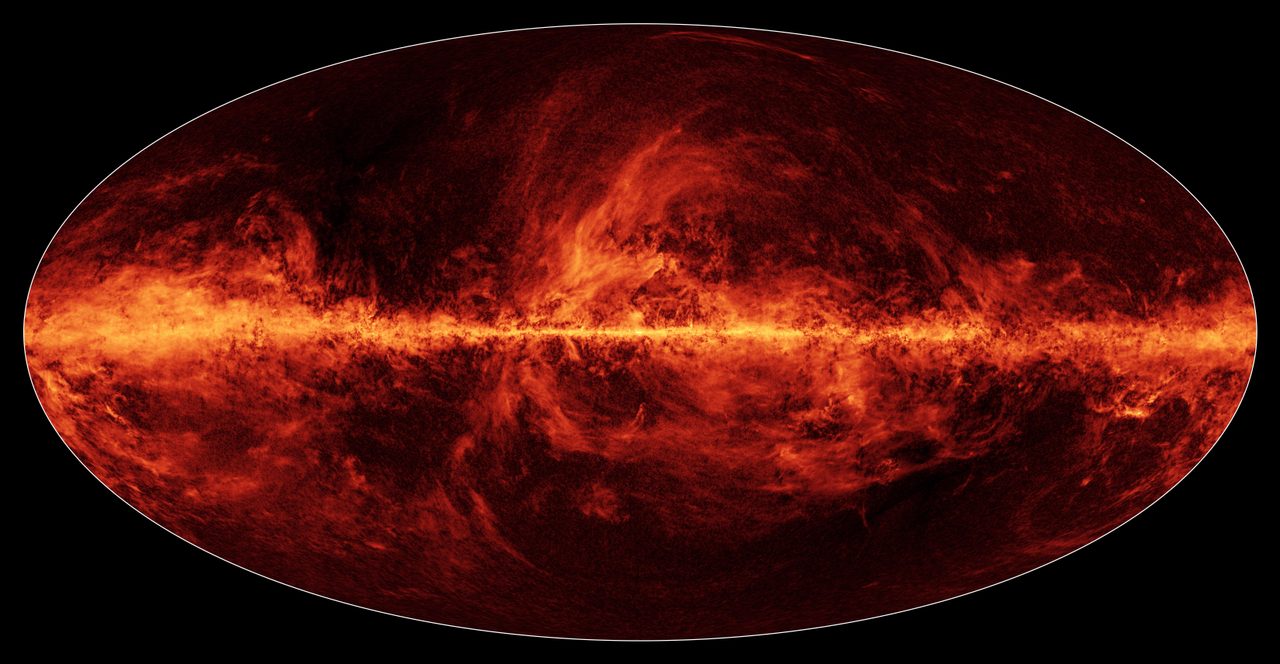
Gaia is a European Space Agency (ESA) mission designed to create a precise three-dimensional map of the Milky Way galaxy. Launched on 19 December 2013, Gaia's primary objective is to catalogue approximately one billion stars, measuring their positions, distances, and motions with unprecedented accur
What is Gaia?
Gaia is a European Space Agency (ESA) mission designed to create a precise three-dimensional map of the Milky Way galaxy. Launched on 19 December 2013, Gaia's primary objective is to catalogue approximately one billion stars, measuring their positions, distances, and motions with unprecedented accuracy. The satellite's data will provide insights into the composition, formation, and evolution of the galaxy. Gaia's mission is crucial for understanding the dynamics of our galaxy and the fundamental properties of stars.
Mission and Purpose
Gaia's mission aims to improve our understanding of the Milky Way by mapping the positions and velocities of stars. By observing each star approximately 70 times over its five-year mission, Gaia can detect changes in position as small as 24 microarcseconds. This precision allows astronomers to determine the distance to stars using the parallax method (a technique that measures the apparent shift of an object against a distant background). Gaia also observes asteroids, comets, and even distant galaxies, contributing to various fields of astronomy. For more information on Gaia's mission, visit the Orbital Radar Satellite Library.
Orbital Characteristics
Gaia operates from a position known as the second Lagrange point (L2), located approximately 1.5 million kilometres from Earth. This stable point allows the satellite to maintain a clear view of the sky without the interference of Earth's shadow. Gaia's orbit is a Lissajous orbit around L2, providing a stable environment for its sensitive instruments. The satellite's NORAD ID is 39482, and it follows an orbital period that synchronises with its scanning strategy, allowing it to cover the entire sky multiple times during its mission.
Significance and Legacy
Gaia's data is revolutionising our understanding of the Milky Way. The satellite's observations have led to the discovery of new star clusters, refined models of stellar evolution, and insights into the distribution of dark matter. Gaia's catalogue is expected to remain a vital resource for astronomers for decades, enabling future research into the structure and history of our galaxy. The mission's impact extends beyond stellar astronomy, contributing to the study of solar system objects and distant quasars.
Current Status
As of 2026, Gaia continues to operate successfully, with its mission extended beyond the original five-year plan. The satellite has released several data sets, each providing more detailed information about the stars in our galaxy. Gaia's data releases are eagerly anticipated by the astronomical community, offering new opportunities for discovery. The satellite's current status and upcoming data releases can be tracked through the Orbital Radar Satellite Library.
📎 Cite this article
Orbital Radar Newsroom. (2026). Gaia: ESA's Billion-Star Surveyor at L2. Orbital Radar. https://orbitalradar.com/blog/gaia-billion-star-surveyor-l2"Gaia: ESA's Billion-Star Surveyor at L2." Orbital Radar, 25 August 2026, https://orbitalradar.com/blog/gaia-billion-star-surveyor-l2.@misc{orbitalradar_gaia_billion_star_surveyor_l2,
title = {Gaia: ESA's Billion-Star Surveyor at L2},
author = {{Orbital Radar}},
year = {2026},
howpublished = {\url{https://orbitalradar.com/blog/gaia-billion-star-surveyor-l2}}
}