GLONASS-K: Russia's Next-Generation Navigation Satellites
GLONASS-K is the third generation of Russia's Global Navigation Satellite System (GNSS), designed to provide real-time positioning and timing data for military and civilian users worldwide. The system is a counterpart to the United States' GPS (Global Positioning System) and the European Union's Gal
What is GLONASS-K?
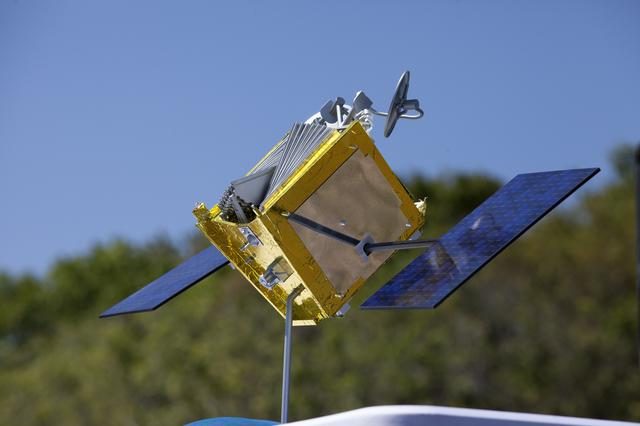
GLONASS-K is the third generation of Russia's Global Navigation Satellite System (GNSS), designed to provide real-time positioning and timing data for military and civilian users worldwide. The system is a counterpart to the United States' GPS (Global Positioning System) and the European Union's Galileo. GLONASS-K satellites represent a significant technological advancement over their predecessors, the GLONASS-M series, offering improved accuracy and reliability.
Mission and Purpose
The primary mission of GLONASS-K is to enhance the accuracy of navigation services provided by the GLONASS constellation. These satellites transmit navigation signals in two frequency bands, L1 and L2, and introduce a third civilian signal in the L3 band, which improves precision and integrity. This capability is crucial for applications ranging from aviation and maritime navigation to land-based positioning systems. The GLONASS-K series also supports search and rescue operations by transmitting distress signals from emergency beacons.
Orbital Characteristics
GLONASS-K satellites are deployed in medium Earth orbit (MEO) at an altitude of approximately 19,100 kilometres. They operate in three orbital planes with an inclination of 64.8 degrees, allowing them to cover high latitudes effectively, a feature particularly beneficial for Russia's geographical needs. Each satellite has a design life of 10 years, significantly longer than the 7-year lifespan of GLONASS-M satellites. The NORAD ID for one of the GLONASS-K satellites is 37829, launched in 2011.
Significance and Legacy
GLONASS-K represents a pivotal step in Russia's efforts to maintain and enhance its independent navigation capabilities. The introduction of the L3 signal aligns the system with international GNSS standards, facilitating interoperability with other global systems like GPS and Galileo. This interoperability is crucial for global navigation applications, ensuring users can rely on multiple systems for redundancy and improved accuracy. The GLONASS programme, initiated in the 1970s, has been instrumental in Russia's strategic and economic interests, providing an alternative to Western navigation systems.
Current Status
As of the latest data, there are several GLONASS-K satellites operational within the GLONASS constellation. These satellites continue to provide critical navigation services, with ongoing launches to replace older units and expand the system's capabilities. The GLONASS system, including the GLONASS-K satellites, can be explored further in the Orbital Radar Satellite Library, which offers comprehensive information on each satellite's status and specifications.
📎 Cite this article
Orbital Radar Newsroom. (2026). GLONASS-K: Russia's Next-Generation Navigation Satellites. Orbital Radar. https://orbitalradar.com/blog/glonass-k-russian-navigation-satellites"GLONASS-K: Russia's Next-Generation Navigation Satellites." Orbital Radar, 20 August 2026, https://orbitalradar.com/blog/glonass-k-russian-navigation-satellites.@misc{orbitalradar_glonass_k_russian_navigation_satellites,
title = {GLONASS-K: Russia's Next-Generation Navigation Satellites},
author = {{Orbital Radar}},
year = {2026},
howpublished = {\url{https://orbitalradar.com/blog/glonass-k-russian-navigation-satellites}}
}