Tiangong: China's Permanent Space Station
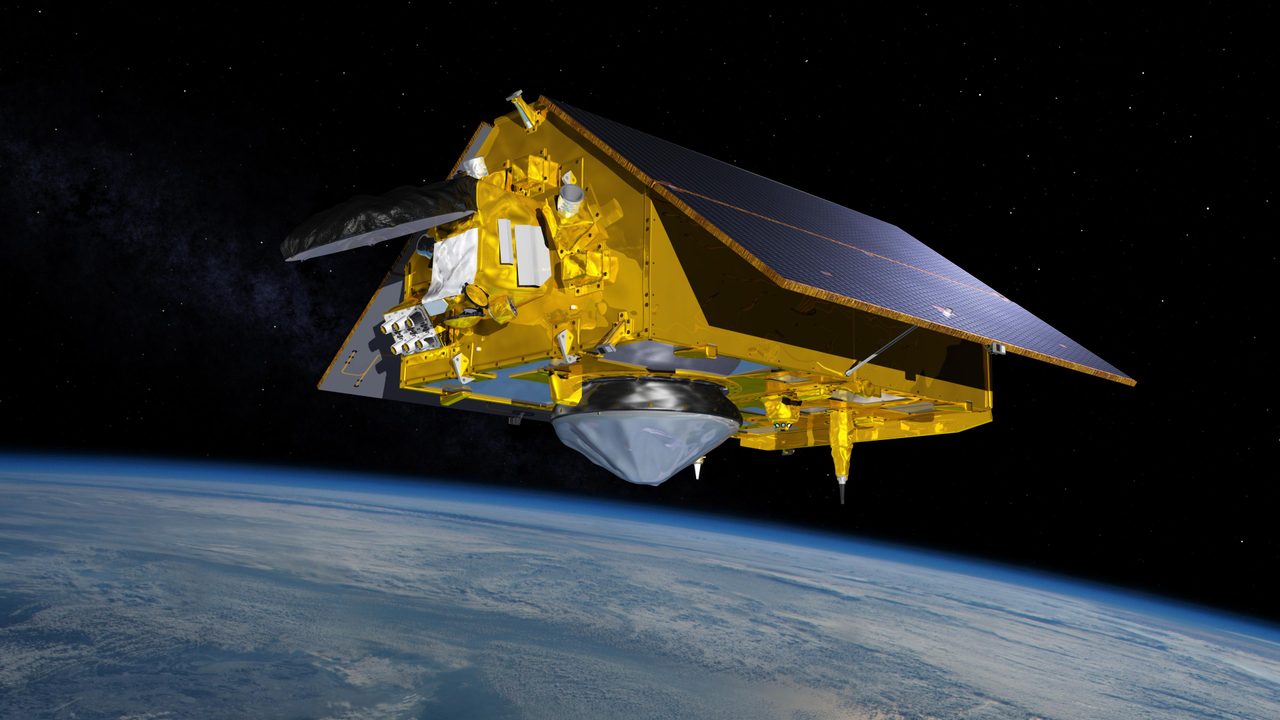
Tiangong, meaning 'Heavenly Palace', is China's permanent space station, a significant milestone for the China National Space Administration (CNSA). The station is designed to support long-term human habitation and scientific research in low Earth orbit (LEO).
Overview of Tiangong
Tiangong, meaning 'Heavenly Palace', is China's permanent space station, a significant milestone for the China National Space Administration (CNSA). The station is designed to support long-term human habitation and scientific research in low Earth orbit (LEO). It is a modular space station, similar in concept to the International Space Station (ISS), and serves as a symbol of China's growing capabilities in space exploration.
Mission and Purpose
The primary mission of Tiangong is to facilitate scientific research across various disciplines, including astronomy, biology, and materials science. It also serves as a platform for international cooperation, with CNSA inviting other countries to conduct experiments onboard. The station supports a crew of three astronauts (taikonauts) for extended missions, contributing to human spaceflight experience and technological developments.
Orbital Characteristics
Tiangong orbits Earth at an altitude of approximately 340 to 450 kilometres, with an inclination of 41.5 degrees. This orbit allows it to pass over much of the populated world, facilitating communications and observations. The station completes an orbit approximately every 92 minutes. Its NORAD ID is 48274, and it is tracked as part of the active payloads in the Orbital Radar Satellite Library.
Significance and Legacy
Tiangong represents a major achievement in China's space programme, marking its transition from a spacefaring nation to a leader in the field. The station's development has spurred advancements in spacecraft design, life support systems, and international collaboration. It is expected to operate for at least a decade, contributing valuable data and insights into long-duration space missions.
Current Status
As of the latest updates, Tiangong is fully operational with a rotating crew of taikonauts conducting experiments and maintenance tasks. The station continues to expand with additional modules planned for launch, enhancing its capabilities. For those interested in observing Tiangong from Earth, visible passes can be checked on the Orbital Radar pass predictor.
📎 Cite this article
Orbital Radar Newsroom. (2026). Tiangong: China's Permanent Space Station. Orbital Radar. https://orbitalradar.com/blog/tiangong-china-space-station"Tiangong: China's Permanent Space Station." Orbital Radar, 6 September 2026, https://orbitalradar.com/blog/tiangong-china-space-station.@misc{orbitalradar_tiangong_china_space_station,
title = {Tiangong: China's Permanent Space Station},
author = {{Orbital Radar}},
year = {2026},
howpublished = {\url{https://orbitalradar.com/blog/tiangong-china-space-station}}
}