How Do Satellites Get Power? Solar, Batteries and Nuclear
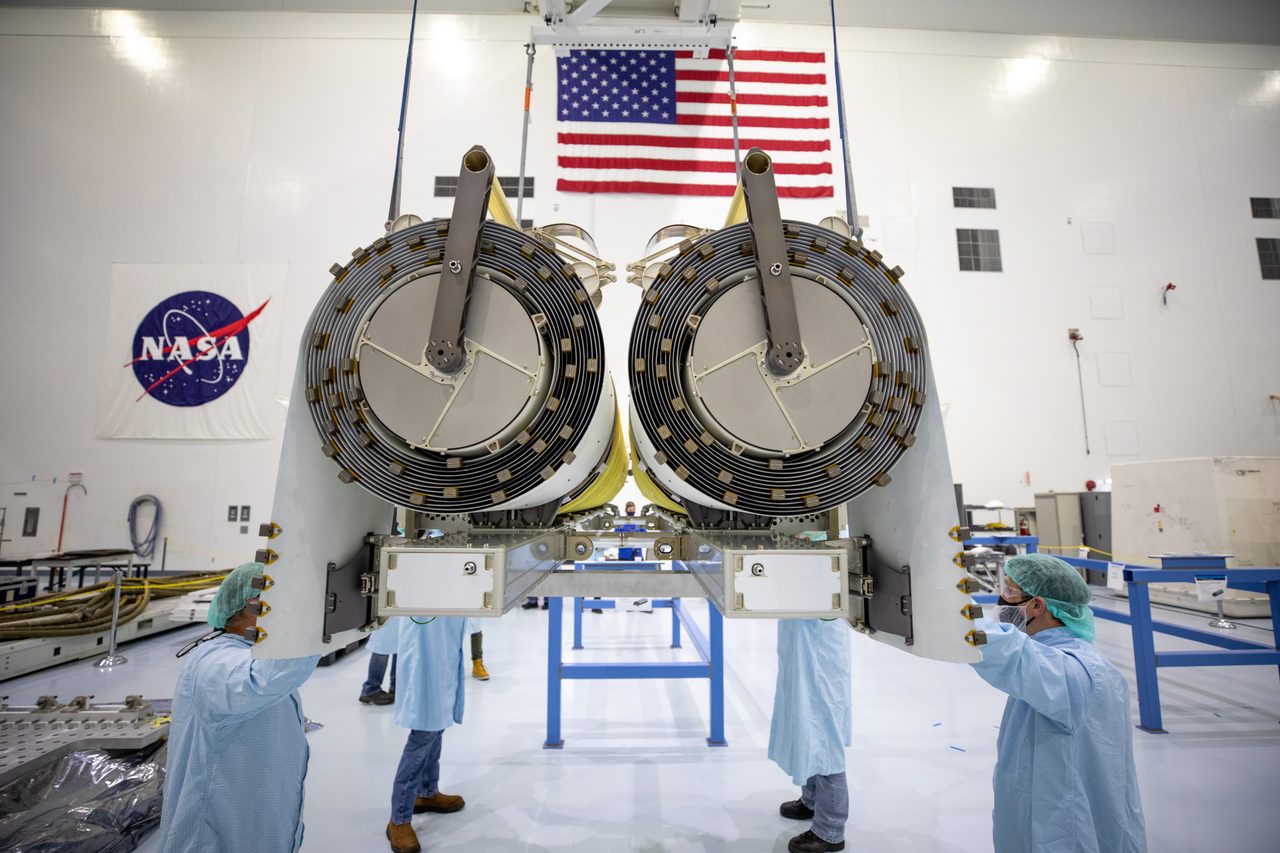
Most satellites turn sunlight into electricity and use batteries in darkness. Explore how spacecraft generate, store and ration power, from Earth orbit to deep space.
| Active satellites | 16,682 |
| Starlink active | 9,815 |
| Catalogued objects | 32,115 |
| Active close approaches | 11 |
| People in space | 10 |
Most satellites get power from solar cells, which convert sunlight into electricity, and rechargeable batteries, which supply electricity when sunlight is unavailable. Some deep-space spacecraft instead use generators that convert heat from radioactive decay into electricity, allowing them to operate where sunlight is too weak for practical solar power.
Orbital Radar tracking data lists 16,682 active satellites in orbit as of 15 November 2026. The spacecraft represented in Orbital Radar’s satellite library depend on electricity to run computers, communicate and keep essential equipment within safe temperatures. Their power needs vary with their mission, equipment and surroundings.
The central engineering challenge is not simply to produce enough electricity in full sunlight. A spacecraft must generate, store and distribute enough power to survive its least favourable operating conditions, including periods without sunlight and times when several systems need electricity together. That balance shapes what a satellite can do, how it operates and how long it can remain useful.
How do satellite solar panels turn sunlight into electricity?
Satellite solar panels turn sunlight into electricity through the photovoltaic effect: light transfers energy to a semiconductor, a material whose electrical properties can be controlled. This energy frees electrons to move, while an internal electric field directs them; connecting a circuit allows electrical current to flow.
A solar array is connected solar cells assembled into a power-generating surface, as explained in Orbital Radar’s solar array glossary entry. These cells generate electricity directly from light: they do not collect heat to drive a generator.
Body-mounted cells cover the spacecraft’s exterior, avoiding deployment mechanisms and keeping the design compact, but the available surface limits generating area. Deployable wings fold for launch and unfold in orbit, providing more area than the body alone. Their hinges, supports and sometimes Sun-tracking motors add mass and mechanical complexity, while the folded wings must fit inside the rocket’s protective fairing.
Orientation matters because cells intercept more sunlight when facing the Sun squarely. Shading by an antenna or another structure reduces output and can affect connected cells. Hotter cells generally convert sunlight less efficiently; farther from the Sun, less light reaches each unit of area, so the same array produces less electricity.
Orbital Radar tracking data lists 16,682 active satellites in orbit as of 15 November 2026. On that date, Orbital Radar tracking data lists 9,815 active Starlink satellites. These fleet counts indicate the scale of satellite operations, not how much electricity their arrays generate.
How do satellites keep working when they enter Earth's shadow?
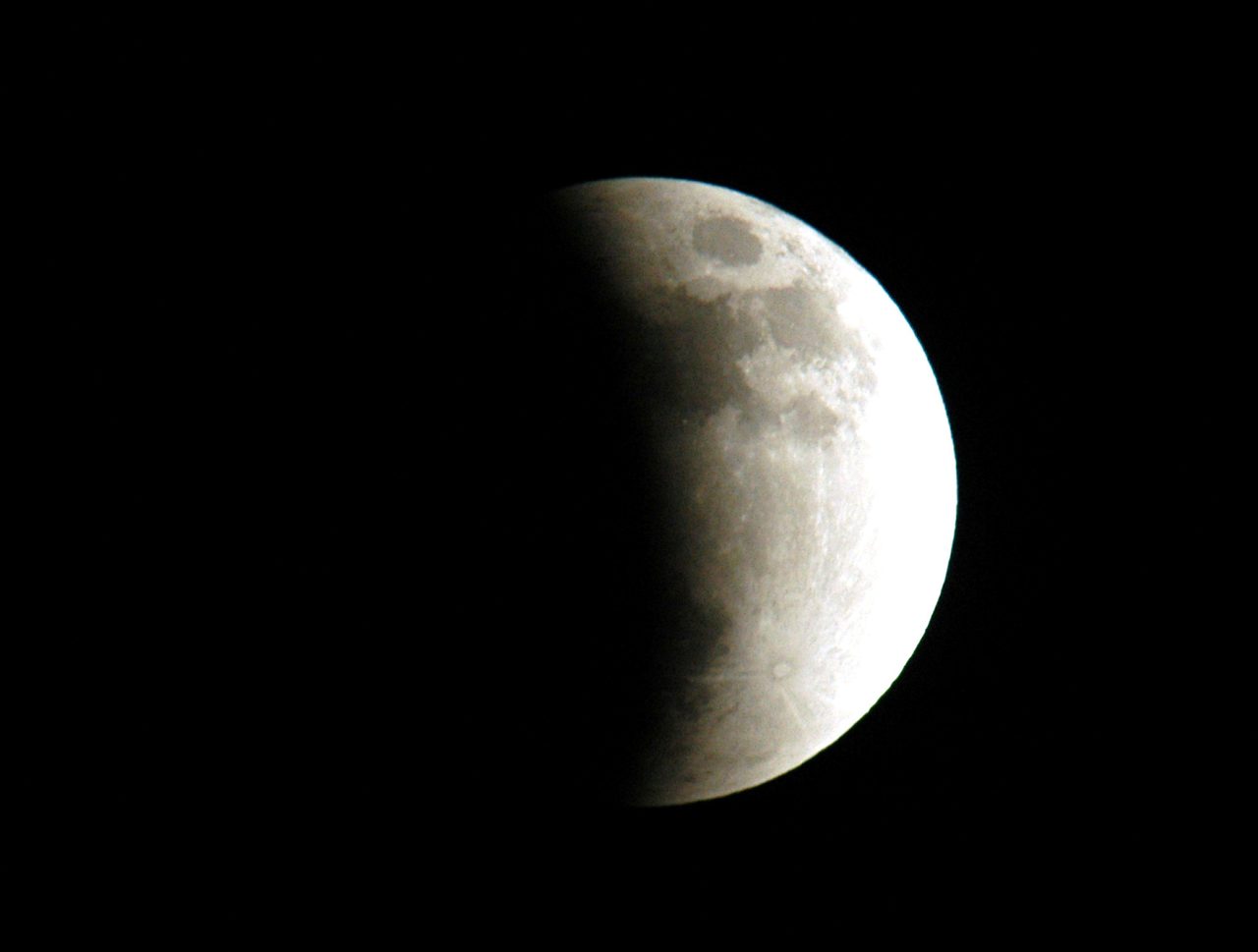
Satellites keep working in Earth's shadow by drawing electricity from rechargeable batteries. During an orbital eclipse (a passage through Earth's shadow), Earth blocks direct sunlight from reaching the solar cells, so the spacecraft must rely on stored energy rather than its usual solar supply.
The batteries power essential systems, including the onboard computer, communications, heaters and equipment that controls the spacecraft's orientation. They can also support scheduled payload operations—the work done by instruments or communications equipment—provided the energy budget allows it. Operators plan these activities around the charge available.
Sunlight must therefore do more than keep a satellite running. During the sunlit part of each orbit, its solar array must generate enough electricity both to operate the spacecraft and to replenish the energy used in shadow, allowing for losses during charging and discharging.
There is no universal eclipse duration. The frequency and length of shadow passages depend on orbital altitude, the orientation of the orbit relative to the Sun, and the season. Some orbits encounter eclipses repeatedly; others have periods of continuous sunlight. Battery capacity and operating schedules must accommodate the expected eclipse pattern.
Orbital Radar tracking data lists 16,682 active satellites as of 15 November 2026. Starlink accounts for 9,815 active satellites as of 15 November 2026, according to Orbital Radar tracking data. Individual spacecraft and their orbital settings can be explored in Orbital Radar's satellite library.
What batteries do satellites use, and how are they protected?
Lithium-ion batteries are a common choice for modern spacecraft because they store substantial energy for their mass, although chemistry varies with mission design and heritage. Batteries store energy supplied by solar arrays or another source; they do not generate it. Orbital Radar tracking data lists 16,682 active satellites as of 15 November 2026.
Battery power, measured in watts, is the rate at which energy can be delivered. Energy capacity, measured in watt-hours, describes how much is available over time. A battery may hold enough energy for a task yet be unable to deliver it at the required rate.
Depth of discharge means the fraction of stored energy used before recharging. Deeper discharges generally put greater strain on lithium-ion cells, so designers often keep some capacity in reserve. Repeated charging and discharging, temperature and ageing all influence how much energy remains usable.
Charge controllers regulate charging current and voltage, while protective electronics guard against overcharging, excessive discharge and short circuits. Heaters and insulation help keep cells within their operating temperature limits: cold can reduce available performance, while excessive heat can accelerate damage.
Orbital Radar tracking data lists 9,815 active Starlink satellites as of 15 November 2026. Those fleet totals do not specify individual battery designs; readers exploring spacecraft in the Orbital Radar satellite library should distinguish a mission's documented electrical specifications from general battery principles.
How does electricity reach a satellite's instruments and thrusters?
A satellite’s power distribution system carries electricity from its generators and batteries to instruments, computers, heaters and propulsion equipment. It is the spacecraft’s electrical network, connecting power sources to the equipment that needs them.
An electrical bus is a shared power supply serving multiple devices. Depending on the spacecraft’s design, voltage converters adapt that supply for different equipment, switches connect or disconnect individual circuits, and protective devices isolate faults such as excessive current. Some spacecraft use several buses rather than a single shared supply.
Flight computers and dedicated power controllers coordinate battery charging and equipment use as sunlight, temperature and mission activities change. They may schedule communications and scientific observations, adjust heater operation and control charging so that competing demands stay within the available supply.
Electric thrusters use electrical energy to accelerate propellant and require substantial electrical input while firing. Chemical engines instead obtain their thrust energy from propellants, although their valves, controls and supporting electronics still need electricity.
Orbital Radar tracking data lists 16,682 active satellites as of 15 November 2026. Of these, 9,815 are active Starlink satellites as of 15 November 2026, according to Orbital Radar tracking data. That population spans different power architectures; Orbital Radar’s satellite library provides a starting point for exploring individual spacecraft.
Why do some deep-space spacecraft use nuclear power?
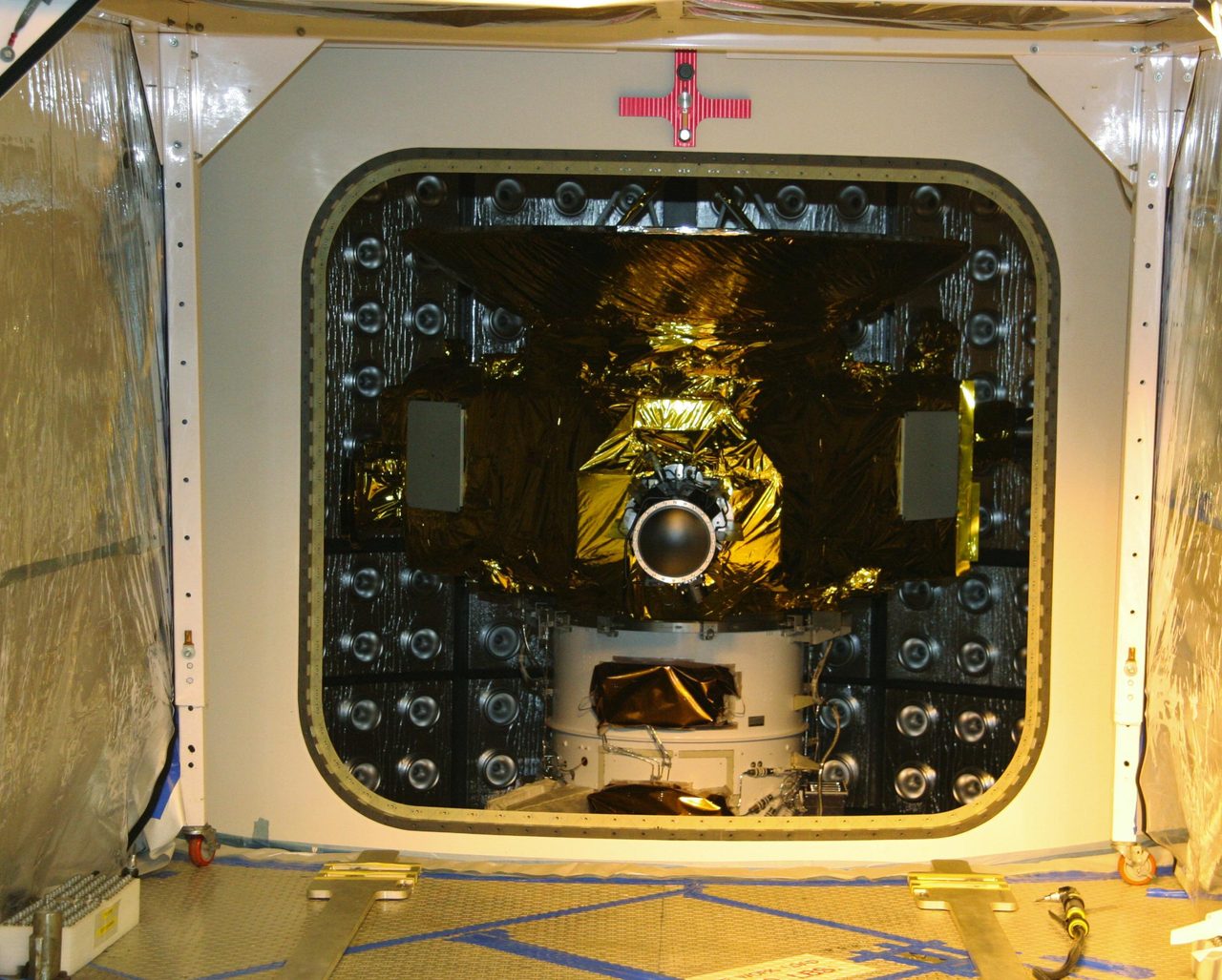
Some deep-space spacecraft use nuclear power because sunlight becomes too weak for a practical solar array to supply their electricity. Sunlight follows an inverse-square law: at twice the distance from the Sun, a panel receives one-quarter as much light. Collecting enough energy therefore demands more panel area, adding mass and complicating deployment, pointing and spacecraft design.
A radioisotope thermoelectric generator (RTG) converts heat from radioactive decay directly into electricity. Voyager and New Horizons use these generators, with plutonium-238 providing heat and thermocouples producing electricity from the temperature difference between hot and cold surfaces. They work without sunlight, while some of their heat can also help keep spacecraft equipment warm.
An RTG is not a fission reactor. Radioisotope generators rely on the natural decay of radioactive material; reactors generate heat through a controlled chain reaction that splits atomic nuclei. Neither is a rechargeable battery: both generate electricity from nuclear processes rather than storing electricity supplied by a charger.
Nuclear power is not essential for every journey beyond Earth. Juno operates at Jupiter using large solar arrays, demonstrating that solar power can remain practical when the spacecraft and its operations are designed around limited sunlight. The distinction matters when comparing missions travelling into deep space.
Engineers choose a power source by balancing destination, thermal needs, mission duration, mass and available electrical output. An RTG offers independence from sunlight but limited electrical power; solar arrays avoid radioactive fuel but need adequate illumination. Orbital Radar's Space Academy provides background on the spacecraft systems involved in these trade-offs.
How does available power limit what a satellite can do?
Available electrical power limits which tasks a satellite can perform simultaneously and how long it can sustain them. Engineers use a power budget: an accounting of electrical supply and demand across operating modes such as observing, transmitting, manoeuvring and standby.
Orbital Radar tracking data lists 16,682 active satellites as of 15 November 2026. Starlink accounts for 9,815 active satellites as of 15 November 2026, according to Orbital Radar tracking data. Across spacecraft, the balance depends on their equipment and mission; Orbital Radar’s satellite library provides context on different spacecraft and their roles.
Communications transmitters, radar instruments, electric propulsion and thermal control can compete for the same supply. A radar sending powerful pulses, a thruster accelerating electrically charged propellant and heaters protecting cold equipment may demand more electricity together than the power system can deliver.
Peak power is not the same as total energy use. Power is the rate of using energy: a brief transmission can strain the instantaneous supply while consuming relatively little energy overall. Batteries may help meet a peak, but wiring and power electronics must also support that demand.
Operators can schedule observations around transmissions, reduce an instrument’s duty cycle (the fraction of time it operates), or postpone manoeuvres. Power is only one constraint: communications speed also depends on bandwidth and signal strength, while image quality depends on optics, detectors and observing conditions.
Higher consumption also creates a thermal challenge because much of the electricity becomes waste heat. With no surrounding air to carry it away, that heat must ultimately be radiated into space, so cooling capacity can constrain operations alongside electrical supply.
Why does a satellite's power supply weaken over time?
A satellite's power supply weakens as radiation and physical damage reduce solar-array output, batteries age, and nuclear generators gradually lose electrical output. Orbital Radar tracking data lists 16682 active satellites as of 15 November 2026; their power systems face different stresses depending on orbit and design.
Energetic particles damage the semiconductor materials that convert sunlight into electricity. Tiny debris and micrometeoroid impacts can damage cells or connections, while thermal cycling (repeated heating and cooling) stresses materials and joints. Orbital Radar tracking data lists 10188 debris objects as of 15 November 2026, although many particles capable of damaging panels are too small to track individually.
Batteries lose usable capacity through both calendar ageing and repeated charging and discharging. Temperature and operating conditions influence the rate: an older battery may store less energy even when its charge indicator reads full.
Engineers therefore size arrays and batteries for expected end-of-life performance, not merely launch-day output. These design margins allow for degradation over the planned mission. Radioisotope generators also weaken: radioactive decay reduces their heat supply, while ageing conversion components produce less electricity from that heat.
Orbital Radar's guide to space weather explains how solar activity changes radiation exposure and can disrupt operations. A solar storm can cause temporary electrical disturbances or protective shutdowns without permanently reducing generating capacity; lasting damage depends on the exposure and spacecraft design.
What happens if a satellite runs short of electricity?
A satellite running short of electricity may enter safe mode, a protective operating state that reduces activity and prioritises essential functions. Instruments and other non-essential equipment are switched off so the remaining power can support the flight computer, temperature control and, where possible, communications.
For a solar-powered spacecraft, recovery may involve restoring a Sun-pointing attitude (orientation) so its arrays receive sunlight. Controllers, or onboard software, can then allow the batteries to recharge before restarting equipment gradually. Recovery depends on enough power remaining to operate the systems needed to diagnose and correct the problem.
A temporary shortfall is different from a hardware failure. An array that never deployed, damaged electrical connections or a battery unable to support essential systems may prevent recovery even in full sunlight. Safe mode conserves electricity; it cannot repair broken hardware.
Permanent power loss can end communications and controlled manoeuvring, but it does not make a satellite immediately fall to Earth: orbital motion continues without electricity. Atmospheric drag can gradually lower an orbit, with the timescale depending strongly on altitude.
Orbital Radar tracking data lists 16,682 active satellites as of 15 November 2026. Orbital Radar's live catalogue contains 32,115 objects, including debris, as of 15 November 2026. The Orbital Radar debris map provides context for the objects remaining in orbit, including spacecraft no longer operating.
How can I explore real satellites and their power systems?
Start with Orbital Radar’s satellite library: find named spacecraft and use the available mission descriptions to connect power-system engineering with actual missions. Look for the spacecraft’s purpose, operating environment and equipment, rather than assuming that every catalogue entry includes detailed electrical specifications.
Orbital Radar tracking data lists 9,815 operational Starlink satellites as of 15 November 2026. A Starlink broadband satellite is a useful starting point for comparison with an Earth-observation spacecraft such as Sentinel-2 and a deep-space probe such as Voyager 1.
Compare what each mission needs electricity to do. For Starlink, consider communications equipment and electrically powered propulsion; for Sentinel-2, consider imaging instruments and sending observations to Earth; for Voyager 1, consider scientific instruments and maintaining a communications link across interplanetary distances. These different roles help explain why spacecraft designers choose different power sources, storage arrangements and operating schedules.
Keep the observational limit clear: catalogue entries and orbital tracking are not live measurements of solar-array output, battery charge or onboard power consumption. A mission description can explain a design, while an orbit shows where a spacecraft travels; neither establishes its electrical condition at a particular moment.
Brightness or visibility from the ground cannot establish how much electricity a satellite is generating. What you see is reflected sunlight, influenced by viewing angle, spacecraft orientation and reflective surfaces—not a direct reading of its power system.
Key takeaways
- Most satellites generate electricity with solar arrays and store some of that energy in rechargeable batteries for periods without sunlight.
- Battery capacity, eclipse conditions and charging opportunities must be considered together when planning spacecraft operations.
- Some deep-space spacecraft use radioisotope generators, which produce electricity from decay heat rather than from a nuclear chain reaction.
- Available electrical power constrains instruments, communications, propulsion and thermal control throughout a mission.
Frequently Asked Questions
Can satellites generate electricity from moonlight?
Do satellites need fuel if they have solar panels?
Can a satellite's batteries be replaced or recharged from Earth?
Why do satellite solar panels often look blue or gold?
Could satellites beam solar electricity down to Earth?
Cite this article
Pick a style, then copy it or download it for your reference manager.Orbital Radar. (2026, November 15). How Do Satellites Get Power? Solar, Batteries and Nuclear. Retrieved November 15, 2026, from https://orbitalradar.com/blog/how-do-satellites-get-power
“How Do Satellites Get Power? Solar, Batteries and Nuclear.” Orbital Radar, 15 Nov. 2026, orbitalradar.com/blog/how-do-satellites-get-power. Accessed 15 Nov. 2026.
Orbital Radar (2026) How Do Satellites Get Power? Solar, Batteries and Nuclear. Available at: https://orbitalradar.com/blog/how-do-satellites-get-power (Accessed: 15 November 2026).
Orbital Radar. “How Do Satellites Get Power? Solar, Batteries and Nuclear.” Last modified November 15, 2026. https://orbitalradar.com/blog/how-do-satellites-get-power.
@misc{orbitalradar_blog_how_do_satellites_get_power,
  author       = {{Orbital Radar}},
  title        = {How Do Satellites Get Power? Solar, Batteries and Nuclear},
  year         = {2026},
  month        = nov,
  howpublished = {\url{https://orbitalradar.com/blog/how-do-satellites-get-power}},
  url          = {https://orbitalradar.com/blog/how-do-satellites-get-power},
  urldate      = {2026-11-15},
  note         = {Accessed 2026-11-15}
}
TY - ELEC AU - Orbital Radar, TI - How Do Satellites Get Power? Solar, Batteries and Nuclear PY - 2026 DA - 2026/11/15 PB - Orbital Radar UR - https://orbitalradar.com/blog/how-do-satellites-get-power Y2 - 2026/11/15 LA - en ER -
Live figures change, so keep the date you accessed the page. How to cite Orbital Radar