Satellite Servicing in Orbit: Refuelling and Repair

Docking can keep a satellite working after its own fuel runs low. Explore how orbital servicing works, what refuelling requires and which manoeuvres observers can identify.
| Active satellites | 16,689 |
| Starlink active | 9,849 |
| Catalogued objects | 32,108 |
| Active close approaches | 16 |
| People in space | 10 |
Satellite servicing in orbit means sending another spacecraft to extend a satellite’s working life through propulsion support, refuelling, inspection or repair. An attached servicing vehicle can supply thrust using its own propulsion system without transferring propellant into the client’s tanks.
Life-extension dockings have already supported commercial communications satellites in geostationary orbit (GEO), a circular orbit 35,786 km above the equator where satellites appear to hover over one spot. Docking therefore does not necessarily mean refuelling, while repairing hardware presents different challenges: reaching, manipulating and restoring components rather than simply keeping a satellite on station.
Orbital Radar tracking data lists 16,689 active satellites as of 12 November 2026. Orbital Radar’s live catalogue contains 32,108 objects, including debris, as of 12 November 2026.
Readers can use Orbital Radar’s manoeuvre tracker to examine orbital changes potentially associated with servicing. Those changes can provide evidence of altered motion, but tracking data alone cannot establish what happened at a docking interface—or whether fuel changed hands.
What counts as satellite servicing in orbit?
Satellite servicing in orbit means inspecting, supporting, refuelling, repairing or relocating a spacecraft after launch. Inspection assesses its condition; propulsion support supplies thrust or pointing control; refuelling transfers propellant; component replacement exchanges hardware; and relocation moves the client spacecraft to another orbit.
These activities are not equally mature. Close-up inspection and commercial life extension through an attached propulsion vehicle have been demonstrated, while astronauts have replaced components on spacecraft such as the Hubble Space Telescope. Propellant transfer has also been demonstrated, but routine robotic refuelling and component replacement across commercial satellite fleets remain capabilities under development, not generally available services.
A cooperative client is designed to help a servicing vehicle approach and connect, with features such as navigation markers, grapple fixtures, docking interfaces or accessible refuelling ports. A legacy spacecraft lacks some or all of these provisions, so servicing may require using existing structures that were never intended for docking. Its accessibility, condition and design determine what is feasible.
Orbital Radar tracking data lists 16,689 active satellites in orbit as of 12 November 2026. That population provides context, not a count of serviceable customers: being active does not establish compatibility with a servicing vehicle. The Orbital Radar satellite library offers a starting point for investigating individual spacecraft and their missions, rather than assuming every satellite can be refuelled or repaired.
Why service satellites in geostationary orbit?
Servicing a geostationary satellite can preserve a working communications service when its propellant is running out but its equipment remains useful. The commercial value lies in extending an existing service, rather than replacing hardware solely because the spacecraft can no longer maintain its position.
Geostationary orbit (GEO) is a circular orbit 35,786 km above the equator whose period matches Earth's rotation, making a satellite appear fixed over one location. That steady vantage supports television, telecommunications and weather monitoring without requiring ground antennas to follow the satellite across the sky. As Orbital Radar's GEO glossary entry explains, GEO is a special case of geosynchronous orbit: geosynchronous satellites match Earth's rotation period but need not follow a circular, equatorial path.
Station-keeping means the corrective manoeuvres that maintain a satellite's assigned orbital position against disturbances, including gravitational influences from the Moon and Sun. These manoeuvres consume propellant, whereas the communications payload—the equipment receiving and transmitting signals—typically runs on solar-generated electricity. A functioning payload can therefore outlast the fuel needed to keep it correctly positioned.
Servicing is worthwhile only if its cost and risks compare favourably with replacement or other options, given the client's condition and expected remaining usefulness. Orbital Radar's GEO spacecraft directory provides a starting point for exploring satellites in this orbital category.
How do life-extension vehicles keep satellites working?
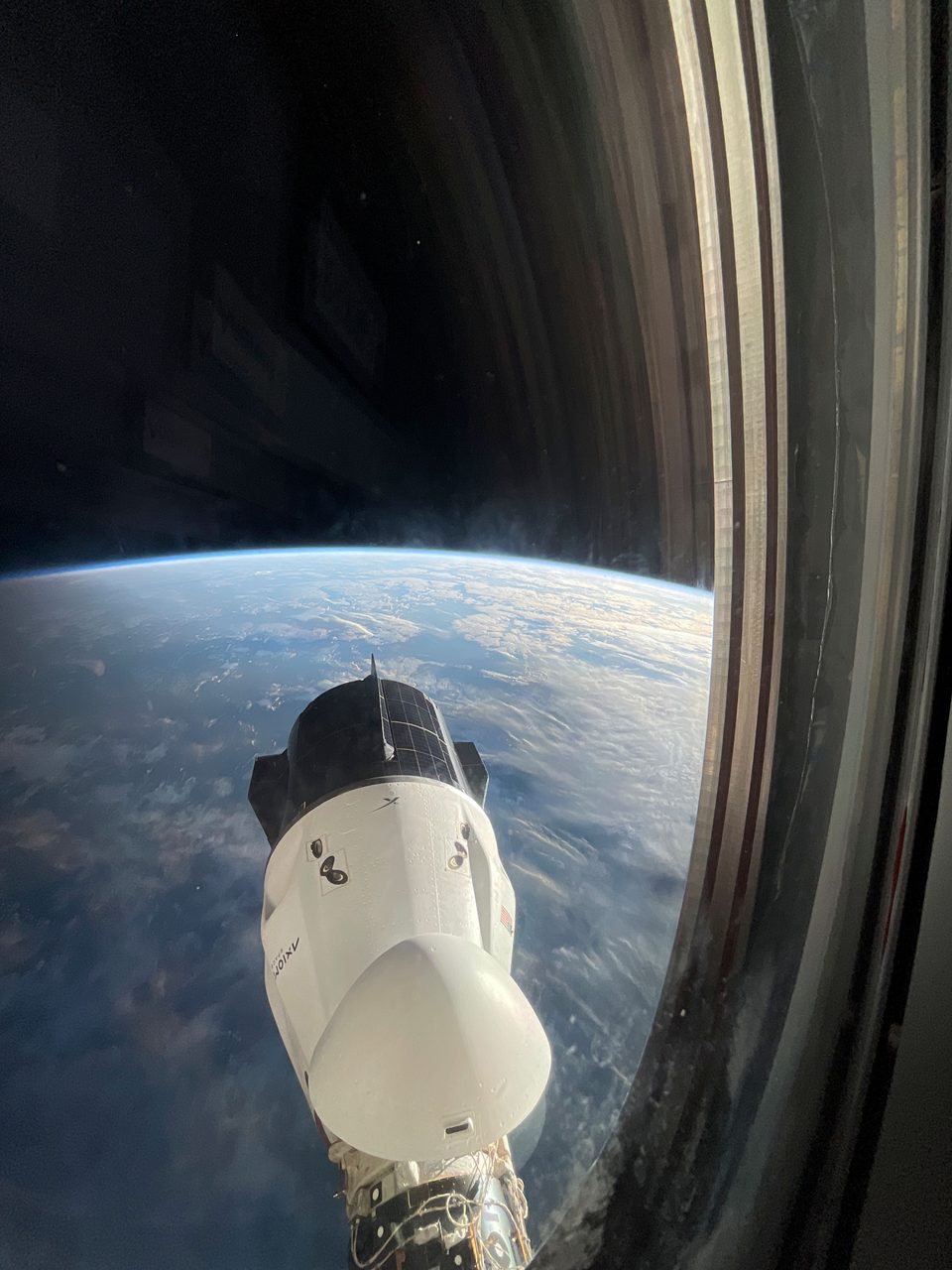
Life-extension vehicles keep satellites working by attaching to them and supplying propulsion and attitude control (control of the combined spacecraft’s orientation). Northrop Grumman’s Mission Extension Vehicles demonstrated this approach with MEV-1 docking to Intelsat 901 and MEV-2 docking to Intelsat 10-02.
MEV-1 docked with Intelsat 901 on 25 February 2020 in a graveyard orbit, a disposal region above the geostationary belt. The coupled spacecraft subsequently returned to service in geostationary orbit. MEV-2 docked with Intelsat 10-02 on 12 April 2021 while the client remained at its operational geostationary location: the demonstration did not require relocation to a graveyard orbit.
Neither client was built with a dedicated servicing port. The MEV docking mechanism entered the client’s existing engine nozzle and secured the connection against its launch-interface ring. This enabled a mechanical attachment without opening the client’s propellant system.
The broad sequence is rendezvous, close-range inspection, docking and coupled operations, followed eventually by separation. Once attached, the servicing vehicle uses its own thrusters to maintain the pair’s orbit and orientation. It supplies propulsion externally rather than filling the client’s tanks; communications equipment and other operational payload electronics remain aboard the original satellite. The arrangement therefore addresses propulsion limitations, not failed payload electronics.
Orbital Radar tracking data lists 16,689 active satellites as of 12 November 2026. Orbital Radar’s live catalogue contains 19,709 payloads as of 12 November 2026. These are distinct categories, not counts of serviceable spacecraft; Orbital Radar’s satellite library provides context on individual missions.
How is refuelling a satellite different from docking?
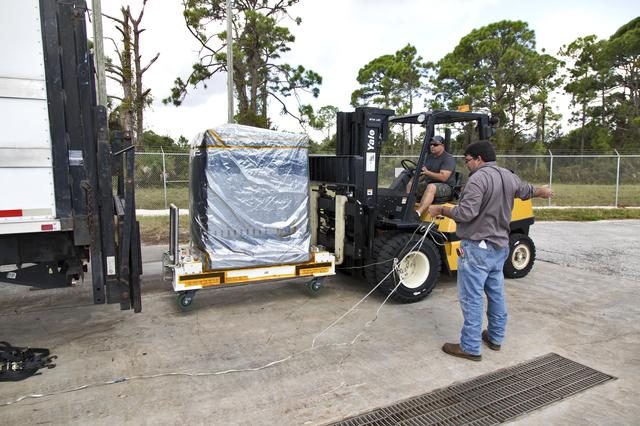
Docking establishes a mechanical connection; refuelling also requires compatible plumbing, controlled fluid transfer and verified sealing. A spacecraft can hold another satellite securely without having any way to transfer propellant into its tanks.
Legacy satellites were generally not designed for robotic refuelling. Their service valves may sit beneath insulation, protective caps and locking wires intended to remain undisturbed after launch. A robot must expose the valve, attach a compatible connector and verify a leak-tight seal without damaging nearby equipment.
Transfer then requires careful pressure, temperature and flow control. Leaking propellant can endanger spacecraft, while contamination can obstruct valves or compromise propulsion. A secure docking connection proves none of these fluid-handling requirements.
NASA's Robotic Refueling Mission on the International Space Station tested robotic tools and servicing techniques on representative hardware, including access through protective coverings and fluid transfer. It was an orbital technology demonstration, not evidence that an operational customer satellite in geostationary orbit had been refuelled.
Simulations test models; ground tests exercise hardware under terrestrial conditions; orbital demonstrations test selected capabilities in space. Operational customer refuelling requires evidence that propellant actually reached the client's tanks under service conditions. These categories are not interchangeable.
Orbital Radar tracking data lists 16,689 active satellites as of 12 November 2026. Orbital Radar's live catalogue contains 32,108 objects, including debris, as of 12 November 2026. Neither count measures servicing readiness; Orbital Radar's satellite library provides context on individual spacecraft, not proof of compatible refuelling interfaces.
What can robots realistically repair in orbit?
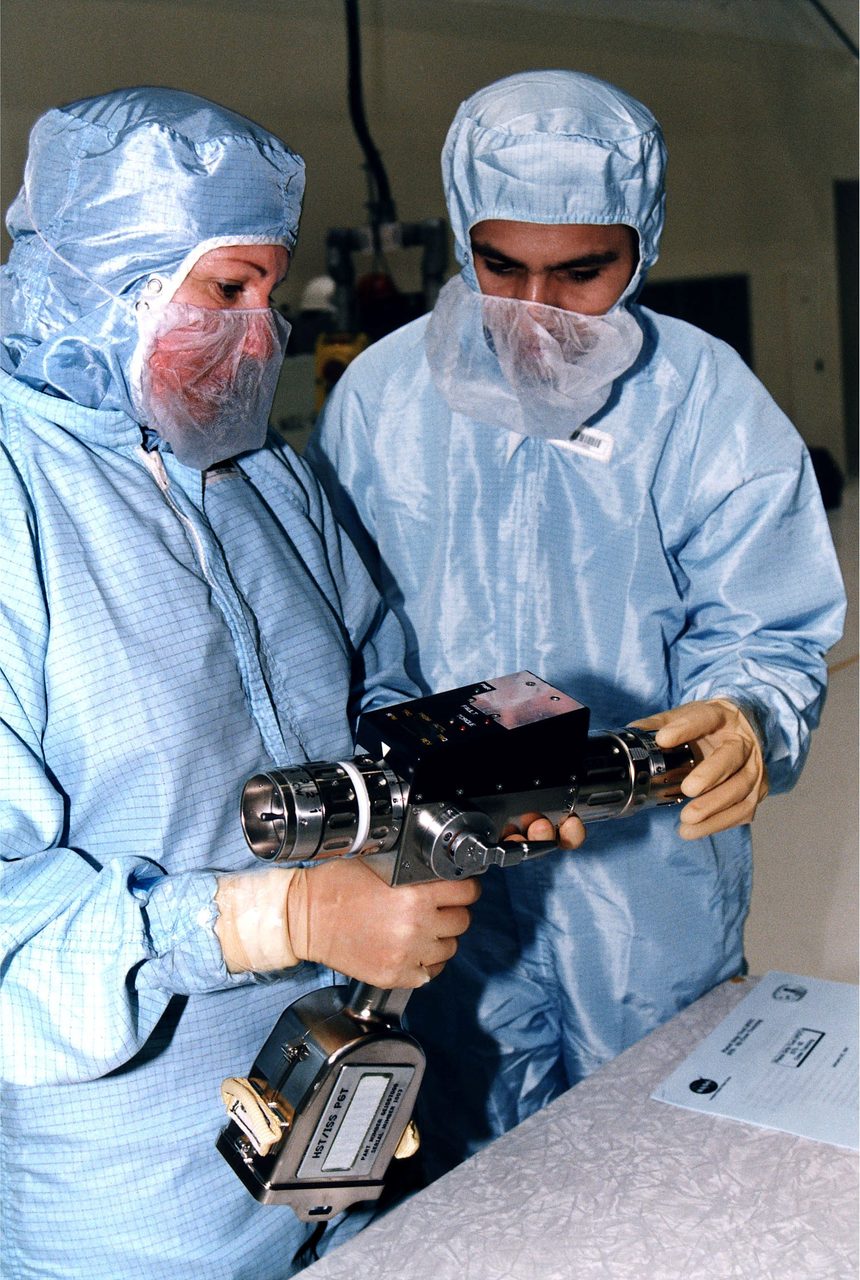
Robots can realistically inspect satellites and potentially replace accessible components designed for servicing; repairing an arbitrary failed spacecraft is much harder. Cameras can reveal damaged insulation, a stuck antenna or an incorrectly deployed solar array, but cannot establish whether internal electronics still work. Diagnosis may also require telemetry (measurements transmitted by the spacecraft) and electrical tests.
Modular equipment, accessible connectors and purpose-built handling fixtures make intervention more feasible. A robot needs secure attachment, suitable tools and force control (regulation of contact loads) to avoid twisting the satellite or damaging fittings. Opening an unprepared spacecraft risks severing cables, tearing insulation and releasing loose fragments.
Hubble Space Telescope servicing demonstrated successful astronaut repairs, including replacement of instruments and gyroscopes. Those missions relied on trained crews, specialised tools and a telescope designed for servicing in low Earth orbit. They did not demonstrate autonomous repair of commercial satellites in geostationary orbit (GEO), where satellites remain above the same equatorial location.
Orbital Radar tracking data lists 16,689 active satellites as of 12 November 2026. That population is not a catalogue of repairable machines: an inaccessible electronics failure may remain beyond practical robotic intervention.
Orbital Radar's live catalogue also includes 10,186 debris objects. Avoiding additional fragments is therefore a constraint on repair, not an afterthought; the Orbital Radar satellite library provides context on individual spacecraft, rather than proof of their serviceability.
How does a servicing spacecraft approach its client safely?
A servicing spacecraft approaches safely by matching its client's orbit and relative motion, then closing under controlled conditions—not simply arriving near its position. This process, called rendezvous, must leave enough time and manoeuvring capability to stop the approach or retreat.
Ground-supported navigation guides the initial approach; close-range cameras and relative-navigation sensors, such as laser rangefinders, then measure separation, orientation and closing speed. Planned holds let controllers assess conditions before proceeding, while predefined abort options provide a route away if navigation becomes unreliable or the client behaves unexpectedly.
A rotating client makes attachment points move. Uncertain geometry can conceal collision hazards, thruster exhaust can contaminate surfaces or disturb the client, and fragile solar arrays and antennas require clearance throughout the approach—not just at the intended contact point.
Orbital Radar tracking data records 16 active close approaches on 12 November 2026. An incidental orbital conjunction—a predicted close passage—is not a controlled rendezvous: proximity alone does not establish coordination or intent.
Orbital Radar's live catalogue lists 16,689 active satellites as of 12 November 2026. Its satellite library provides context on the spacecraft involved, but external tracking alone cannot establish consent. Client-operator permission, agreed procedures and communication are essential: servicing approaches can resemble inspection or other proximity activities when viewed only through orbital measurements.
What does satellite servicing look like in manoeuvre data?
Satellite servicing can leave a sequence in manoeuvre data: changing orbital drift, adjustments towards a client's orbit, sustained proximity and later changes consistent with shared orbital motion. Together, these patterns can support a rendezvous interpretation, but they do not establish that docking, refuelling or repair occurred.
Orbital elements are parameters describing an orbit, including its size, shape and orientation. They are fitted descriptions derived from tracking observations, not direct measurements of physical contact or propellant transfer. In geostationary orbit (GEO), a circular orbit 35,786 km above the equator, changes in drift relative to Earth's surface can help reveal an approach towards a client.
Orbital Radar's live catalogue contains 32,108 objects as of 12 November 2026. Distinguishing deliberate approaches within that population requires examining successive orbital estimates rather than treating an isolated change as proof. Orbital Radar tracking data records 16 active close approaches on 12 November 2026. A close approach alone does not establish servicing intent.
Routine station-keeping, the manoeuvres used to maintain an assigned orbit, can resemble parts of this sequence. Sparse observations can conceal intermediate motion, while catalogue updates can make a gradual or poorly constrained change appear abrupt. The time an updated orbit appears is therefore not necessarily the precise time of a burn.
The evidence hierarchy matters when interpreting records in Orbital Radar's satellite library: repeated tracking can support a rendezvous interpretation, and sustained shared motion may strengthen it. Confirmation of docking, fuel transfer or repair requires additional evidence from mission reporting or suitable observations; orbital similarity alone cannot demonstrate those operations.
How can I check servicing-related manoeuvres on Orbital Radar?
Start with Orbital Radar’s manoeuvre tracker and search for the named servicing vehicle or client satellite, where coverage is available. Check which spacecraft the displayed changes concern: a manoeuvre by the servicing vehicle is not necessarily a manoeuvre by its client. Do not assume that every docking produces a dedicated alert.
Use the satellite library to establish each spacecraft’s identity, operator and mission role, then compare its available orbital history with the reported servicing sequence. Orbital Radar’s live catalogue lists 16,689 active satellites as of 12 November 2026. Matching the correct spacecraft matters more than finding an orbital change near the reported event.
Look for a sustained pattern across successive observations rather than an isolated update. Approach-related orbital changes, reduced relative drift (a slower change in the spacecraft’s positions relative to one another) and later repositioning can be useful clues. None independently proves docking, and gaps in observations can obscure the sequence.
Consult Orbital Radar’s data sources page at /data-sources for the provenance and limitations of the displayed records. Orbital Radar tracking data cover 32,108 catalogued objects, including debris, as of 12 November 2026. That catalogue scope does not guarantee continuous, separate tracking of a servicing pair: closely attached spacecraft may not remain independently resolved throughout an operation. Treat the orbital history as supporting evidence alongside mission reports, not as confirmation of physical contact.
Can satellite servicing reduce debris and delay replacement?
Satellite servicing can delay replacement by keeping a useful spacecraft working, but reducing debris depends on what happens during and after the mission. Refuelling or restoring essential functions can defer a replacement launch; it does not by itself establish fewer launches overall, lower emissions or a financial return.
Orbital Radar's live catalogue contained 32,108 tracked objects, including debris, as of 12 November 2026. The Orbital Radar satellite library provides context for the spacecraft population, but the catalogue total alone cannot measure whether servicing improves the orbital environment.
Servicing a functioning satellite preserves a service; active debris removal targets unwanted objects for removal from orbit. A life-extension mission is therefore not automatically a debris-removal mission. Keeping a satellite operational may preserve its ability to manoeuvre and carry out planned disposal, but postponing retirement without securing disposal merely delays the problem.
The servicing vehicle also needs an end-of-mission plan, whether it remains attached to its client or departs for another assignment. Close approaches and docking introduce additional collision risks, and a failed operation could leave more unwanted hardware in orbit. Benefits should be judged through successful service delivery, responsible disposal of both spacecraft and credible operational evidence—not simply the years added to a client's life.
Key takeaways
- Satellite servicing includes inspection, propulsion support, refuelling and repair, but these are distinct capabilities with different demonstration histories.
- A life-extension vehicle can keep a GEO satellite operating by providing thrust without transferring fuel into the client's tanks.
- Orbital manoeuvre data can reveal patterns consistent with rendezvous and repositioning, but cannot independently prove docking, refuelling or repair.
- Orbital Radar's manoeuvre tracker is a starting point for examining servicing-related orbital changes alongside spacecraft records and confirmed mission reporting.
Frequently Asked Questions
Can Starlink satellites be refuelled in orbit?
Can a servicing spacecraft capture a satellite that is tumbling?
Who must authorise another spacecraft to dock with a satellite?
Can satellite servicing change who owns or operates a spacecraft?
Could an orbital propellant depot service satellites in different orbits?
Cite this article
Pick a style, then copy it or download it for your reference manager.Orbital Radar. (2026, November 12). Satellite Servicing in Orbit: Refuelling and Repair. Retrieved November 12, 2026, from https://orbitalradar.com/blog/satellite-servicing-and-refuelling
“Satellite Servicing in Orbit: Refuelling and Repair.” Orbital Radar, 12 Nov. 2026, orbitalradar.com/blog/satellite-servicing-and-refuelling. Accessed 12 Nov. 2026.
Orbital Radar (2026) Satellite Servicing in Orbit: Refuelling and Repair. Available at: https://orbitalradar.com/blog/satellite-servicing-and-refuelling (Accessed: 12 November 2026).
Orbital Radar. “Satellite Servicing in Orbit: Refuelling and Repair.” Last modified November 12, 2026. https://orbitalradar.com/blog/satellite-servicing-and-refuelling.
@misc{orbitalradar_blog_satellite_servicing_and_refuelling,
  author       = {{Orbital Radar}},
  title        = {Satellite Servicing in Orbit: Refuelling and Repair},
  year         = {2026},
  month        = nov,
  howpublished = {\url{https://orbitalradar.com/blog/satellite-servicing-and-refuelling}},
  url          = {https://orbitalradar.com/blog/satellite-servicing-and-refuelling},
  urldate      = {2026-11-12},
  note         = {Accessed 2026-11-12}
}
TY - ELEC AU - Orbital Radar, TI - Satellite Servicing in Orbit: Refuelling and Repair PY - 2026 DA - 2026/11/12 PB - Orbital Radar UR - https://orbitalradar.com/blog/satellite-servicing-and-refuelling Y2 - 2026/11/12 LA - en ER -
Live figures change, so keep the date you accessed the page. How to cite Orbital Radar