How Do Astronauts Get Back to Earth?
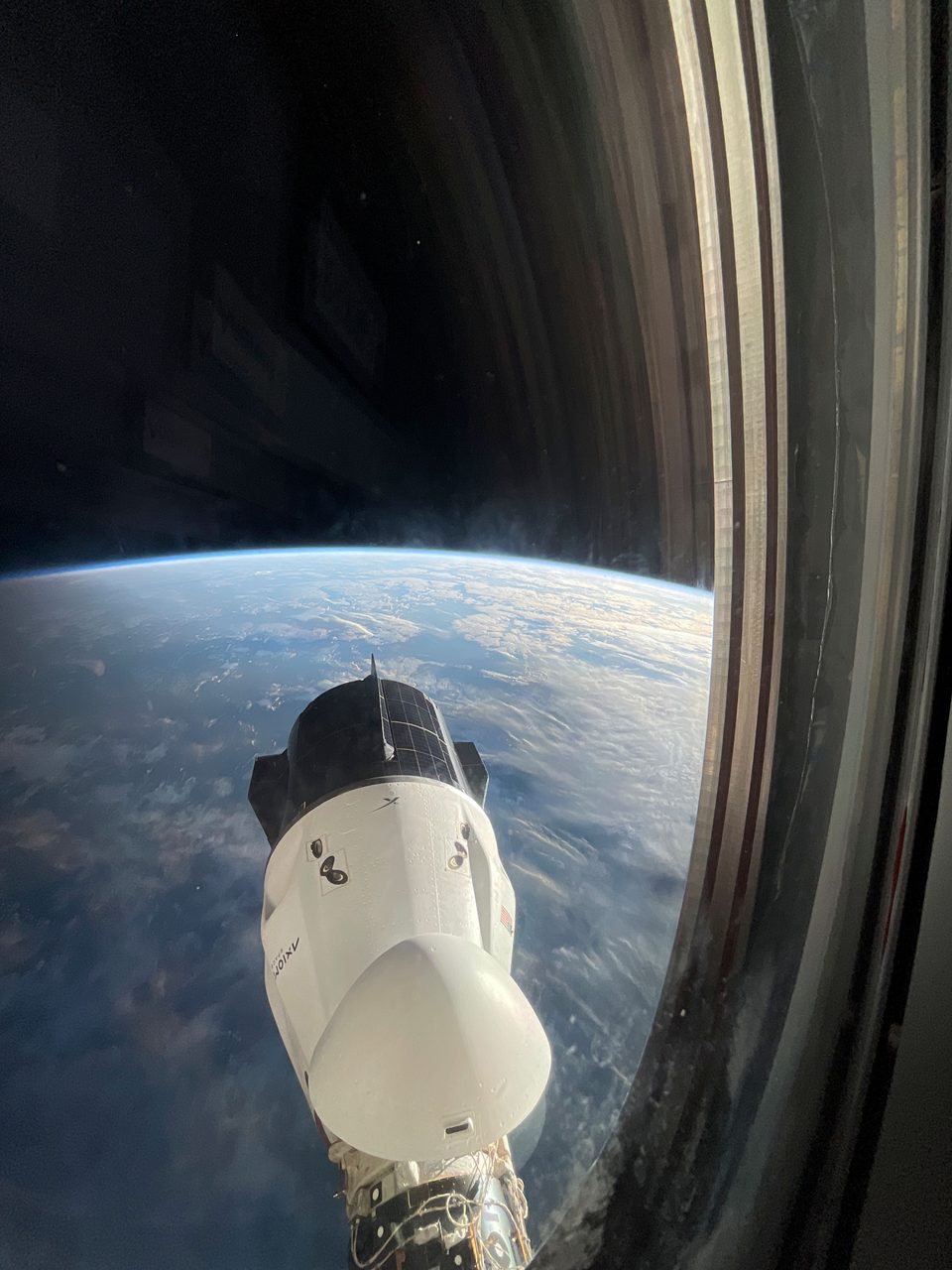
Astronauts return in spacecraft that slow down, survive atmospheric heating and land under parachutes. The journey ends with an ocean splashdown or a touchdown on land.
| Active satellites | 16,690 |
| Starlink active | 9,870 |
| Catalogued objects | 32,115 |
| Active close approaches | 19 |
| People in space | 10 |
Astronauts get back to Earth in a spacecraft that slows down with a de-orbit burn (an engine firing that lowers its orbit), then passes through the atmosphere protected by a heat shield. Parachutes or other landing systems complete the return: Crew Dragon splashes down in the ocean, while Soyuz touches down on land.
The journey is a planned sequence, not a fall straight down from a space station. Its timing depends on the spacecraft, its position in orbit and conditions at the landing site. Returning from low Earth orbit means shedding speeds of roughly 28,000 km/h, with compression of the air ahead of the spacecraft producing intense heat.
Orbital Radar tracking data records 10 people in space as of 11 November 2026. This guide focuses on present-day capsule returns from low Earth orbit, with brief comparisons to faster lunar returns and the retired Space Shuttle, which glided to a runway rather than landing beneath parachutes.
What happens when astronauts undock from a space station?
When astronauts undock, their spacecraft releases its connection to the space station and uses small thrusters to move safely away. Both vehicles initially continue orbiting Earth: undocking alone does not send the crew towards the ground.
Before departure, astronauts pack return cargo and secure equipment so nothing can float loose or shift during landing. They put on pressure suits, which can protect them if cabin pressure is lost, strap into their seats and close the hatches. Leak checks confirm that the sealed spacecraft can hold pressure before the docking connection is released.
Orbital Radar tracking data records 10 people in space as of 11 November 2026. On that date, Orbital Radar's live catalogue also lists 16690 active satellites orbiting Earth. Departure therefore requires a planned route, not simply movement away from the station.
Flight controllers and the crew confirm spacecraft readiness, suitable landing-zone weather and a clear departure path. As Orbital Radar's Crew Dragon spacecraft page explains, the capsule is designed to bring its occupants home, but departure depends on conditions being acceptable. After release, carefully timed thruster firings increase separation from the station; the manoeuvre that takes the capsule out of orbit comes later.
How does a de-orbit burn bring a spacecraft home?
A de-orbit burn is an engine firing that reduces a spacecraft’s orbital speed enough for its path to enter the denser atmosphere. Astronauts do not aim straight down: instead, the spacecraft fires against its direction of travel, lowering the part of its orbit ahead until atmospheric drag — resistance from the air — can take over.
The burn does not remove all the spacecraft’s speed; it changes where the spacecraft’s curved path will carry it. A returning capsule still has to shed roughly 28,000 km/h during atmospheric re-entry, rather than using its engines to brake all the way to the ground.
Controllers choose the burn’s timing and duration so that the descending spacecraft reaches a planned landing region as Earth rotates beneath its orbit. They also account for the capsule’s ability to steer during descent: the burn must place it within a carefully managed entry corridor, not simply point it towards a country or ocean.
Orbital Radar tracking data lists 10 people in space as of 11 November 2026. Their eventual return requires a controlled trajectory and a heat shield designed to protect the crew, rather than expose the vehicle to destructive heating.
Orbital Radar tracking data lists 208 Starlink satellites deorbiting as of 11 November 2026. Unlike a crewed return, satellite disposal generally aims for atmospheric destruction; Orbital Radar’s deorbit glossary entry explains this controlled lowering of an orbit, during which most of the satellite burns up.
Why does a spacecraft get so hot during re-entry?
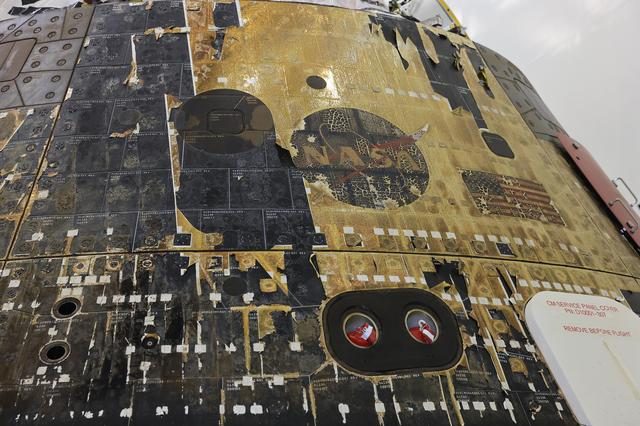
A spacecraft gets so hot during re-entry because it compresses the air ahead of it while shedding orbital speed of approximately 28,000 km/h. Most of that speed is lost through interaction with the atmosphere, converting the spacecraft’s energy of motion into heat in the surrounding gas and at its surface.
Surface friction contributes, but it is not the whole explanation. A capsule drives a shock wave ahead of itself, abruptly compressing and heating the air. This intensely hot gas transfers heat to the spacecraft. Exterior surface temperatures can exceed 1,600°C, depending on the vehicle, location on its surface and return trajectory; that is not the temperature inside the cabin.
An ablative heat shield is made from material designed to char and erode while carrying heat away. Its protective layers absorb heat, release gases and gradually lose material, limiting how much energy reaches the structure underneath. The cabin remains protected behind the shield and insulation.
A capsule’s blunt shape helps hold the shock wave away from its surface and creates substantial aerodynamic drag (resistance from the air). Its attitude — its orientation relative to the airflow — keeps the shield facing the hot gas. Controlled changes in orientation can also direct lift, helping manage the path and deceleration.
The entry corridor is the acceptable range of return trajectories. Too steep an entry can produce excessive heating and deceleration; too shallow an entry can carry the vehicle back out of the denser atmosphere. Orbital Radar’s atmospheric re-entry glossary entry explains why heat protection and trajectory control must work together.
When do the parachutes open?
Parachutes open only after a returning capsule has slowed substantially in the atmosphere, not while it is still travelling at orbital speed. At roughly 28,000 km/h, deploying a parachute would expose it to destructive aerodynamic forces; the capsule must first shed most of that speed through air resistance.
Deployment then happens in stages, rather than with one sudden opening of the largest canopies. Smaller stabilising parachutes, often called drogues, help control the capsule’s motion and slow it further before the main parachutes deploy; the exact arrangement and opening sequence differ between spacecraft.
The main parachutes provide a much larger area for air resistance to act on, reducing the final descent speed to a level the landing system can manage. They do not bring the capsule to a stop above the surface, so astronauts must still withstand the impact of landing.
For Crew Dragon, the sequence ends in splashdown (a landing in water), with the capsule descending into an ocean recovery zone. Soyuz instead makes a cushioned touchdown on land, using small braking rockets just before contact; Orbital Radar’s Crew Dragon profile provides context on the water-landing spacecraft.
Why does Crew Dragon splash down in the ocean?
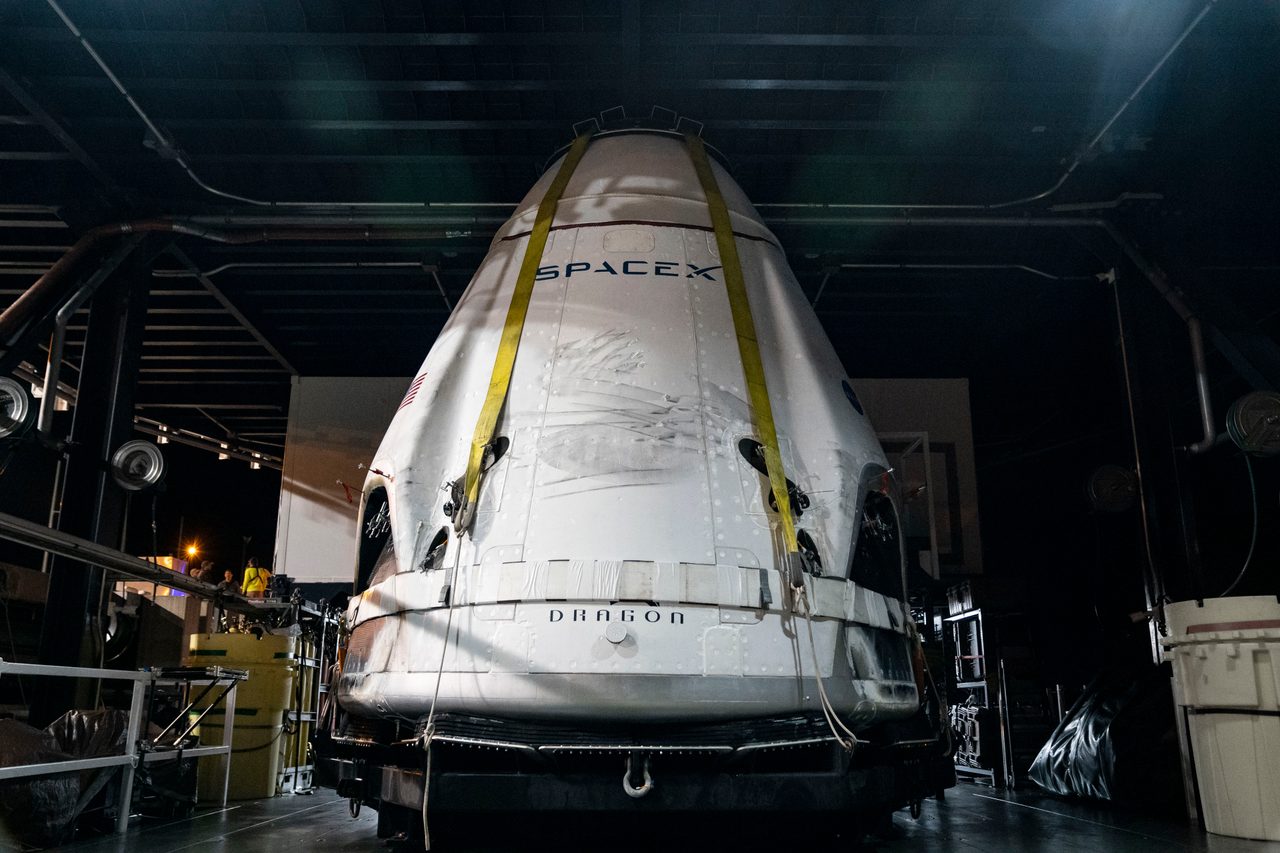
Crew Dragon splashes down because parachutes and an ocean landing let it return without a runway or landing rockets. A splashdown is a parachute-assisted spacecraft landing in water at the end of re-entry. Apollo used this approach, and SpaceX revived it for its Dragon capsules, including Crew Dragon.
The trade-off is a substantial recovery operation: ships, trained teams and suitable sea conditions must be available where the capsule comes down. Water provides a landing surface, but it does not make the final descent or recovery independent of weather.
Strong winds can shift the parachute descent and complicate recovery-team operations, while high waves make approaching and securing the floating capsule harder. Poor visibility can hamper locating it and working alongside it; nearby thunderstorms bring additional wind and lightning hazards. These conditions can rule out a landing opportunity or favour another recovery zone.
After water contact, recovery teams approach, assess the capsule and check for hazards before securing it for lifting aboard the recovery ship. Orbital Radar’s recovery fleet page explains the vessels supporting this ship-based operation.
Orbital Radar tracking data records 10 people in space as of 11 November 2026. Returning crews need a controlled landing and recovery, unlike the uncrewed objects that dominate orbital traffic.
Orbital Radar tracking data records 16,690 active satellites in orbit as of 11 November 2026. Splashdown is specifically a way to recover a returning spacecraft, not the usual disposal route for satellites.
How does Soyuz land on solid ground?
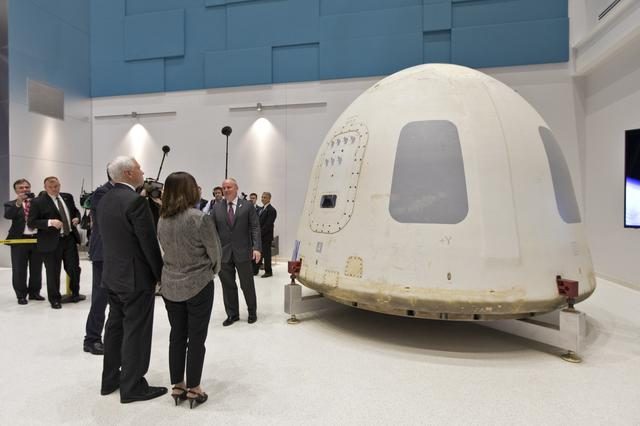
Soyuz lands on solid ground using parachutes and small braking rockets, usually on the open steppe of Kazakhstan. Only its descent module—the compact compartment carrying the crew—returns intact; the orbital module and propulsion module separate before atmospheric entry and are destroyed during re-entry.
The descent module enters with its heat shield facing into the airflow. Its ablative material (a protective layer that gradually erodes, carrying heat away) protects the crew as the capsule slows in the atmosphere. Parachutes then reduce its speed further, with the main parachute supporting the final descent towards the landing area.
Before touchdown, Soyuz releases its heat shield, exposing the small solid-fuel braking rockets beneath it. These fire just above the ground to soften the impact, while shock-absorbing seats help cushion the crew. The result is still a firm landing rather than a gentle settling onto the surface.
Recovery teams travel to the predicted landing zone by helicopter and ground vehicle, locate the capsule and help its occupants out. Kazakhstan’s broad, sparsely populated steppe provides room for the landing operation, although wind can shift the touchdown point.
Unlike Soyuz, Crew Dragon normally splashes down under parachutes without firing touchdown braking rockets. The retired Space Shuttle instead glided to a runway. Orbital Radar’s Soyuz capsule profile helps readers compare these different spacecraft designs.
How long does it take astronauts to get back to Earth?
A return from a space station generally takes hours, although some flight plans keep astronauts in free flight for a day or longer. The useful measure is the interval from undocking to landing—not simply the final descent through the atmosphere.
Orbital Radar tracking data records 10 people in space as of 11 November 2026. For a station crew, time spent waiting aboard for departure clearance is separate from time travelling home: a weather postponement can extend the mission without extending the eventual return flight.
After undocking, the capsule must move safely away, complete checks and reach the correct position for its de-orbit burn (the engine firing that lowers its path into the atmosphere). Departure geometry and alignment with the landing site determine which opportunities are usable. Vehicle procedures and weather at the recovery zone can produce different return times even for the same spacecraft type.
Orbital Radar tracking data lists 19 active close approaches on 11 November 2026. That wider traffic picture is not a timetable for a particular crew’s return; each flight has its own operational constraints.
Atmospheric entry occupies only the closing portion of the journey, with parachute descent confined to the final minutes. Orbital Radar’s Crew Dragon profile provides context on the vehicle, but no single undocking-to-splashdown duration applies universally.
Returning from the Moon is a different undertaking: the homeward journey typically takes several days rather than hours. A lunar crew must cross the distance back to Earth before beginning the comparatively brief atmospheric entry and landing sequence.
What happens to astronauts immediately after landing?
Recovery teams secure the spacecraft, check for hazards and help astronauts out; returning crews are not expected to climb out unaided. Teams assess the capsule’s stability and check for leaking propellants or other dangers before opening the hatch and assisting the occupants.
After prolonged weightlessness, the body needs to readjust to gravity. The balance system in the inner ear must recalibrate, muscles may have weakened, and circulation must again work against gravity to supply blood to the brain. Astronauts can feel dizzy, nauseated or unsteady, making standing and walking difficult at first.
Medical staff assess alertness, breathing, pulse and blood pressure, and ask about symptoms or injuries. Crew members may be supported in seats or carried on stretchers, then transferred to medical facilities by ship, helicopter or ground vehicle, depending on the landing location and their condition.
A successful touchdown is therefore not the end of recovery. For a Dragon splashdown, the ocean operations described on Orbital Radar’s recovery fleet page include approaching and securing the floating capsule before lifting it aboard a recovery ship. Medical monitoring continues while astronauts begin a tailored rehabilitation programme to rebuild strength, balance and tolerance of standing upright.
How can you check spacecraft re-entries on Orbital Radar?
Use Orbital Radar’s re-entry tracker to explore information about tracked orbital objects returning towards Earth, rather than treating it as a schedule of astronaut landings. A satellite approaching re-entry is not necessarily a crew capsule, and an estimated atmospheric entry time is not a confirmed splashdown time.
Orbital Radar tracking data lists 208 Starlink satellites as deorbiting as of 11 November 2026. Orbital Radar tracking data lists another 1,121 Starlink satellites as raising their orbits on 11 November 2026. These categories describe different stages of satellite operations, not the movements of astronauts.
Deorbiting means deliberately lowering an orbit until atmospheric drag brings the object back into the atmosphere. Satellite disposal usually ends in destructive re-entry, with most of the spacecraft burning up; astronaut capsules instead use heat shields and controlled flight paths to protect their occupants.
For an uncontrolled object, changing atmospheric conditions alter drag and can shift the predicted re-entry time. That estimate should not be read as a guaranteed landing forecast or evidence that a crew is returning.
For vehicle context, consult the Crew Dragon profile and the Soyuz capsule page at /spacecraft/soyuz-capsule. Dragon’s splashdown is a parachute-assisted water landing; Soyuz normally returns to land. These profiles explain the vehicles, without implying that the re-entry tracker provides live crew positions or guaranteed arrival times.
Key takeaways
- Astronauts return by reducing their spacecraft's orbital speed, allowing its path to carry it into Earth's atmosphere.
- The heat shield protects the crew during atmospheric braking, and parachutes slow the capsule later in the descent.
- Crew Dragon splashes down in the ocean, while Soyuz uses parachutes and last-moment braking rockets to land on solid ground.
- The time from undocking to landing varies with the spacecraft, orbital geometry and conditions at the recovery site.
Frequently Asked Questions
Can astronauts return to Earth in an emergency?
Why do astronauts sometimes lose radio contact during re-entry?
Can astronauts steer a capsule during re-entry?
Do astronauts feel weightless all the way back to Earth?
Can a returning spacecraft be reused?
Cite this article
Pick a style, then copy it or download it for your reference manager.Orbital Radar. (2026, November 11). How Do Astronauts Get Back to Earth? Retrieved November 11, 2026, from https://orbitalradar.com/blog/how-do-astronauts-get-back-to-earth
“How Do Astronauts Get Back to Earth?” Orbital Radar, 11 Nov. 2026, orbitalradar.com/blog/how-do-astronauts-get-back-to-earth. Accessed 11 Nov. 2026.
Orbital Radar (2026) How Do Astronauts Get Back to Earth? Available at: https://orbitalradar.com/blog/how-do-astronauts-get-back-to-earth (Accessed: 11 November 2026).
Orbital Radar. “How Do Astronauts Get Back to Earth?” Last modified November 11, 2026. https://orbitalradar.com/blog/how-do-astronauts-get-back-to-earth.
@misc{orbitalradar_blog_how_do_astronauts_get_back_to_earth,
  author       = {{Orbital Radar}},
  title        = {How Do Astronauts Get Back to Earth?},
  year         = {2026},
  month        = nov,
  howpublished = {\url{https://orbitalradar.com/blog/how-do-astronauts-get-back-to-earth}},
  url          = {https://orbitalradar.com/blog/how-do-astronauts-get-back-to-earth},
  urldate      = {2026-11-11},
  note         = {Accessed 2026-11-11}
}
TY - ELEC AU - Orbital Radar, TI - How Do Astronauts Get Back to Earth? PY - 2026 DA - 2026/11/11 PB - Orbital Radar UR - https://orbitalradar.com/blog/how-do-astronauts-get-back-to-earth Y2 - 2026/11/11 LA - en ER -
Live figures change, so keep the date you accessed the page. How to cite Orbital Radar