Rocket Launches This Year: Countries and Companies Compared
Orbital launches stand at 256 this year, against 261 at the same point in 2025. Explore which providers lead and how country comparisons work.
| Active satellites | 15,952 |
| Starlink active | 9,916 |
| Catalogued objects | 31,957 |
| Active close approaches | 23 |
| People in space | 10 |
Orbital Radar tracking data records 256 orbital launches in 2026 as of 2 November 2026. That compares with 261 launches over the same period in 2025, putting this year's orbital launch activity slightly behind last year's pace.
SpaceX leads the provider rankings with 124 orbital launches in 2026, according to Orbital Radar tracking data. Its lead makes the company central to any comparison of launch activity, but a provider table and a country table answer different questions.
Provider rankings show which companies and organisations carry out launches; country rankings depend on how those launches are assigned to nations. The launch operator and the location of the launch site are distinct measures, so national totals need a clear counting rule before comparisons become meaningful.
The underlying records are available in Orbital Radar's searchable Launch Log. Those records provide a way to move beyond the headline total and examine the individual orbital launches behind the comparisons.
How does this year's launch total compare with last year?
Orbital Radar tracking data records 256 orbital launches as of 2 November 2026, slightly behind the equivalent year-to-date period last year. Orbital Radar tracking data records 261 orbital launches over the same reporting period in 2025. This is a comparison of launches completed by the same point in each year, not a comparison of full-year totals.
Matching the reporting periods matters because a partial year and a completed calendar year measure different spans of activity. Comparing them directly would give a misleading impression of the launch pace. The like-for-like figures show that activity is running below last year's level at this stage, without establishing how the completed years will compare.
The recorded total also needs to be kept separate from future missions. Orbital Radar's Launch Log covers launches already recorded, while its Launch Schedule lists missions still to come. A scheduled mission is not an additional launch until it has actually flown.
The current pace therefore does not establish the eventual annual total. Launch schedules can change, and missions can be delayed beyond their intended dates or into the following calendar year. The year-to-date tally describes activity so far; it is not a forecast of the final count.
Which companies and organisations launch the most rockets?
SpaceX leads the orbital launch-provider ranking with 124 launches in 2026 as of 2 November 2026, according to Orbital Radar tracking data. Its lead is substantial, but the comparison brings together different kinds of organisations, from private businesses to state aerospace groups.
China Aerospace Science and Technology Corporation (CASC) has flown 51 orbital launches in 2026, according to Orbital Radar tracking data. The selected leading providers rank in descending order as follows:
- SpaceX: 124 launches
- China Aerospace Science and Technology Corporation (CASC): 51
- Rocket Lab: 16
- Roscosmos: 13
- CAS Space: 6
- United Launch Alliance (ULA): 5
- LandSpace: 5
- China Rocket: 4
This is a selection of leading providers, not the complete provider table. ULA and LandSpace are level on launch count; their order in the list does not indicate a difference in activity.
Provider is more precise than company for this comparison because the ranking includes both private companies and state organisations. It identifies the organisation responsible for providing the launch, rather than treating every participant as the same kind of commercial business.
Position here measures missions flown, not payload capacity—the amount of material a rocket can carry to orbit. A higher launch count does not by itself establish that a provider delivered more total mass, since rockets differ in capacity and missions carry different loads.
The missions behind these totals can be explored in Orbital Radar’s searchable orbital launch log, connecting the provider comparison to individual launch records.
How should rocket launches be counted by country?
Count rocket launches by country using a single, explicit attribution rule: the launch provider's national association, the country hosting the launch site, or the country owning the payload. These answer different questions about industrial capability, launch geography and satellite ownership. A meaningful comparison applies the same rule to every mission rather than switching between them.
Rocket Lab illustrates the distinction: it is a US-based company with New Zealand origins, and its Electron rocket launches from both New Zealand and the United States. Rocket Lab had conducted 16 launches in 2026 as of 2 November, according to Orbital Radar tracking data. Assigning all those missions to the United States by provider association would not mean they all departed from US territory.
The provider ranking includes SpaceX and ULA for the United States; CASC, CAS Space, LandSpace and China Rocket for China; and Roscosmos for Russia. SpaceX recorded 124 launches during 2026, according to Orbital Radar tracking data. Those provider figures are not complete national totals: a country comparison requires a defined attribution method applied across the mission list.
Payload ownership adds another distinction: a satellite can belong to a country different from both its launcher and its launch site, while shared missions can carry payloads for several countries. Individual mission records in Orbital Radar's Launch Log provide the route into examining launches separately. Keep that mission-level evidence distinct from country-level interpretation: the stated ranking counts providers, not nations.
What does an orbital launch count actually measure?
An orbital launch attempt is a mission intended to place a payload into orbit, whether or not it succeeds. A suborbital flight follows a trajectory that does not complete an orbit around Earth; it is not counted as an orbital attempt simply because it reaches space.
Orbital Radar tracking data records 256 orbital launches in 2026 as of 2 November 2026. That headline measures launch activity, not the number of satellites carried: a rocket carrying multiple spacecraft still represents a single launch event.
Three things therefore need to remain distinct: the launch event, the rocket used and the payload carried. The event is the departure being counted; the rocket is the vehicle that provides propulsion; and the payload is the spacecraft or cargo it transports. Orbital Radar's launch vehicle profiles provide context on the rockets behind those events.
An attempt intended for orbit can fail during ascent, or deliver its payload into an orbit different from the intended destination. It remains an orbital launch attempt because the count reflects the mission's objective, rather than treating success as a condition for inclusion.
Orbital Radar tracking data puts the 2026 launch success rate at 97%. Keeping that assessment separate from the launch count lets readers distinguish how frequently rockets fly from how reliably those missions achieve their objectives.
How successful have this year's orbital launches been?
Orbital launches in 2026 had a 97% success rate as of 2 November 2026, according to Orbital Radar tracking data. That measures the proportion of launches classified as successful, not the volume of launch activity: a busy year and a reliable year describe different things.
Orbital Radar tracking data records 25 launch providers having flown in 2026. The overall success rate is an aggregate across launch activity, not a reliability score for any individual provider. Because 97% is rounded, it should not be converted into an exact number of failed launches.
Successful launch delivery also differs from successful spacecraft operation. A rocket may deliver its payload to the intended orbit, yet the spacecraft can subsequently suffer a power, communications or propulsion failure. Reaching orbit therefore does not guarantee that a satellite will complete its planned working life or achieve its mission objectives.
Readers should assess success rate alongside launch frequency. A provider flying frequently builds a broader operational record, while a provider with fewer flights offers a smaller sample on which to judge reliability. Neither activity nor success rate alone provides a complete assessment. Orbital Radar’s Launch Log provides a way to examine launch records rather than relying only on a headline percentage.
What do provider numbers and busy launch pads reveal?
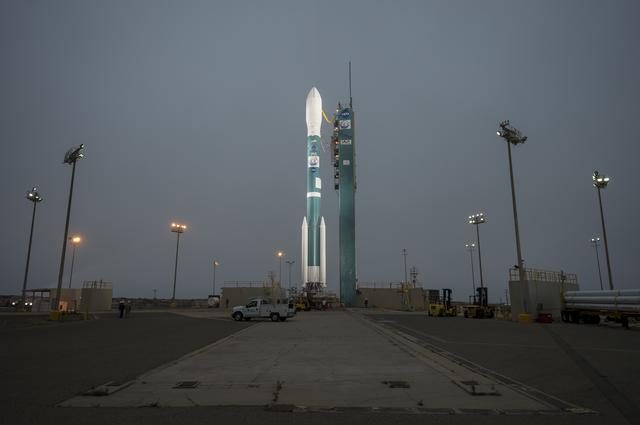
Participation is broad, but launch activity is concentrated among the leading providers, while Space Launch Complex 4E at Vandenberg Space Force Base in California is the busiest pad in the current figures. As of 2 November 2026, 25 launch providers have flown this year, according to Orbital Radar tracking data. That breadth does not mean flights are evenly distributed across the industry.
SpaceX has conducted 124 orbital launches this year, according to Orbital Radar tracking data. CASC follows with 51 and Rocket Lab with 16, illustrating the gap between the busiest operators and the wider field. Provider totals measure the activity of launch organisations, not the workload at any single location.
A launch pad is the specific facility from which a rocket departs; a spaceport is the wider site and can contain several pads. Space Launch Complex 4E therefore leads a ranking of individual departure facilities, rather than a comparison of entire spaceports.
Pad availability helps determine launch cadence (the frequency of flights). Rocket and payload preparation, maintenance between missions, access to tracking systems and the infrastructure for handling propellants can all affect how quickly another flight can proceed. A busy pad reflects an operating system, not simply demand for launches.
Keep the rankings separate when exploring the Orbital Radar Launch Log: providers describe who launches, pads identify where rockets depart, and country totals measure national activity under the chosen counting method.
Why don't launch totals match the number of satellites?
Launch totals count events during a year; active satellite totals count the existing population in orbit, including spacecraft launched in earlier years. As of 2 November 2026, Orbital Radar tracking data records 256 orbital launches this year and 15,952 active satellites in orbit. These figures measure different things: a flow of launches versus a population accumulated over time.
On that date, Starlink accounted for 9,916 active satellites, according to Orbital Radar tracking data. That constellation cannot be read as an equivalent number of rocket launches, because constellation deployment missions can place multiple satellites into orbit together. A rocket is the transport vehicle, not a counter for the individual spacecraft it carries.
Rideshare missions likewise carry multiple customers’ spacecraft on a single rocket, sharing the journey to orbit rather than requiring a dedicated launch for each satellite. The Orbital Radar Launch Log records launch events, so a mission carrying several spacecraft still contributes only a single launch to the total.
Satellites launched in earlier years remain in today’s active population while they continue operating; others retire or re-enter the atmosphere and leave that population. Neither launch counts nor active satellite totals alone measure the mass delivered to orbit or the economic value of missions. Those comparisons require information about payload mass, spacecraft capabilities and the services each mission provides.
How can you check this year's launches on Orbital Radar?
Use Orbital Radar’s Launch Log to search completed orbital launch records, then inspect individual missions to see who launched them, which rocket flew and where it lifted off. Orbital Radar tracking data records 256 orbital launches in 2026 as of 2 November 2026, against 261 in the same period of 2025.
For a reproducible comparison, use matching year-to-date boundaries: start each period on 1 January and end at the same calendar date and time. Apply the same definition of an orbital launch in both years, treating each launch as an event rather than counting its satellites separately. Keep the treatment of unsuccessful orbital attempts consistent, and exclude suborbital flights from both totals.
Read the provider, vehicle and launch location as separate fields. The provider is the organisation conducting the launch; the vehicle is the rocket; the location identifies the launch site or pad. SpaceX accounts for 124 orbital launches in 2026 in Orbital Radar tracking data. That provider total should not be read as a count for a single rocket model or launch location.
Use the Launch Schedule to distinguish upcoming missions from launches already recorded, and consult Orbital Radar’s rocket profiles at /launch-vehicles/ to understand the vehicles involved. A scheduled mission is not a completed launch. This article’s 256-launch headline is a reporting snapshot, not a continuously updating counter; consult the live Launch Log for the latest recorded activity.
Key takeaways
- Orbital Radar records 256 orbital launches so far in 2026, compared with 261 over the same period in 2025.
- SpaceX leads the provider ranking with 124 launches, followed by CASC with 51 and Rocket Lab with 16.
- The orbital launch success rate stands at 97%, with 25 providers having flown this year.
- Country comparisons require consistent attribution because a provider's national association, launch location and payload ownership can differ.
Frequently Asked Questions
Do SpaceX Starship test flights count as orbital launches?
Are military and classified rocket launches included?
Does a scrubbed or postponed launch count towards the total?
Do crewed missions count separately from satellite launches?
Can one rocket launch carry satellites from several countries?
📎 Cite this article · data available
Orbital Radar Newsroom. (2026). Rocket Launches This Year: Countries and Companies Compared. Orbital Radar. https://orbitalradar.com/blog/rocket-launches-this-year-by-country"Rocket Launches This Year: Countries and Companies Compared." Orbital Radar, 2 November 2026, https://orbitalradar.com/blog/rocket-launches-this-year-by-country.@misc{orbitalradar_rocket_launches_this_year_by_country,
title = {Rocket Launches This Year: Countries and Companies Compared},
author = {{Orbital Radar}},
year = {2026},
howpublished = {\url{https://orbitalradar.com/blog/rocket-launches-this-year-by-country}}
}