Commercial Space Stations: Orbital Reef, Starlab and Axiom Explained

Commercial space stations, such as Orbital Reef, Starlab, and Axiom, are set to revolutionise space habitation and industry.
Commercial space stations are privately funded orbital platforms designed for research, manufacturing, and tourism. Unlike traditional government-operated stations, these platforms aim to provide services to a variety of industries, fostering economic activity in low Earth orbit (LEO). Key players include Orbital Reef, Starlab, and Axiom Space, each offering unique capabilities and business models.
What is Orbital Reef?
Orbital Reef is a commercial space station project led by Blue Origin and Sierra Space, with Boeing and Redwire Space among its partners. Scheduled for deployment in the late 2020s, Orbital Reef aims to operate as a 'mixed-use business park' in space. It will support research, industrial activities, and tourism. The station's modular design allows for expansion and customisation, catering to diverse client needs. Its planned orbit will be similar to the International Space Station (ISS), facilitating easy access for spacecraft.
How Does Starlab Differ?
Starlab is a collaboration between Nanoracks, Voyager Space, and Lockheed Martin. It is designed to be a continuously crewed commercial space station, with a focus on scientific research and manufacturing. Starlab will feature a large inflatable habitat, a laboratory module, and a power and propulsion element. The station is expected to launch by 2027 and will orbit at an altitude of approximately 400 km, similar to the ISS. This positioning allows for ease of access and collaboration with existing space infrastructure.
Axiom Space: Bridging the Gap
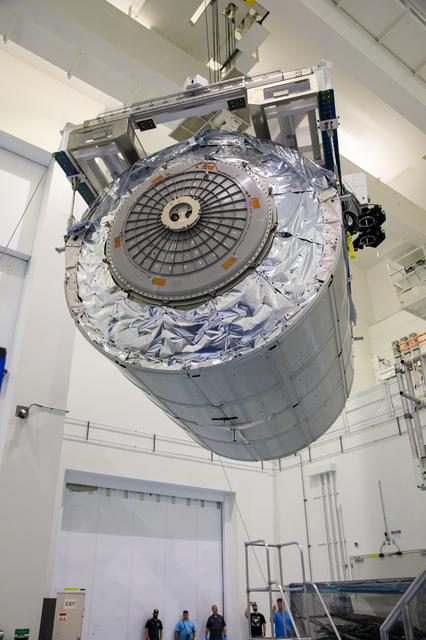
Axiom Space plans to initially attach its modules to the ISS before transitioning to a standalone station. This strategy allows Axiom to leverage existing infrastructure while developing its own capabilities. The first module is expected to launch in 2024, with the complete station operational by the late 2020s. Axiom's focus includes commercial research, manufacturing, and space tourism, aiming to create a sustainable business model in LEO. The company's approach highlights the potential for public-private partnerships in space exploration.
Why Do Commercial Space Stations Matter?

Commercial space stations represent a paradigm shift in how humans utilise space. By opening up LEO to private enterprises, these stations can drive innovation in fields such as pharmaceuticals, materials science, and even entertainment. They also offer new opportunities for international cooperation and can serve as stepping stones for deeper space exploration. The commercialisation of space stations is expected to reduce costs and increase access, potentially making space travel more commonplace.
Challenges and Opportunities

The development of commercial space stations is not without challenges. Regulatory hurdles, funding, and technical complexities must be addressed to ensure success. However, the potential benefits are significant. These stations can stimulate economic growth, create new markets, and enhance scientific understanding. As companies like Blue Origin, Nanoracks, and Axiom Space push forward, they will need to navigate these challenges while capitalising on the opportunities that lie ahead.
Key Takeaways
Commercial space stations are poised to transform the space industry by offering new platforms for research, manufacturing, and tourism. Projects like Orbital Reef, Starlab, and Axiom Space exemplify the diverse approaches being taken. While challenges remain, the potential for economic growth and scientific advancement is significant. As these stations become operational, they will redefine humanity's relationship with space.
Frequently Asked Questions
What are commercial space stations?
When will Orbital Reef be operational?
How is Starlab unique?
What is Axiom Space's approach?
Why are commercial space stations important?
📎 Cite this article
Orbital Radar Newsroom. (2026). Commercial Space Stations: Orbital Reef, Starlab and Axiom Explained. Orbital Radar. https://orbitalradar.com/blog/commercial-space-stations-guide"Commercial Space Stations: Orbital Reef, Starlab and Axiom Explained." Orbital Radar, 26 July 2026, https://orbitalradar.com/blog/commercial-space-stations-guide.@misc{orbitalradar_commercial_space_stations_guide,
title = {Commercial Space Stations: Orbital Reef, Starlab and Axiom Explained},
author = {{Orbital Radar}},
year = {2026},
howpublished = {\url{https://orbitalradar.com/blog/commercial-space-stations-guide}}
}