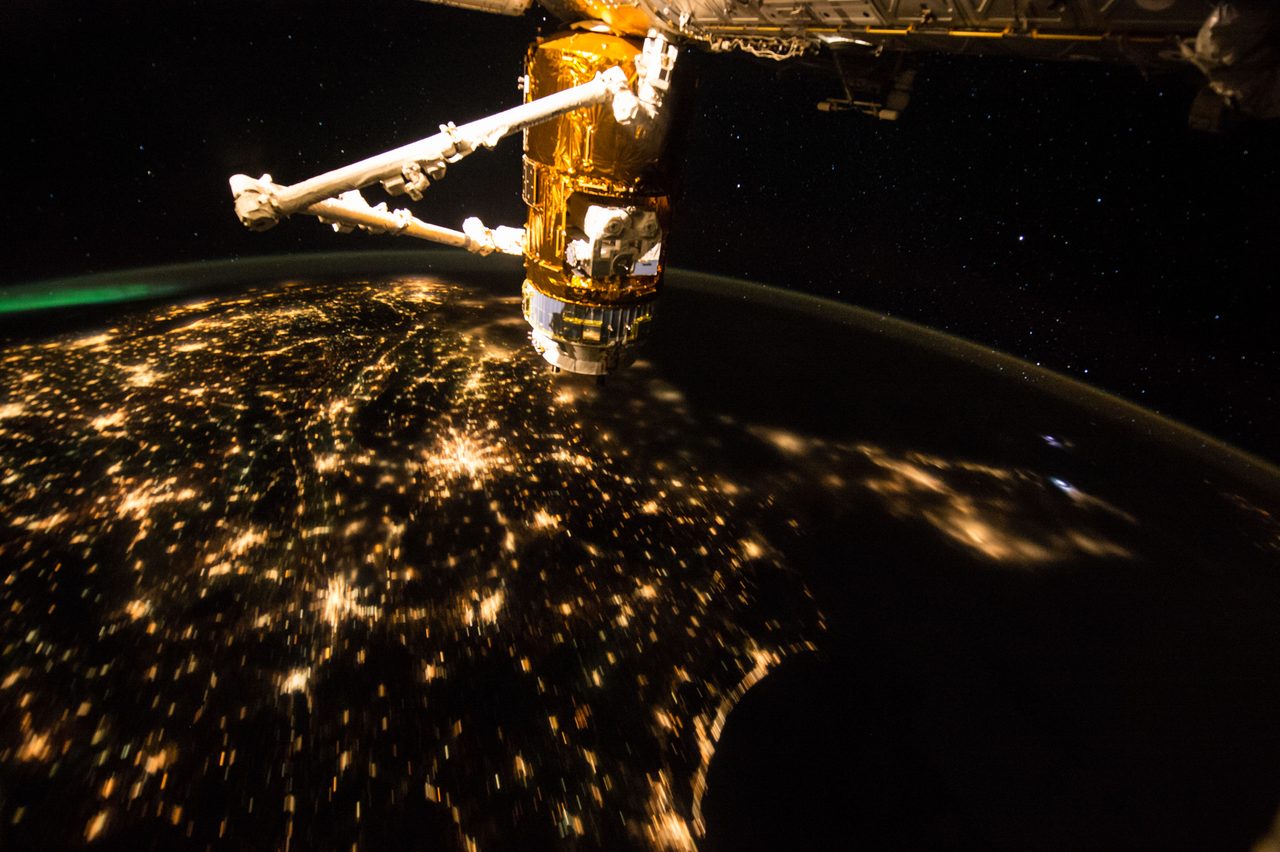
What Happens to Your Body in Space? The Human Effects
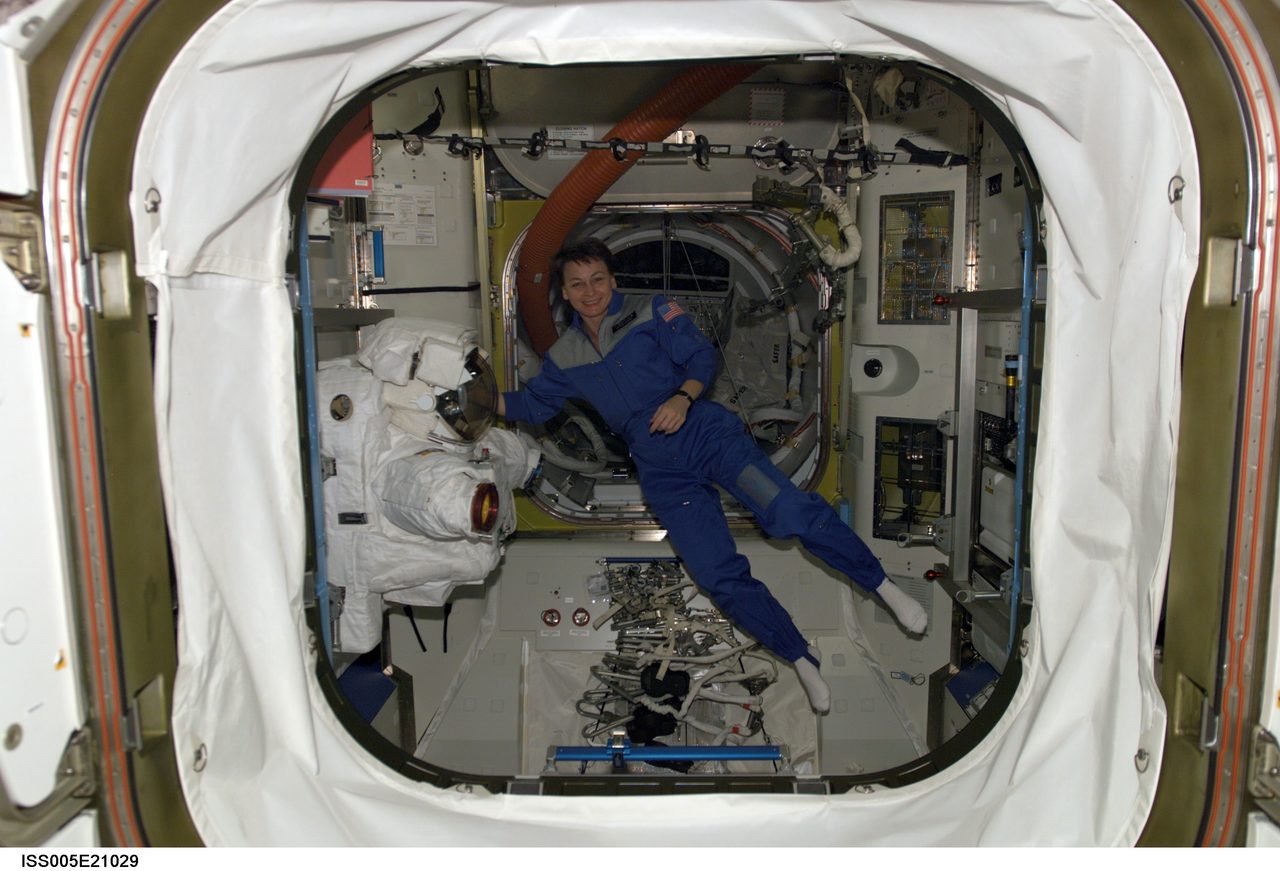
Spaceflight changes how bones, muscles, circulation and eyesight work. Explore the risks of long ISS stays, the countermeasures crews use and what recovery involves.
| Active satellites | 15,878 |
| Starlink active | 10,078 |
| Catalogued objects | 31,832 |
| Predicted re-entries | 18 |
| Active close approaches | 20 |
| People in space | 10 |
In space, your body adapts to weightlessness: muscles weaken, bones lose mineral and fluids shift towards your head. Longer stays can also affect eyesight, balance and immune function, while space radiation poses a separate health risk.
According to Orbital Radar tracking data, 10 people were in space on 22 October 2026. These changes are not all illnesses, and they do not affect everyone equally: some are adaptations to living without the usual pull of gravity. Astronauts manage the risks through exercise, nutrition, medical monitoring and spacecraft protection, although these measures cannot eliminate every effect.
The International Space Station (ISS) is the main setting for this article; its orbit can be followed on Orbital Radar’s ISS tracker. The station operates within Earth’s protective magnetic field, which reduces exposure to some space radiation but does not remove the hazard. Journeys beyond that protection involve a different radiation environment, so experience aboard the ISS does not capture every health challenge of travelling farther into space.
Why does your body change when you live in space?
Your body changes in space because apparent weightlessness removes the constant loading and directional cues it evolved to expect on Earth. Microgravity is the condition in which people and objects experience apparent weightlessness: the International Space Station (ISS) and its occupants are continuously falling around Earth, not escaping gravity.
On Earth, standing and moving against gravity give bones and muscles regular mechanical signals to maintain their strength. In orbit, those demands diminish, changing the body's maintenance signals. Without countermeasures, it can reduce tissue that is no longer being used as heavily.
The balance organs in the inner ear lose their usual gravity reference, so the brain must reinterpret information from the eyes, joints and muscles. Circulation also adjusts without the familiar head-to-foot gravitational pull, while astronauts learn to move without a persistent sense of up or down.
Some adjustments begin immediately; changes to bone and muscle accumulate over a longer stay. Responses differ with mission duration, age, physiology, previous spaceflight and exercise.
According to Orbital Radar tracking data, 10 people are in space on 22 October 2026. The Orbital Radar Space Academy explains the orbital mechanics behind their apparent weightlessness.
Why do astronauts lose bone in space?
Astronauts lose bone because, without normal weight-bearing loads, bone removal can outpace replacement. Bone remodelling (the continual breakdown and rebuilding of bone tissue) normally responds to mechanical strain. In microgravity, hips, pelvis and legs lose much of their usual loading; not every bone changes equally.
Orbital Radar tracking data lists 10 people in space on 22 October 2026. Bone health is a concern for long-duration crews because this imbalance can reduce both mineral density and the internal structure that helps bone resist fractures.
As bone tissue is broken down, calcium enters the bloodstream and more can be excreted in urine, contributing to kidney-stone risk. This is regulated biological turnover becoming unbalanced, not bones simply dissolving. Hydration and urine chemistry also influence whether stones form.
Resistance exercise supplies mechanical loading, while adequate energy intake, calcium and vitamin D support maintenance and rebuilding. Supplements alone cannot replace that loading. Medical monitoring can include bone-density measurements and blood and urine tests; Orbital Radar’s Space Academy provides wider spaceflight context.
Orbital Radar’s live catalogue records a current spacegoing population of 10. For astronauts returning from lengthy missions, restoring everyday loading does not immediately reverse bone changes: rebuilding takes time, and recovery can be incomplete. A bone-density scan measures mineral content, but a return towards previous density does not necessarily mean the bone’s internal architecture, or its strength, has fully recovered.
How do astronauts stop their muscles getting weaker?
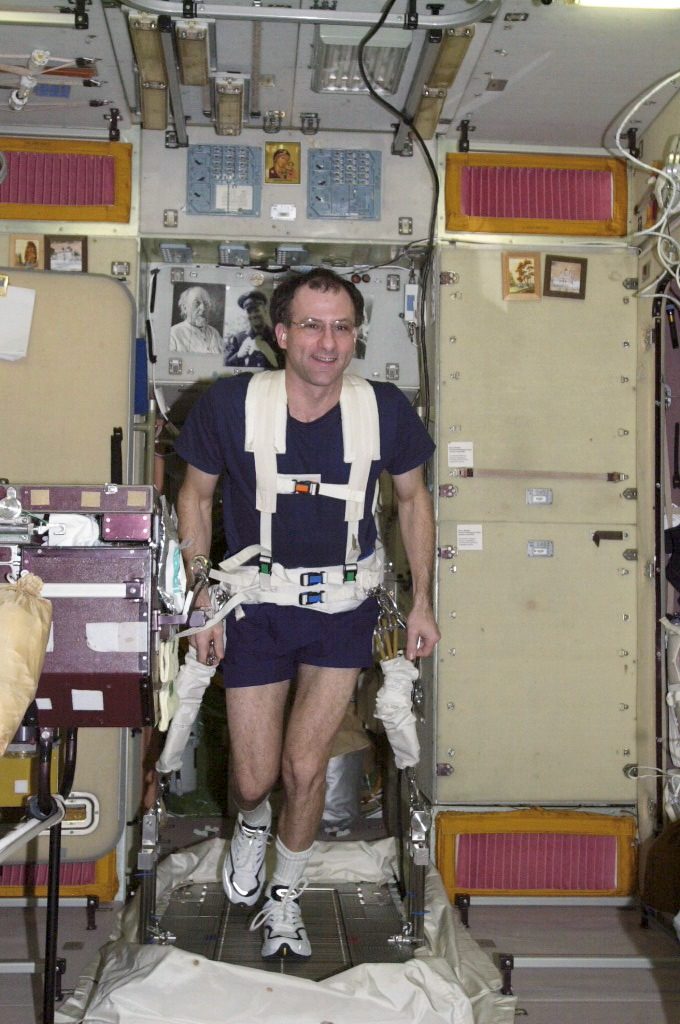
Astronauts limit muscle weakening with scheduled resistance exercise, aerobic training and adequate food. In microgravity (the near-weightless conditions of orbital flight), muscles that normally support standing and walking do less routine work, so strength and endurance can decline.
The International Space Station’s Advanced Resistive Exercise Device uses vacuum cylinders and a flywheel to provide resistance without relying on conventional free weights. Astronauts perform movements such as squats and deadlifts, loading muscles that would otherwise receive little weight-bearing work.
A treadmill harness pulls the runner towards the belt, allowing exercise without floating away. A stationary cycle supports cardiovascular fitness by challenging the heart and circulation, but cycling does not provide the same muscular loading as resistance exercise. These activities complement rather than replace one another.
Orbital Radar tracking data records 10 people in space as of 22 October 2026. That count of 10 people in Orbital Radar’s live catalogue describes the crew population, not their individual fitness.
Training must be tailored to each astronaut’s condition, workload and recovery, with protected time in the schedule. Enough food supplies energy, while adequate protein supports muscle maintenance and repair; exercise alone cannot compensate for consistently inadequate intake.
This conditioning supports demanding tasks such as spacewalks, emergency evacuation and standing after landing, but does not prevent every physical change. Orbital Radar’s Space Academy provides further context on human spaceflight.
Why do astronauts get puffy faces and thinner legs?
Astronauts develop puffy faces and thinner-looking legs because microgravity redistributes blood and other fluids towards the chest and head. On Earth, gravity creates a pressure gradient that encourages blood to pool in the legs when standing; in orbit, that gradient largely disappears.
The shift can cause facial swelling and a blocked-nose sensation, while reduced fluid in the legs makes them look slimmer. This early change is not the same as muscle loss, which develops through reduced loading and requires separate countermeasures.
Circulation and fluid regulation then adapt: hormonal signals and kidney function adjust, and circulating blood volume generally falls. That adaptation does not preserve cardiovascular fitness by itself. Astronauts still need regular exercise to maintain aerobic capacity.
Lower-body negative pressure uses a sealed chamber around the lower body to create suction, drawing blood towards the legs. It has been studied and used in selected spaceflight protocols, but is not a universal daily treatment; routine exercise remains central.
Headward fluid shifts also matter to research into spaceflight-associated neuro-ocular syndrome, involving changes to the eyes and vision. They are a suspected contributor, not the sole established cause.
Orbital Radar tracking data records 10 people in space on 22 October 2026. Orbital Radar’s Space Academy provides further background on microgravity, the near-weightless conditions experienced in orbit.
Can living in space damage your eyesight?
Yes: living in space can alter eyesight and eye structure, although this does not mean every astronaut develops permanent sight loss. Spaceflight-associated neuro-ocular syndrome (SANS) is a pattern of eye and vision changes observed in some astronauts.
Findings can include swelling of the optic disc (where the optic nerve enters the eye), flattening at the back of the eyeball and altered focusing. Some astronauts notice difficulty with close-up tasks and need different corrective lenses; structural changes do not always produce obvious symptoms.
Orbital Radar tracking data records 10 people in space on 22 October 2026. In weightlessness, fluid shifts towards the head, potentially affecting pressures and drainage around the eyes and brain. Researchers suspect this redistribution contributes to SANS, but the mechanisms remain under investigation: it is not simply a proven case of increased pressure inside the skull.
Medical teams use eye imaging, including optical coherence tomography (scans that resolve retinal layers), alongside vision tests and examinations before, during and after missions. Corrective lenses can compensate for focusing changes, but they do not treat every underlying structural finding.
The 10-person spaceflight population recorded on 22 October 2026 by Orbital Radar tracking data is not a count of SANS diagnoses. Symptoms and recovery vary: some changes improve after return, while others can persist, and risks on longer missions remain uncertain. Orbital Radar’s Space Academy provides wider context for the conditions astronauts experience in orbit.
How dangerous is radiation during a long ISS stay?
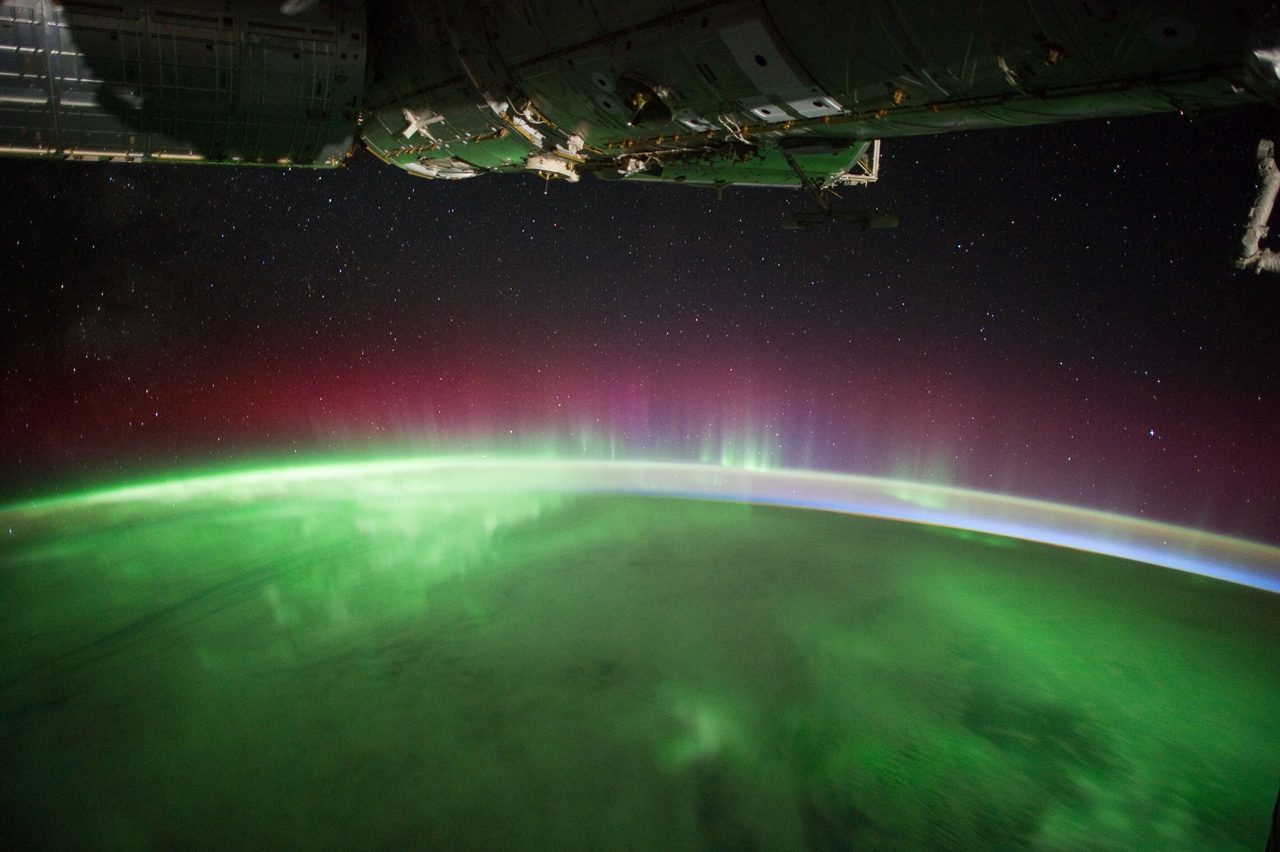
Radiation during a long ISS stay increases cumulative health risks, particularly cancer risk; acute radiation illness is not expected during routine operations. Ionising radiation carries enough energy to remove electrons from atoms, potentially damaging cells and DNA.
Orbital Radar tracking data records 10 people in space on 22 October 2026. Their radiation exposure depends on their location, shielding and time in orbit, rather than simply being above the atmosphere.
Galactic cosmic rays are highly energetic particles arriving from beyond the Solar System. Solar energetic particles are accelerated during solar eruptions, while trapped radiation consists of charged particles held by Earth's magnetic field. The ISS encounters enhanced trapped radiation when crossing the South Atlantic Anomaly, where that protection is weaker.
Earth's magnetic field deflects some incoming particles, and spacecraft walls absorb some radiation. Lunar and interplanetary crews travel beyond much of this magnetic protection. Shielding remains imperfect: highly energetic particles can penetrate it and generate secondary radiation when they strike materials.
Astronauts wear personal dosimeters (radiation-dose monitors), while station instruments and ground teams track conditions. Exposure management includes cumulative-dose records, mission planning and spacewalk decisions. During significant solar events, procedures can include postponing spacewalks and moving crews to better-shielded areas. Acute radiation illness requires a sufficiently large dose over a short period; it is distinct from the cancer risk accumulated over a career.
Orbital Radar's live catalogue lists 15,878 active satellites as of 22 October 2026. Neither satellite counts nor general forecasts establish an astronaut's personal dose; Orbital Radar's space weather guide explains the wider environment.
Does space affect sleep, immunity and mental health?
Yes: spaceflight can disrupt sleep, alter immune regulation and strain mental wellbeing, but these effects are not all caused by microgravity. According to Orbital Radar tracking data, 10 people were in space on 22 October 2026.
Changing light cues, demanding schedules, equipment noise and unfamiliar sleeping quarters can disturb circadian rhythms (the body's daily timing system). Floating is not inherently harmful to sleep: carefully timed lighting, protected sleep periods and operational planning help crews maintain a dependable routine.
Immune regulation can change during spaceflight, and some microbes show altered growth or behaviour under spaceflight conditions. Neither finding means infection is inevitable; the consequences depend on the organism, the astronaut and the environment. Hygiene, health monitoring and cabin maintenance remain important safeguards.
Confinement, separation from family, heavy workloads and limited privacy can affect mood and relationships. Regular communication with home, confidential psychological support and shared team routines help crews manage these pressures. Orbital Radar's Space Academy provides broader context for the conditions crews experience.
These influences overlap: poor sleep can increase stress and make exercise harder, while stress can disrupt appetite and sleep. Exercise supports conditioning and can help mood and routine, but must fit around work and rest. Microgravity changes how the body functions; noise, scheduling and isolation belong to the wider mission environment, so effective countermeasures must address both.
What happens to astronauts when they return to Earth?
Astronauts returning to Earth can feel dizzy, struggle with balance and find standing or walking difficult as their bodies readapt to gravity. The balance organs in the inner ear must recalibrate, while muscles must again support body weight.
Some experience orthostatic intolerance: difficulty maintaining adequate circulation when upright. Gravity draws blood towards the legs; after spaceflight, reduced circulating blood volume and altered cardiovascular responses can make it harder to maintain blood flow to the brain. Standing may therefore cause light-headedness or fainting.
Supervised rehabilitation combines supported walking and balance exercises with progressive strength training and cardiovascular conditioning. Medical and rehabilitation teams adjust the workload to symptoms and test results, rather than assuming that being able to walk means recovery is complete.
Different systems recover on different timescales. Balance and everyday mobility may improve before strength, aerobic fitness or bone measurements return towards pre-flight values. Mission duration, individual biology and countermeasures—including exercise during flight—influence the outcome. Returning to everyday activity is not the same as recovering in every measurement; long-term follow-up can identify persistent changes and inform future missions with less access to medical support.
Orbital Radar tracking data records 10 people in space on 22 October 2026. Orbital Radar's live catalogue records 15,878 active satellites on 22 October 2026. Unlike those machines, returning crews need continuing care; Orbital Radar’s Space Academy provides wider spaceflight context.
How can you check who is in space and follow the ISS?
Orbital Radar tracking data recorded 10 people in space on 22 October 2026. To check the current human presence in orbit, use Orbital Radar’s human spaceflight page; individual profiles are available in its astronaut directory at /human-spaceflight/astronauts.
The worldwide count is not necessarily the crew count aboard the International Space Station (ISS). People elsewhere in orbit also contribute to that total, so it should not be read as a list of everyone living in the station’s laboratory.
Use Orbital Radar’s ISS tracker to follow the station’s position as it travels around Earth. That moving point represents a working laboratory where researchers study how living in space affects the human body, including changes that become apparent during a mission and after return.
Location tracking shows where the spacecraft is, not how any particular astronaut is feeling. It does not reveal individual medical information or establish whether someone has experienced a particular health effect.
If you would like to observe the station yourself, the optional next step is Orbital Radar’s viewing guide at /how-to-see-iss-tonight. You will see the spacecraft crossing the sky, not its occupants.
Key takeaways
- Microgravity reduces the normal loading on bones and muscles and redistributes body fluids towards the head.
- Exercise, nutrition and medical monitoring limit health risks during ISS missions but do not prevent every physiological change.
- Spaceflight-related eye changes remain an active research problem, while radiation poses a separate risk that depends on exposure and mission environment.
- Returning to Earth starts another period of adaptation, with recovery varying between people and body systems.
Frequently Asked Questions
Do astronauts get taller on the ISS?
Can you catch a cold on the International Space Station?
Does food taste different on the ISS?
Can astronauts take normal medicines on the ISS?
Do short space-tourism flights cause the same changes as an ISS mission?
📎 Cite this article · data available
Orbital Radar Newsroom. (2026). What Happens to Your Body in Space? The Human Effects. Orbital Radar. https://orbitalradar.com/blog/what-happens-to-the-human-body-in-space"What Happens to Your Body in Space? The Human Effects." Orbital Radar, 23 October 2026, https://orbitalradar.com/blog/what-happens-to-the-human-body-in-space.@misc{orbitalradar_what_happens_to_the_human_body_in_space,
title = {What Happens to Your Body in Space? The Human Effects},
author = {{Orbital Radar}},
year = {2026},
howpublished = {\url{https://orbitalradar.com/blog/what-happens-to-the-human-body-in-space}}
}