How Many Satellites Reentered This Year? 2026 by the Numbers
Orbital Radar records 673 satellite and payload re-entries in 2026 so far, within 1,119 atmospheric returns across all object types.
| Active satellites | 15,880 |
| Starlink active | 10,078 |
| Catalogued objects | 31,850 |
| Predicted re-entries | 13 |
| Active close approaches | 21 |
| People in space | 10 |
673 satellites and payloads re-entered Earth's atmosphere between 1 January and 22 October 2026, according to Orbital Radar tracking data. Including rocket bodies, debris and unclassified objects, Orbital Radar's live catalogue records 1,119 re-entries over the same period.
That distinction matters: the satellite count answers one question, while the broader total captures the range of tracked objects returning from orbit. Re-entry means an object has returned to the atmosphere; it does not necessarily mean that any part of it reached the ground.
This article examines what returned, how recent activity compares with the equivalent period last year, and which objects had the largest listed masses. Those mass figures describe the catalogued objects, not the amount of material that survived passage through the atmosphere.
The Orbital Radar Re-entry Tracker is the place to follow the changing picture, bringing recorded returns and upcoming predictions together. Predictions should be read as estimates rather than confirmed events: the year-to-date tally counts returns already recorded.
What counts as a satellite re-entry in the 2026 total?
673 satellites and payloads re-entered Earth's atmosphere between 1 January and 22 October 2026, according to Orbital Radar tracking data. That is the relevant count for readers asking how many satellites re-entered this year, rather than the broader total that also includes rocket bodies, debris and unclassified objects.
Orbital Radar tracking data records 1,119 catalogued object re-entries in 2026. The breakdown separates intact payloads from other types of tracked hardware:
Catalogue categoryRe-entered objectsSatellites and payloads673Debris pieces272Rocket bodies85UnclassifiedRemainderTotal1,119
Payload is a catalogue category, not an operational status. An object listed as a payload need not have been functioning immediately before re-entry: a satellite that stopped working can retain that classification. The category therefore does not mean that every returning satellite was still providing a service.
A rocket body is a spent launch-vehicle stage. Debris means detached or fragmented material rather than an intact payload; unclassified objects remain outside those identified categories.
These figures count catalogued objects, not launches or missions, each of which can produce multiple tracked objects. They are also not counts of atmospheric fragments or impacts on the ground. Orbital Radar's re-entry tracker provides a way to follow the tracked objects behind the totals.
How much of this year's re-entry activity is Starlink?
445 Starlink satellites re-entered Earth's atmosphere between 1 January and 22 October 2026, according to Orbital Radar tracking data. Those completed returns form part of the 673 satellites and payloads recorded as re-entering this year: they are already included in the overall total of 1,119 objects, not an additional count to add on top.
The Starlink figure works out at about 1.5 re-entries a day across that period. That is a period average, not a daily schedule: it describes the rate across the reporting window rather than implying that returns occurred at a steady pace or on every day.
As of that same date, 193 Starlink satellites were categorised as deorbiting in Orbital Radar's live catalogue. Deorbiting means lowering an orbit towards atmospheric re-entry; it does not mean that the spacecraft has already entered the atmosphere, so this group must remain distinct from the completed returns.
The distinction matters when reading a constellation's status: an operational satellite, a satellite lowering its orbit and a satellite that has re-entered represent different stages. The deorbiting count is a current status figure, whereas the completed re-entry count accumulates events over the year.
Orbital Radar's Starlink constellation page provides context for those different stages across the fleet. The re-entry total alone does not establish why each spacecraft returned, and it should not be read as evidence that every Starlink re-entry had the same cause.
How quickly have objects been re-entering recently?
Orbital Radar tracking data records 111 objects re-entering Earth’s atmosphere in the rolling 30 days to 22 October 2026, including 44 Starlink satellites. That recent window covers all recorded object types, not just satellites, and provides a snapshot of activity rather than a forecast.
Across the year to date, re-entries have averaged about 3.8 objects a day, according to Orbital Radar tracking data. The recent rolling total is broadly consistent with that pace, but neither measure means objects return at a steady daily rate. Quiet stretches can alternate with clusters of re-entries.
A rolling 30-day window counts backwards from the reporting date, moving forward as each day passes. It therefore includes days from the preceding calendar month while excluding older events as they fall outside the window. A calendar-month total instead begins on the first day of that month, so it measures a different interval.
Clusters can reflect differing orbital lifetimes and disposal activity: some objects gradually lose altitude, while others are deliberately moved towards re-entry. Those mechanisms do not establish why this particular period produced its recorded total. Orbital Radar’s Re-entry Tracker provides a way to follow how the recent record changes.
Have more objects re-entered than at this point in 2025?
No: fewer objects have re-entered this year than over the equivalent period last year. According to Orbital Radar tracking data, 1,119 objects re-entered Earth's atmosphere between 1 January and 22 October 2026. Orbital Radar tracking data records 1,656 re-entries over the equivalent year-to-date period in 2025. This is a like-for-like comparison covering the same portion of each year, not a comparison between this year's running total and the whole of last year.
The lower count establishes that fewer catalogued objects have returned during the comparison period; it does not, by itself, establish that the orbital debris environment has improved. Re-entries measure objects leaving orbit, whereas the orbital population measures objects still there. Launches and the creation of debris can add to that population while other objects are returning to the atmosphere.
Nor does a simple object count distinguish between the sizes, masses or orbital locations of the objects involved. To put the decline in returns into context, Orbital Radar's space debris statistics page covers the wider population remaining in orbit. The useful distinction is between the flow out of orbit and the population left behind: a smaller outflow alone cannot tell us whether that population is shrinking.
Which were among the heaviest objects to re-enter in 2026?
ICPS, classified as a payload in Orbital Radar's live catalogue, re-entered on 2 April 2026 with a listed mass of about 32,700 kg. It was among the heaviest recorded returns of the year, alongside ZK-2 R/B and BREEZE-M DEB (TANK), although these examples are not a definitive ranking of every object.
ZK-2 R/B, classified as a rocket body in Orbital Radar's live catalogue, re-entered on 13 April 2026 with a listed mass of about 17,000 kg. BREEZE-M DEB (TANK), classified as debris in Orbital Radar's live catalogue, re-entered on 1 March 2026 with a listed mass of about 11,900 kg.
Those classifications matter when comparing the records. ICPS is counted here as a payload, ZK-2 R/B as a rocket body and BREEZE-M DEB (TANK) as debris: the catalogue labels should be preserved even where an object's name might suggest a different everyday description. Readers exploring individual records through the Orbital Radar re-entry tracker should therefore distinguish the object's name from its recorded category.
The mass figures also need careful interpretation. A listed object mass is not a measurement of how much material survived atmospheric entry, and it should not be presented as the weight that reached the ground. These records identify substantial objects that returned from orbit; they do not, by themselves, establish surviving fragments, impact locations or casualties. Their value here is to illustrate the scale and variety of objects represented in the year's re-entry record.
What happens when these objects enter the atmosphere?
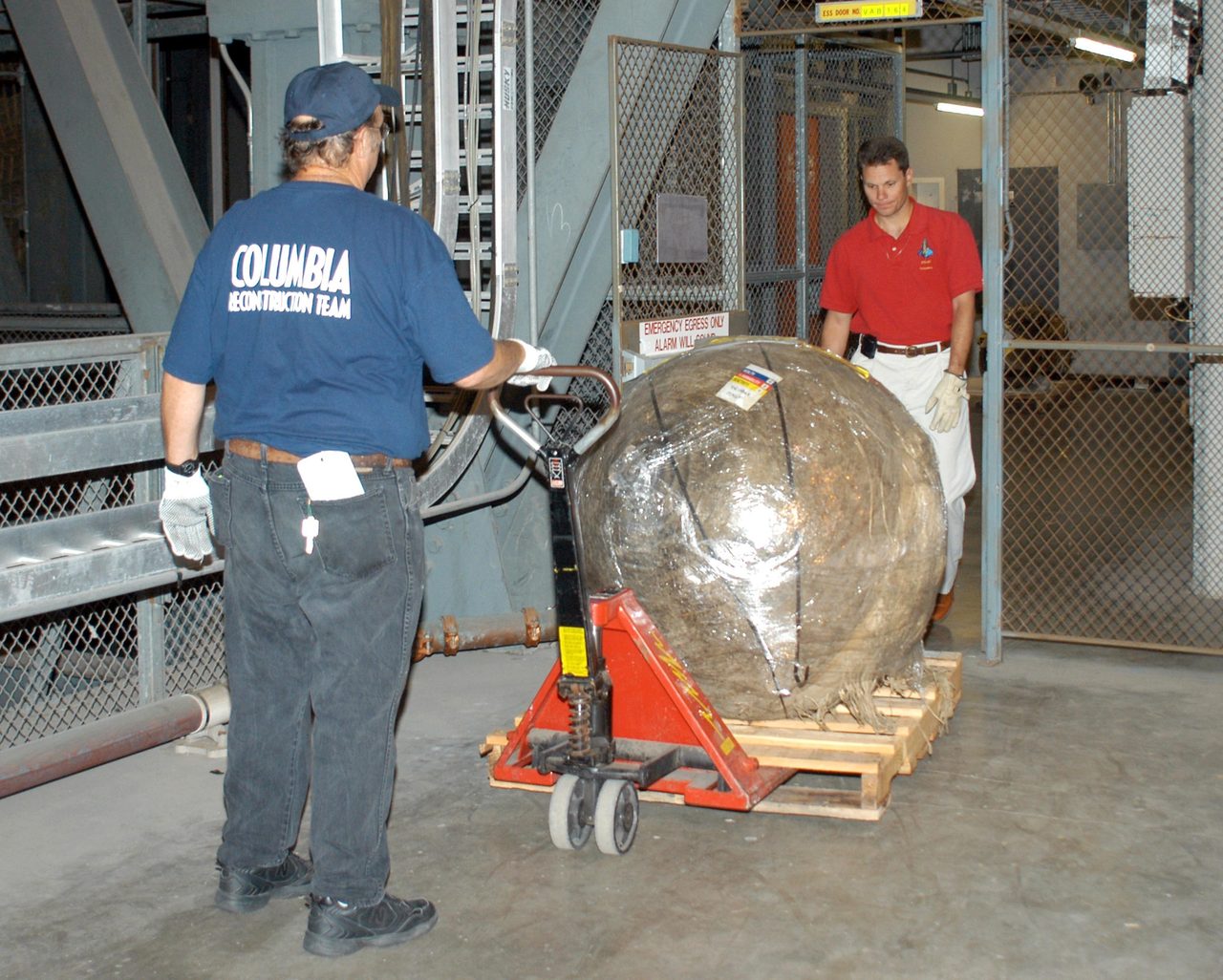
Objects entering the atmosphere lose speed, heat up and may break apart; some material can survive to reach the surface. Atmospheric drag (resistance from thin air) removes orbital energy, gradually lowering an object's orbit in a process called orbital decay. As it descends into denser air, drag intensifies.
At orbital speeds, the object compresses the air ahead of it, producing extremely hot gas that transfers heat to its surface. Heating can melt or strip away material, while aerodynamic forces can tear the structure apart. This is more complex than simply burning through friction.
A controlled re-entry uses manoeuvres to target an entry corridor, usually directing surviving debris towards a remote ocean area. An uncontrolled re-entry has no such targeted final descent: its timing and location remain uncertain because atmospheric density, orientation and other factors affect the trajectory.
Orbital Radar tracking data records ICPS re-entering on 2 April 2026 with a catalogue mass of about 32,700 kg. That figure is not a measurement of material reaching the surface.
The roughly 32,700 kg listed for ICPS's 2 April 2026 re-entry in Orbital Radar tracking data does not establish how much survived. Construction, material, shielding and entry conditions influence fragmentation and survival; the annual count alone cannot resolve those outcomes. Orbital Radar's explanation of re-entry physics and uncertainties explores why different objects can meet very different ends.
How can I follow satellite re-entries live on Orbital Radar?
Use Orbital Radar's Re-entry Tracker to follow recorded returns and upcoming predictions, keeping completed events separate from forecasts. Orbital Radar tracking data records 1,119 completed atmospheric re-entries this year as of 22 October 2026. That annual total describes objects that have already returned, not objects whose orbits suggest they will return soon.
Orbital Radar tracking data lists 13 objects predicted to re-enter soon in 2026. These are forecasts rather than confirmed returns, so they should not be added to the completed total. Their predicted timing can change as their orbits evolve and atmospheric drag—the resistance an object encounters in the upper atmosphere—alters their descent.
When reading any figure, note both its status and its reporting window: does it describe completed re-entries or predicted events, and does it cover a year, month or week? The tracker records 76 completed returns this month and 13 this week; neither is interchangeable with the annual total. The weekly count also happens to match the number predicted soon, but the figures describe different things.
For additional context about an individual object, consult Orbital Radar's satellite library where a corresponding catalogue entry is available. Keep that object information distinct from its forecast: a predicted return remains a prediction until the re-entry is recorded as completed.
Does a re-entry mean there is less space debris?
A completed re-entry removes an object from orbit, but it does not necessarily mean the overall debris environment is shrinking. Launches and satellite deployments add objects, while fragmentation (the break-up of an object into smaller pieces) can create more debris than re-entries remove. Orbital Radar tracking data records 1,119 objects returning to Earth's atmosphere so far in 2026.
Orbital Radar tracking data lists 31,850 tracked objects in orbit as of 22 October 2026. That is a population snapshot, not an annual total of returning objects: it describes what remains in the tracked orbital environment. The catalogue includes 18,881 payloads (satellites and other mission equipment), 2,196 rocket bodies and 10,085 debris objects. These are objects still being tracked in orbit, not categories to add to the year's re-entry total; payloads should not all be treated as debris.
Nor does the tracked population represent every small fragment in space. Pieces too small to catalogue reliably can still damage spacecraft. An object count is therefore not a direct measure of collision risk: altitude, orbital paths, relative speed and the size of the objects all matter. A falling total alone cannot show whether a particular spacecraft has become safer.
The Orbital Radar debris map provides spatial context for the tracked environment. For the principles behind limiting new debris, avoiding break-ups and disposing of spacecraft after their missions, see the guide to debris mitigation.
What does the historical record tell us about this year's returns?
Orbital Radar tracking data records 1,119 objects re-entering Earth's atmosphere between 1 January and 22 October 2026. That partial-year total belongs within a much longer historical record, but it is neither a full-year tally nor a count of satellites alone.
Orbital Radar's live catalogue records a historical cumulative total of 35,719 documented re-entries since the start of the space age. This is a record of documented objects, not a census of every fragment that has entered the atmosphere. Material that was never individually catalogued cannot be assumed to appear as a separate entry, so the historical figure describes the recorded population rather than every atmospheric return.
The annual and historical totals therefore answer different questions: how many recorded objects have returned during the current reporting period, and how many have been documented across the space age. Neither supports projecting the unfinished year into a final annual total.
For the evolving annual picture, return to the Orbital Radar re-entry tracker rather than treating this snapshot as definitive. The central reading rule remains: distinguish satellites from all objects, completed returns from predictions, and an object's mass from the amount, if any, that reaches the ground.
Key takeaways
- Orbital Radar records 673 satellite and payload re-entries within a total of 1,119 objects returned so far in 2026.
- Starlink accounts for 445 recorded satellite returns this year, averaging about 1.5 a day.
- The 1,119 recorded returns are fewer than the 1,656 recorded over the equivalent period in 2025.
- ICPS is among the heaviest listed returns at about 32,700 kg, but catalogue mass does not establish how much material reached the ground.
Frequently Asked Questions
Why do re-entry forecasts change as a satellite gets closer to Earth?
Can I see a satellite re-entry from the ground?
Does solar activity make satellites fall out of orbit faster?
Can a satellite re-enter without an engine firing?
Who is responsible if satellite debris causes damage on Earth?
📎 Cite this article · data available
Orbital Radar Newsroom. (2026). How Many Satellites Reentered This Year? 2026 by the Numbers. Orbital Radar. https://orbitalradar.com/blog/satellite-reentries-this-year"How Many Satellites Reentered This Year? 2026 by the Numbers." Orbital Radar, 22 October 2026, https://orbitalradar.com/blog/satellite-reentries-this-year.@misc{orbitalradar_satellite_reentries_this_year,
title = {How Many Satellites Reentered This Year? 2026 by the Numbers},
author = {{Orbital Radar}},
year = {2026},
howpublished = {\url{https://orbitalradar.com/blog/satellite-reentries-this-year}}
}