Blue Origin's New Glenn: A Comprehensive Guide to the Heavy-Lift Rocket

Blue Origin's New Glenn is a heavy-lift rocket designed to compete in the commercial space market with significant payload capacity.
Blue Origin's New Glenn rocket is a heavy-lift launch vehicle designed to carry payloads to low Earth orbit (LEO) and beyond. Named after astronaut John Glenn, the New Glenn aims to provide reliable access to space for commercial and government customers. Its first stage is designed for reusability, similar to SpaceX's Falcon 9, with a planned launch debut in the late 2020s.
Design and Specifications of New Glenn

The New Glenn rocket stands 98 metres tall and is equipped with a seven-metre diameter payload fairing. It is powered by seven BE-4 engines on its first stage, which use liquefied natural gas (LNG) and liquid oxygen (LOX) as propellants. This configuration allows the rocket to deliver up to 45 tonnes to LEO. The second stage is powered by two BE-3U engines, optimised for vacuum operation. Detailed specifications and comparisons with other rockets can be explored in the Orbital Radar launch vehicles directory.
How New Glenn's Reusability Works

New Glenn's first stage is designed to be reusable for up to 25 missions, a key feature aimed at reducing launch costs. The booster will return to Earth for a controlled landing on a sea-based platform, similar to SpaceX's drone ship landings. This reusability is expected to make New Glenn competitive in the commercial launch market, where cost efficiency is paramount.
New Glenn vs Falcon 9: A Comparison
Both New Glenn and SpaceX's Falcon 9 are designed for reusability and serve similar markets, but they differ in size and payload capacity. While Falcon 9 can carry approximately 22.8 tonnes to LEO, New Glenn's capacity is nearly double. However, Falcon 9 has a proven track record with over 200 successful launches, whereas New Glenn is yet to make its debut. For a detailed comparison, see the Orbital Radar launch schedule.
Why New Glenn Matters in the Space Industry
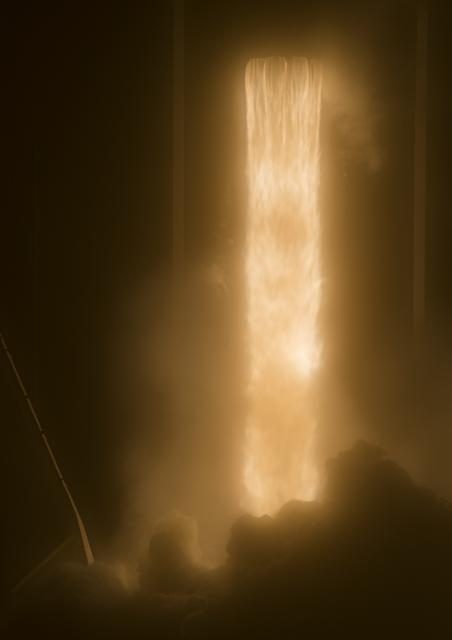
New Glenn represents Blue Origin's entry into the heavy-lift launch market, challenging incumbents like SpaceX and ULA. Its development signifies the growing competition in the commercial space sector, which could lead to reduced costs and increased access to space. The rocket's large payload capacity is particularly suited for deploying large satellite constellations and interplanetary missions.
Future Prospects and Challenges for New Glenn
While New Glenn holds promise, it faces challenges such as development delays and competition from established players. Blue Origin's ability to secure contracts and demonstrate reliability will be crucial. The rocket's success could influence the future of space exploration and commercial spaceflight, making it an important player in the industry.
Key Takeaways
Blue Origin's New Glenn is poised to become a significant player in the heavy-lift rocket market, offering substantial payload capacity and reusability. Its development highlights the competitive nature of the commercial space industry. As New Glenn approaches its first launch, its performance and impact on the market will be closely watched.
Frequently Asked Questions
What is the New Glenn rocket?
When will New Glenn launch?
How does New Glenn compare to SpaceX's Falcon 9?
What engines power the New Glenn rocket?
Why is New Glenn important?
📎 Cite this article
Orbital Radar Newsroom. (2026). Blue Origin's New Glenn: A Comprehensive Guide to the Heavy-Lift Rocket. Orbital Radar. https://orbitalradar.com/blog/new-glenn-explained"Blue Origin's New Glenn: A Comprehensive Guide to the Heavy-Lift Rocket." Orbital Radar, 23 July 2026, https://orbitalradar.com/blog/new-glenn-explained.@misc{orbitalradar_new_glenn_explained,
title = {Blue Origin's New Glenn: A Comprehensive Guide to the Heavy-Lift Rocket},
author = {{Orbital Radar}},
year = {2026},
howpublished = {\url{https://orbitalradar.com/blog/new-glenn-explained}}
}