How Long Does It Take to Get to the Moon?
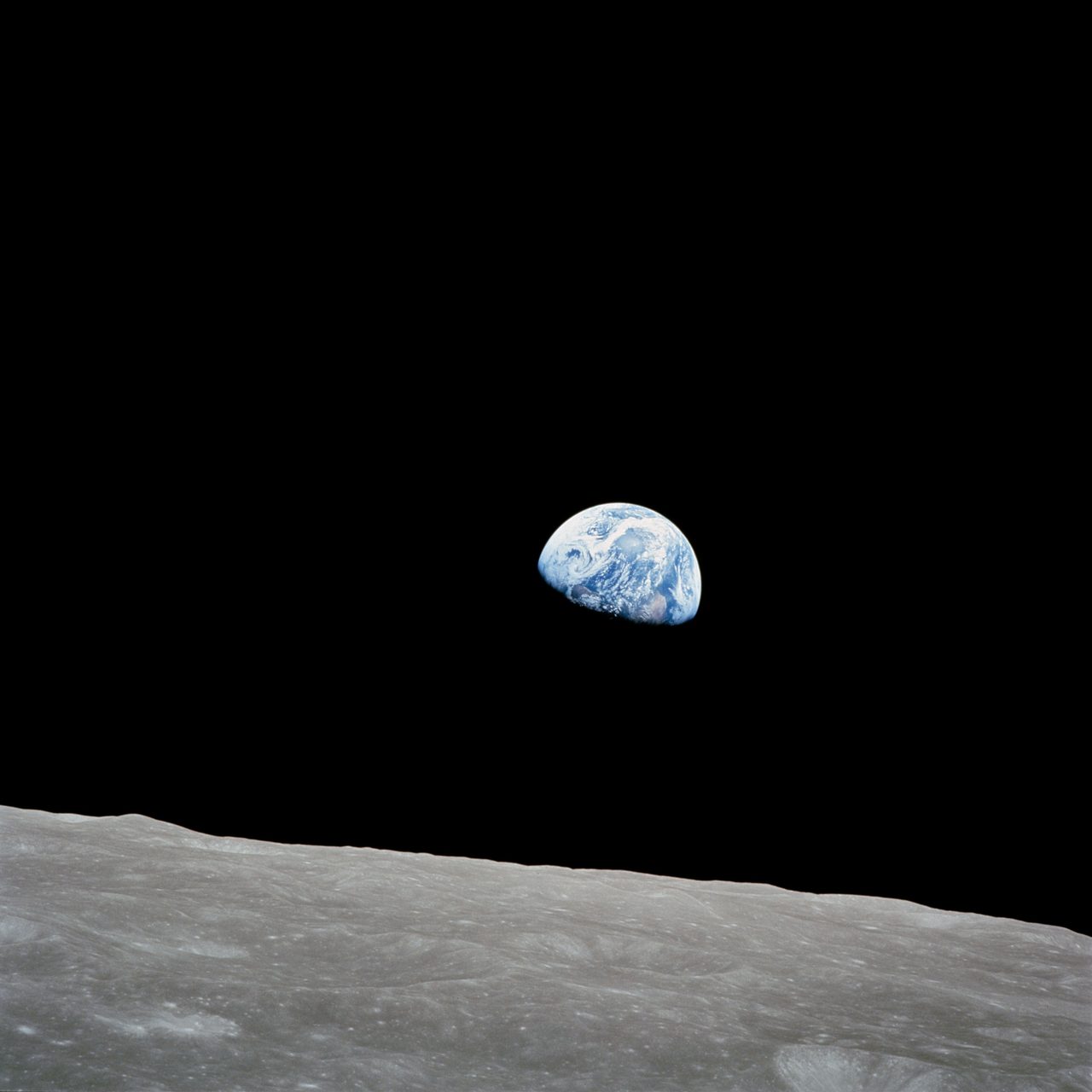
Reaching the Moon can take about three days or several months. The difference lies in the route, the fuel budget and whether a spacecraft must land, orbit or simply fly past.
| Active satellites | 15,877 |
| Starlink active | 10,061 |
| Catalogued objects | 31,827 |
| Active close approaches | 17 |
| People in space | 10 |
It takes about three days to get to the Moon on an Apollo-style journey, but some spacecraft take weeks or months. Artemis flight times depend on the mission’s route, while small spacecraft can follow slower paths that reduce particular propulsion requirements rather than minimise travel time.
“Reaching the Moon” can mean reaching lunar distance, entering lunar orbit or landing on the surface. These are different milestones: passing through the Moon’s neighbourhood is not the same as slowing down to orbit it or descending to a landing site. There is no single travel time that describes every mission.
Orbital Radar tracking data lists 10 people in space as of 23 October 2026. Orbital Radar tracking data lists 15,877 active satellites in orbit as of 23 October 2026. Those figures describe space activity, not lunar journey times; the comparison here is between Apollo, Artemis and low-energy transfers (slower routes shaped by gravitational forces), with mission context on Orbital Radar’s Apollo and Artemis pages.
Why does getting to the Moon take days rather than hours?
Getting to the Moon takes days because a spacecraft follows a curved path under gravity, rather than travelling at a constant top speed. The Moon is about 384,400 kilometres from Earth on average, but its elliptical (oval-shaped) orbit means the actual distance varies.
Dividing that distance by a rocket’s maximum speed does not give a useful journey time. A spacecraft accelerates while its engines fire, then usually coasts for much of the crossing. Coasting does not mean maintaining a fixed speed: Earth’s gravity slows an outward-bound spacecraft, while the Moon’s pull becomes increasingly important as it approaches.
Translunar injection is the engine burn that sends a spacecraft from Earth’s vicinity towards the Moon. It establishes a trajectory designed to meet the Moon at its future position, not a straight line towards where it currently appears in the sky.
Reaching Earth orbit is therefore different from making a lunar crossing. Orbital Radar tracking data lists 15,877 active satellites in Earth orbit as of 23 October 2026. Orbital Radar tracking data records 10 people in space as of 23 October 2026. Neither count measures traffic travelling to the Moon.
The moving destination is visible on Orbital Radar’s Moon Globe. For mission planners, the task is to arrange an encounter between two moving bodies, not simply to cover a fixed distance.
How long did Apollo astronauts take to reach the Moon?
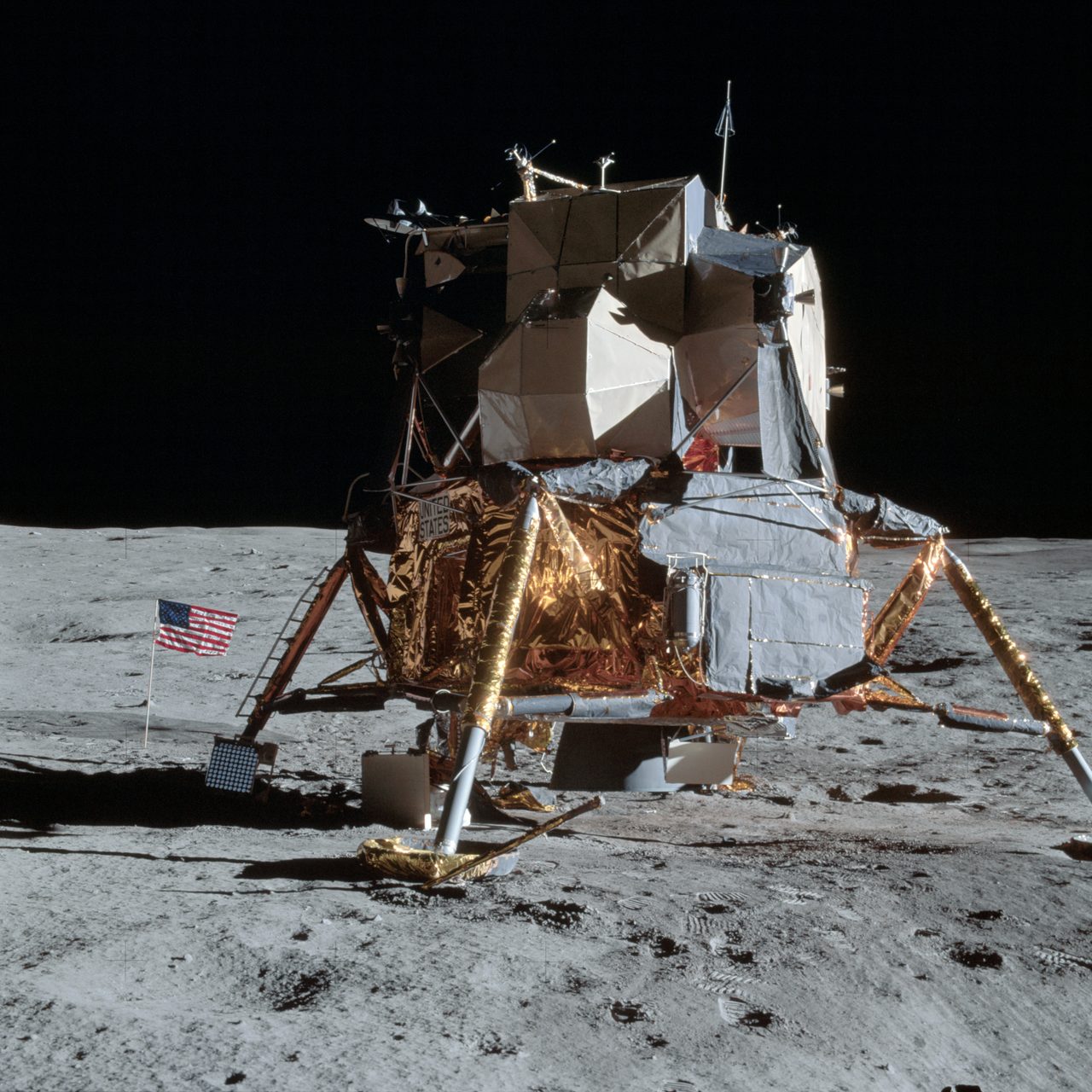
Apollo astronauts typically took roughly three days to reach the Moon. Apollo 11 launched on 16 July 1969 and entered lunar orbit on 19 July, about three days later; its lunar module landed on 20 July, about four days after launch. Reaching orbit and touching down were separate milestones, not interchangeable measures of journey time.
The journey began with launch into an Earth parking orbit (a temporary orbit before departure). After spacecraft checks, a further engine burn called translunar injection sent the crew towards the Moon. The spacecraft then coasted for most of the crossing, with course corrections as needed, before lunar orbit insertion: an engine burn that slowed it enough for the Moon’s gravity to capture it into orbit.
This timetable balanced crew time, propulsion requirements and mission objectives rather than pursuing the shortest possible crossing. A faster approach could demand more propellant both to depart Earth and to brake at the Moon. Apollo also needed time for navigation, spacecraft checks and preparations for lunar operations. Orbital Radar’s Apollo programme overview provides the wider mission context.
Today’s orbital activity should not be confused with lunar travel. Orbital Radar tracking data records 10 people in space as of 23 October 2026. Orbital Radar tracking data records 15,877 active satellites in orbit as of 23 October 2026. Neither figure measures traffic to the Moon; the Orbital Radar Moon globe provides a separate view of the Moon’s position and its orbiters.
Why can Artemis take longer than Apollo to reach the Moon?
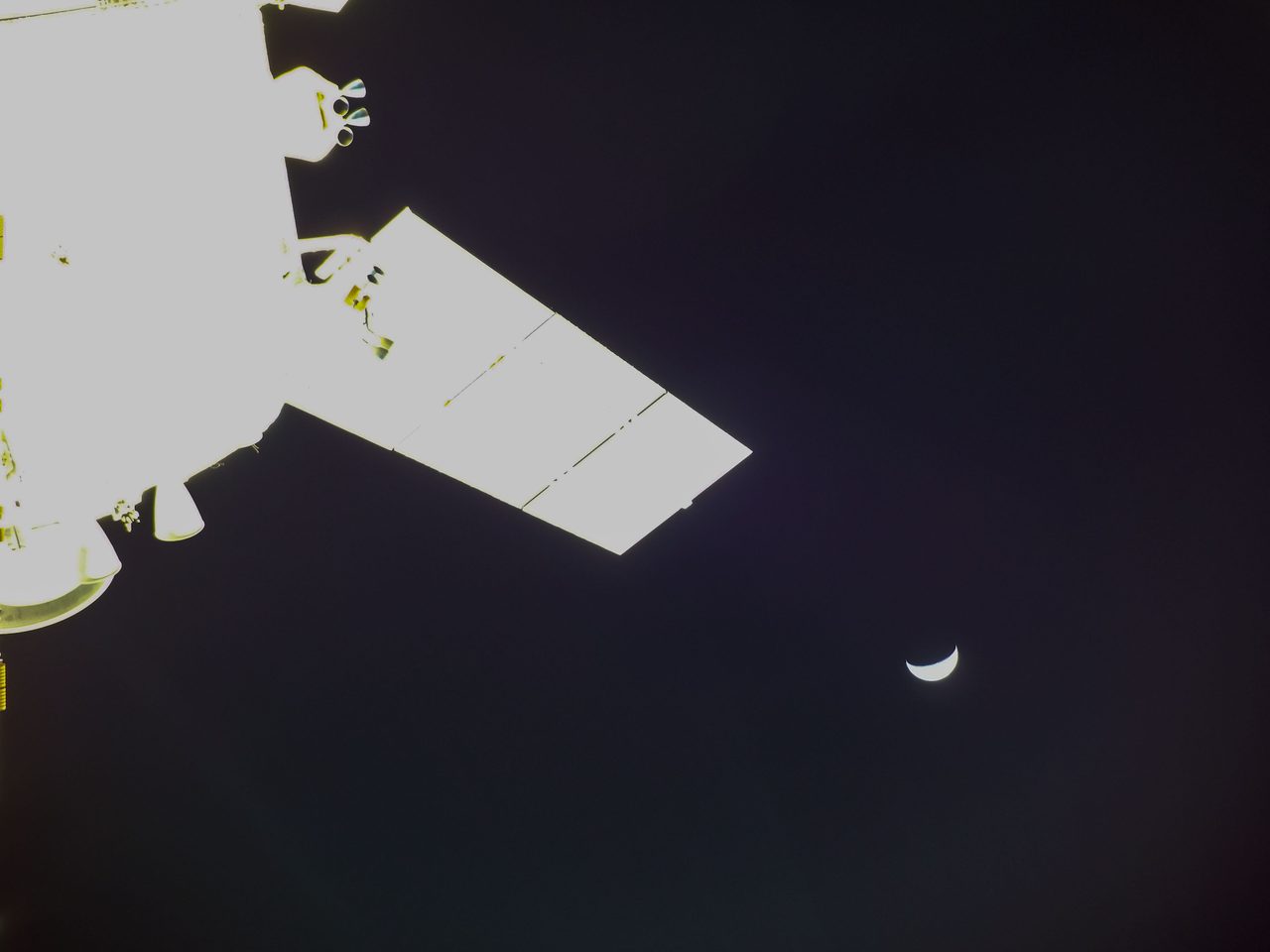
Artemis can take longer than Apollo to reach its intended lunar orbit because its missions can follow different routes and have different objectives. Artemis is a programme, not a single flight plan: reaching the Moon for a flyby is not the same milestone as entering the orbit chosen for a particular mission.
The uncrewed Artemis I mission launched on 16 November 2022, and Orion made its first lunar flyby on 21 November, about six days after launch. That encounter brought the spacecraft close to the Moon, but it was not the end of its outward journey. Orion then continued towards the distant retrograde orbit selected for the test flight, entering it on 25 November.
A distant retrograde orbit is a distant lunar orbit travelled in the opposite direction to the Moon’s motion around Earth. For Artemis I, this stable orbit provided an environment for testing Orion’s systems far from Earth before committing the spacecraft to its return journey. Time spent reaching and operating in that orbit served the test programme; it did not mean Orion needed all that time simply to encounter the Moon.
There are therefore separate clocks: launch to first lunar encounter, launch to the intended orbit, and the complete round trip, including tests and the return to Earth. Orbital Radar’s Artemis programme guide provides mission context, while its Moon Globe shows the lunar setting. Artemis I’s timings describe that historical flight, not a fixed schedule for every Artemis mission.
Why do some small lunar spacecraft take months to arrive?
Some small lunar spacecraft take months to arrive because they follow routes designed to save propellant rather than minimise travel time. A low-energy transfer is a trajectory that exploits gravitational dynamics to reduce the propulsion needed for particular parts of a journey, often at the cost of time.
Some routes carry a spacecraft far beyond the Moon before bringing it back for a carefully timed encounter. The gravitational influence of the Earth, Moon and Sun helps shape the trajectory, potentially reducing the manoeuvre needed to enter lunar orbit.
CAPSTONE took roughly four months to reach its lunar orbit in 2022. It was an orbiter, not a lander, and its journey demonstrated an approach suited to a small spacecraft with limited propellant. Orbital Radar’s Moon Globe provides context for the destination and its orbiters.
Small landers may also choose lengthy transfers to fit their propulsion budgets and available launch opportunities. They do not all follow the same route: the benefit depends on the starting orbit, spacecraft design and intended arrival conditions.
Longer journeys require longer operations, demanding navigation and more exposure to radiation and other space hazards. Orbital Radar’s live catalogue contained 31,827 objects on 23 October 2026. Orbital Radar tracking data recorded 17 active close approaches on 23 October 2026. Those Earth-orbit figures are not a measure of lunar-transfer risk; each route needs its own assessment. Saving propellant does not automatically make a mission cheaper or safer.
Does reaching the Moon mean orbiting it or landing?
No: reaching the Moon can mean crossing its distance from Earth, flying past it, entering lunar orbit or landing on the surface. These are different milestones, so a quoted journey time is meaningful only if its endpoint is clear.
Crossing lunar distance does not necessarily mean approaching the Moon: the spacecraft must also reach the right place. A flyby passes the Moon without staying, whereas lunar orbit insertion is the manoeuvre that slows a spacecraft sufficiently for lunar gravity to hold it in a bound orbit. Landing requires a further controlled descent, making a fast flyby different from delivering a spacecraft that must stop, operate in orbit or touch down safely.
Apollo 11 illustrates the distinction: it reached lunar orbit roughly three days after launch and landed roughly four days after launch. Both are valid answers to how long the journey took, but they describe different achievements. Orbital Radar’s Moon Globe provides context for the Moon’s position and orbiters.
Earth-orbit counts describe a separate population, not lunar arrivals. Orbital Radar tracking data lists 15,877 active satellites in Earth orbit as of 23 October 2026. Orbital Radar’s live catalogue lists 31,827 objects, including debris, as of 23 October 2026.
Why do crewed Moon missions usually avoid months-long transfers?
Crewed Moon missions usually avoid months-long transfers because every extra day adds demands on supplies, life support and crew safety. A roughly three-day Apollo-style transfer limits those demands, even when a robotic spacecraft could accept a much longer journey to conserve propellant.
People need food, water and oxygen throughout the flight, along with waste management, temperature control and systems that remove carbon dioxide from cabin air. Recycling can reduce the supplies carried, but it requires equipment, power and maintenance. Longer journeys also mean more time during which essential systems must remain reliable, with spare parts and reserves available if something fails.
Radiation is another constraint: longer exposure beyond Earth’s protective magnetic environment can increase accumulated dose, while solar particle events can create an acute hazard. A shorter trip does not eliminate either danger. Crews still need shielding, radiation monitoring and contingency plans for equipment failures, illness or a disrupted flight plan; a quick return is not possible from every point on a lunar trajectory.
According to Orbital Radar tracking data, 10 people were in space on 23 October 2026. This is not a count of lunar travellers. Unlike crews, robotic spacecraft need neither breathable air nor food, although their electronics and power systems still face hazards. That distinction helps explain the appeal of the short transfers used by Apollo; the destination can be explored on Orbital Radar’s Moon globe.
What determines the travel time of a lunar mission?
A lunar mission’s travel time depends on launch energy, spacecraft mass, propulsion, target orbit and the conditions it must meet on arrival. These factors determine which route is feasible, not simply how fast the spacecraft can fly.
A launch window is the period when departure conditions allow the intended trajectory. The spacecraft must intercept a moving Moon, aiming for where it will be at arrival rather than where it is at launch.
For a given launch vehicle, spacecraft mass affects the departure energy available. More energetic departures can shorten some journeys, but may increase the braking needed at arrival. Propulsion capability and fuel reserves therefore constrain both the outward journey and entry into the target lunar orbit.
A lander’s schedule also depends on suitable sunlight, communications with Earth or a relay spacecraft, and landing conditions. Waiting for those requirements can matter more than taking the shortest route.
Orbital Radar’s live catalogue contained 31,827 objects, including debris, as of 23 October 2026. Orbital Radar tracking data recorded 15,877 active satellites as of 23 October 2026. Those inventory totals do not measure lunar travel time; the relevant geometry is illustrated by Orbital Radar’s Moon Globe.
For a useful comparison, identify each mission’s departure event and stated arrival milestone. Launch-to-landing and departure-burn-to-orbit durations measure different intervals, even when both are described as the time taken to reach the Moon.
How can I check the Moon's position on Orbital Radar?
Open Orbital Radar’s Moon globe to explore the Moon’s current position, phase and lunar orbiters. It provides present-day lunar context: where the Moon is and how much of its Earth-facing side is illuminated by the Sun.
The Moon’s position and phase help you understand the changing geometry between Earth, the Moon and the Sun. They do not, on their own, tell you how long a spacecraft will take to arrive. The globe is not a universal countdown to the Moon or a trajectory prediction for every spacecraft.
According to Orbital Radar's live catalogue, 15,877 satellites were active in orbit on 23 October 2026. That is a broad satellite count, not the number of spacecraft at the Moon; it must not be read as a total for the globe’s lunar-orbiter view.
Use the globe to put a lunar mission into context, then look to that spacecraft’s flight plan for its actual journey time. Its planned departure, route and arrival manoeuvres determine the schedule, rather than the Moon’s phase alone. Seeing where the Moon is now helps explain the destination, but does not establish when a particular mission will reach it.
Key takeaways
- An Apollo-style journey reaches the Moon in about three days, but landing happens later than arrival in lunar orbit.
- Artemis travel times depend on the mission's trajectory and destination, not a single programme-wide timetable.
- Small robotic spacecraft can spend months on low-energy routes that trade journey time against propulsion requirements.
- Compare lunar travel times only after establishing whether arrival means a flyby, entry into orbit or landing.
Frequently Asked Questions
How long would it take to drive to the Moon?
How long does a radio signal take to reach the Moon?
How long did Apollo 11 astronauts spend on the Moon?
Does the journey home from the Moon take the same amount of time?
Can a spacecraft reach the Moon without landing?
📎 Cite this article · data available
Orbital Radar Newsroom. (2026). How Long Does It Take to Get to the Moon?. Orbital Radar. https://orbitalradar.com/blog/how-long-to-get-to-the-moon"How Long Does It Take to Get to the Moon?." Orbital Radar, 23 October 2026, https://orbitalradar.com/blog/how-long-to-get-to-the-moon.@misc{orbitalradar_how_long_to_get_to_the_moon,
title = {How Long Does It Take to Get to the Moon?},
author = {{Orbital Radar}},
year = {2026},
howpublished = {\url{https://orbitalradar.com/blog/how-long-to-get-to-the-moon}}
}