Comet 220P's Unexpected Luminosity: A Celestial Surprise
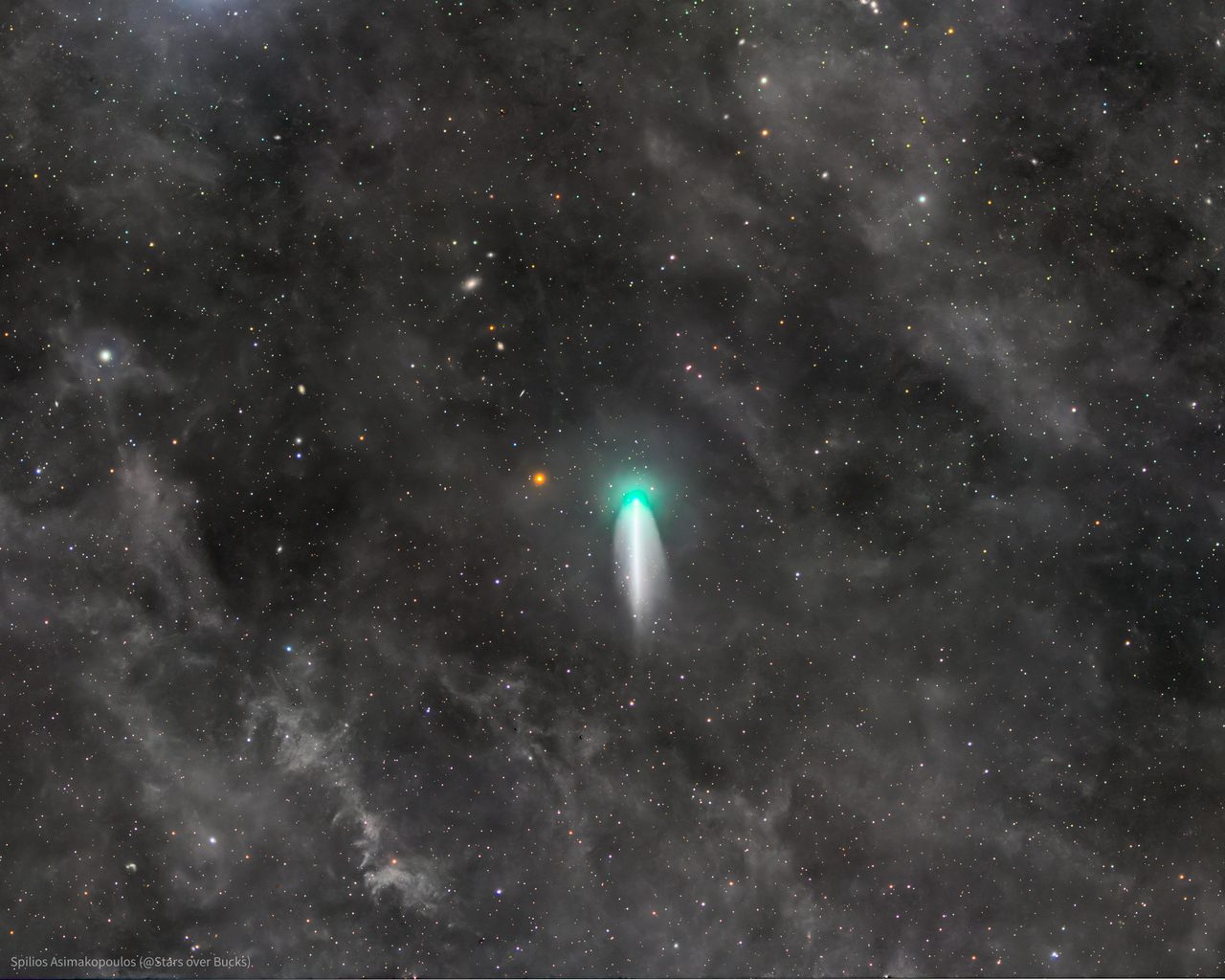
Comet 220P/McNaught, usually dim, is now visible with binoculars after two surprising outbursts increased its brightness 20,000-fold.
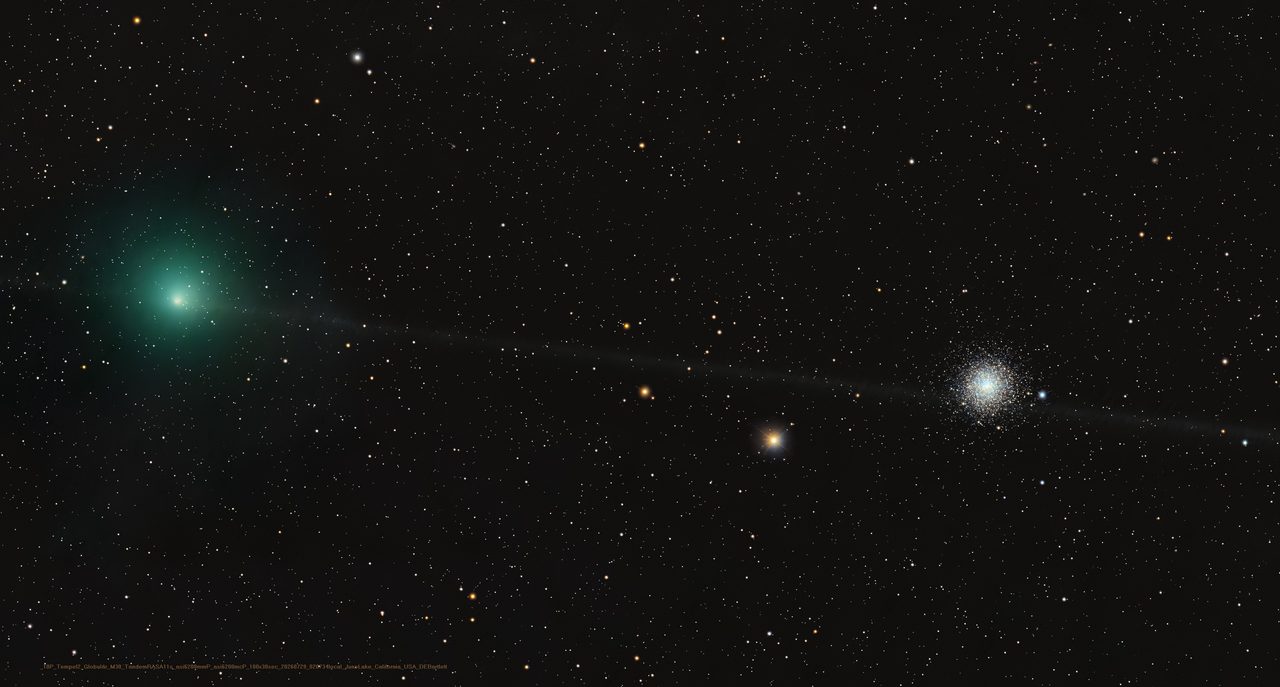
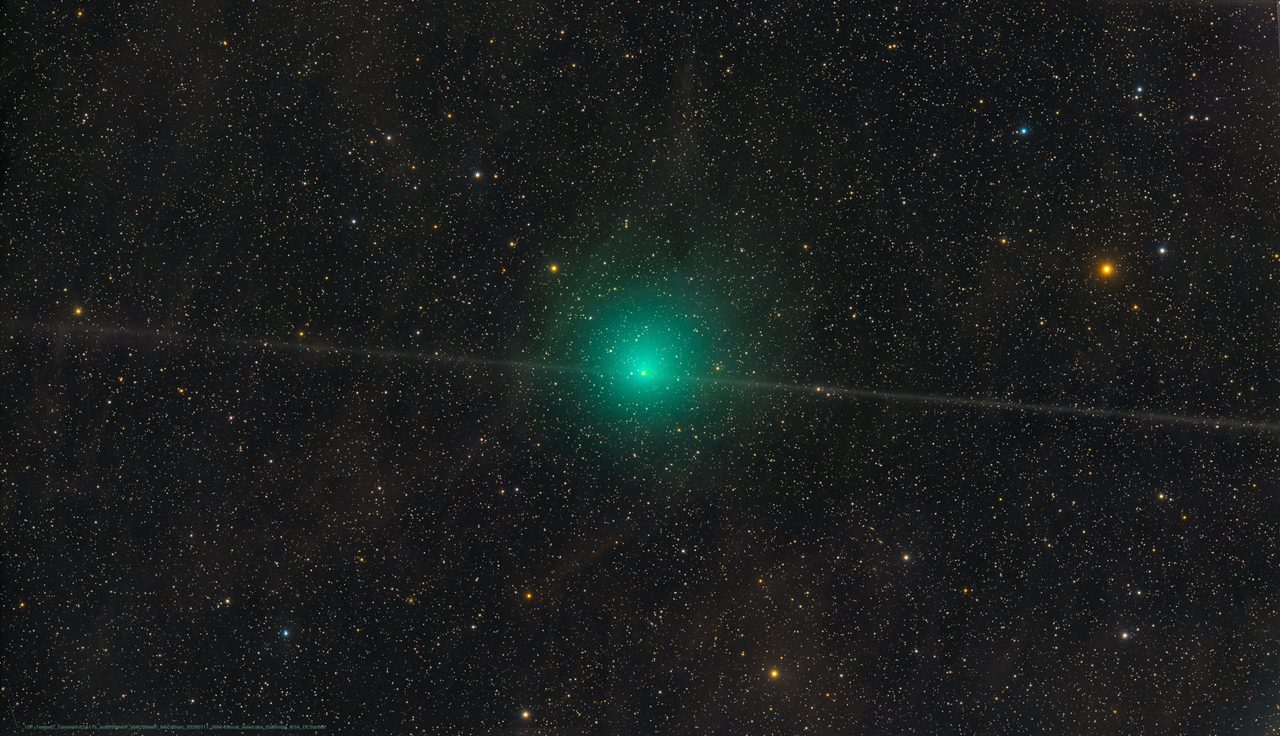
Comet 220P/McNaught has astonished astronomers with its recent dramatic increase in brightness. Normally requiring a telescope to observe, the comet has become visible with binoculars following two unexpected outbursts. These events have amplified its brightness by approximately 20,000 times, a phenomenon that remains unexplained. The comet's current visibility offers a rare opportunity for amateur astronomers to witness its bright green head and short dust tail, captured in a long-duration exposure from South Africa.
The Science Behind the Outburst
The precise cause of Comet 220P's outbursts is currently unknown, but scientists speculate that the sudden release of subsurface gases or seismic activity, known as comet quakes, could be responsible. As the comet continues its orbit between Mars and Jupiter, with a period of over five years, it will pass within one astronomical unit (the average Earth-Sun distance) of Earth in October. Following this close approach, the comet is expected to fade as it retreats to the outer reaches of its orbit. For those interested in tracking its path, the Orbital Radar pass predictor can provide visibility details.
Observing Comet 220P
To observe Comet 220P, find a location with minimal light pollution and use binoculars or a camera with long exposure capabilities. The comet's greenish hue is due to the presence of diatomic carbon (C2) in its coma, which fluoresces in sunlight. As it approaches Earth, the comet will become more challenging to view, so early observation is recommended. For real-time updates on its position, the Orbital Radar debris map can be a useful tool.
Frequently Asked Questions
What caused Comet 220P to become so bright?
How can I see Comet 220P?
📎 Cite this article
Orbital Radar Newsroom. (2026). Comet 220P's Unexpected Luminosity: A Celestial Surprise. Orbital Radar. https://orbitalradar.com/blog/cosmic-gallery-2026-05-22"Comet 220P's Unexpected Luminosity: A Celestial Surprise." Orbital Radar, 22 May 2026, https://orbitalradar.com/blog/cosmic-gallery-2026-05-22.@misc{orbitalradar_cosmic_gallery_2026_05_22,
title = {Comet 220P's Unexpected Luminosity: A Celestial Surprise},
author = {{Orbital Radar}},
year = {2026},
howpublished = {\url{https://orbitalradar.com/blog/cosmic-gallery-2026-05-22}}
}